Kenya’s Coast to Get Protected Internet Cable by 2028, Developers Say
Kenya · TECHNOLOGY
Key Facts
- —The country Kenya, home to about 57.5 million people, is East Africa’s hub for mobile money and tech firms. Its economy was worth about US$136 billion in 2025, the World Bank says.
- —Why it matters The port city of Mombasa is where Kenya’s international subsea internet cables come ashore. Cable cuts off South Africa in May 2024 slowed service across East Africa.
- —Why now Private developers unveiled the LuLu cable on 9 September, and Nigeria’s Punch re-reported their statement on 30 September. No contract has been announced since.
- —What happened The group plans a roughly 500-kilometre protected cable with five landings from Mombasa to Lamu. Service is targeted for April to June 2028.
- —Who is involved Mauritius-based INDOI would develop, own and operate it. Kenya’s Blue Trade Investments is the local landing partner, alongside a zone developer, a consultancy and Kingdom Bank.
- —What it means for you The pitch targets data centres, payment firms and investors in the Vipingo zone near Mombasa. Households are not the main market.
- —Still open Cost, financing, cable supplier and a construction start are undisclosed. The 2028 date depends on contracts still to be executed, the developers say.
A private group plans a protected fibre-optic cable along Kenya’s Indian Ocean coast, from the port of Mombasa north to Lamu. Its backers aim it at data centres and industry, and target service in 2028.
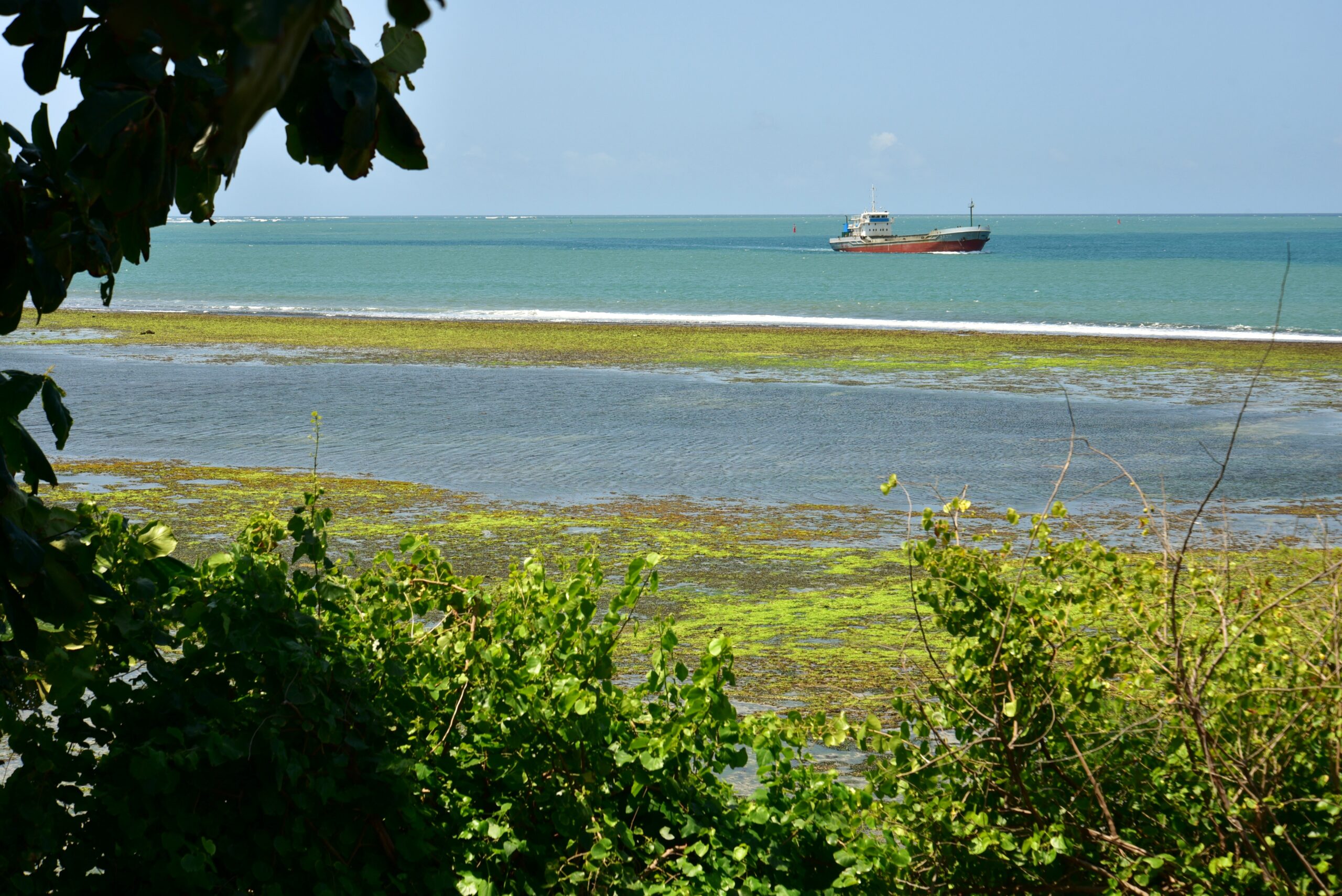
Kenya, a country of about 57.5 million people, is one of East Africa’s main gateways to the global internet. The LuLu cable, unveiled on 9 September, would add a protected link along the coast where those international cables land.
The backers are private firms from Kenya and Mauritius, not the Kenyan government. Their launch statement, re-reported by Nigeria’s Punch newspaper on 30 September, sets out who does what but gives no price tag.
What the LuLu cable would do
The planned system would run along about 500 kilometres of coast, with five landing points between Mombasa and Lamu. Named stops include the Vipingo Special Economic Zone, Kilifi and Malindi.
It pairs a cable laid on the seabed with a parallel, protected route on land. The developers say this dual path makes the network more resilient than a single line.
The developers say it will carry 144 fibres, with capacity of up to 60 terabits per second per fibre pair. One terabit is a million megabits, so this is wholesale capacity, not a household speed.
It will use dense wavelength division multiplexing, a technique that sends many light signals down one fibre at once. The system is designed to operate for 25 years.
The developers call it Kenya’s first fully protected coastal submarine cable network. That claim could not be independently confirmed.
Who is behind the project
INDOI, headquartered in Mauritius and also known as IOX, is the developer, owner and commercial operator. Its founder and chief executive is Arunachalam Kandasamy.
“East Africa is not a market of the future — it is a market of right now,” Kandasamy said in a statement. He added that the coast had never had a unified, fully protected digital system.
Blue Trade Investments, a Kenyan firm focused on information and communications technology, is the designated cable landing party. It will act as regulatory interface and local delivery partner, the statement said.
ARISE Integrated Industrial Platforms, known as ARISE IIP, develops the Vipingo zone. AfriTrade Consulting Group advised on transaction structuring, regulatory clearance and compliance.
Kingdom Bank, a subsidiary of the Co-operative Bank of Kenya, is also listed as a partner. Its chief executive, Anthony Mburu, called Blue Trade “a valued client” but did not describe any loan.
Vipingo and the business case
Vipingo is a special economic zone north of Mombasa, in Kilifi County. Such zones offer tax and customs incentives to attract manufacturers and service firms.
The developers pitch the link to hyperscale data centres, cloud providers, payment platforms and outsourcing campuses. Consumers are not the main target.
George Olaka, who heads ARISE IIP in Kenya, said Vipingo “was never intended to be a conventional industrial zone”. He described it as a platform where industry, logistics and digital infrastructure reinforce each other.
The zone’s promoters say it could mobilise up to US$3 billion in investment. That figure is their own estimate and has not been independently verified.
Why a second coastal route matters
Kenya has seven submarine cable landings, according to TeleGeography, a telecoms research firm, as reported by TechTrends Kenya in August. More international cables are planned, including a 4,108-kilometre link from Oman to Mombasa involving Meta and Safaricom.
Relying on a few landing sites is also a weakness. In May 2024, damage to the EASSy and Seacom cables off South Africa disrupted internet service across East Africa, Kenya included.
A coastal system with a land-based backup would not prevent cuts far out at sea. It could, however, keep traffic moving between coastal towns and landing stations if one path fails.
What expats and investors should watch
The key milestone is contract execution, on which the 2028 date explicitly depends. No construction start, supplier or project cost has been disclosed.
AfriTrade chief executive Caroline Saroni said success depends on regulatory, licensing and commercial execution. “A project of LuLu’s ambition succeeds only when vision is matched by careful execution,” she said.
The statement did not mention any licence from the Communications Authority of Kenya, the telecoms regulator. Watch for that approval, a named supplier and financing terms.
Saroni also linked the project to the LAPSSET corridor, a planned transport route from Lamu Port to South Sudan and Ethiopia. The project’s stated aim is resilience for businesses, not cheaper home broadband.
The regional read-through
East Africa’s demand for data is rising as mobile money, cloud services and data centres spread. Coastal links decide how quickly that traffic reaches the rest of the world.
Landlocked neighbours such as Uganda, Rwanda and South Sudan reach international cables partly through Kenya. The LuLu cable has not committed any capacity to cross-border use so far.
For now, LuLu is a well-specified proposal with named partners. Whether it becomes infrastructure depends on the contracts its backers have yet to announce.
Frequently Asked Questions
When will the LuLu cable start operating?
The developers target the second quarter of 2028. That date depends on contracts still to be executed, and no construction start has been announced.
Which places will the cable connect?
The planned route runs about 500 kilometres along Kenya’s coast from Mombasa to Lamu. Named landing points include the Vipingo Special Economic Zone, Kilifi and Malindi.
Who is paying for the project?
No cost or financing terms have been disclosed. INDOI of Mauritius is the developer and owner, with Kenya’s Blue Trade Investments as local partner and Kingdom Bank among the backers.
Connected Coverage
Sources
This article was produced by The Rio Times’ automated newsroom system. How we use AI · Report an error
LatAm Markets: Live Signals → — real-time movers, turnover leaders and FX across Latin America.
Read More from The Rio Times