Geopolitical Gambit: Chinese and Russian Bombers Test U.S. Defense Boundaries
For the first time, Chinese and Russian bombers jointly flew near Alaska. This marks a significant escalation in military cooperation between the two nations.
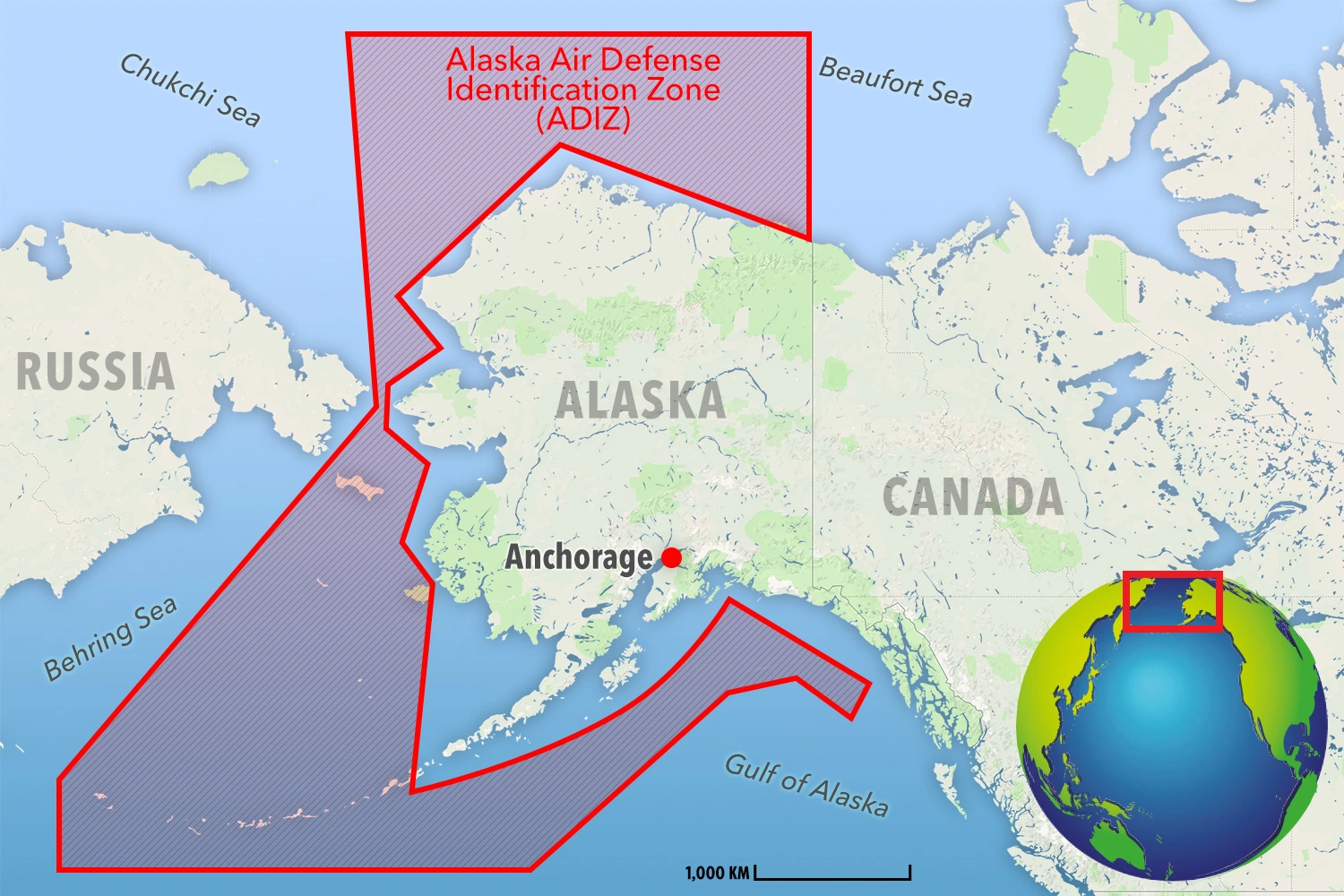
On July 24, 2024, the North American Aerospace Defense Command (NORAD) intercepted two Chinese Xian H-6 bombers and two Russian Tu-95 bombers in Alaska’s Air Defense Identification Zone (ADIZ).
This unprecedented event highlights the growing strategic partnership between Beijing and Moscow. It raises concerns about the stability of global power dynamics.
The Incident
NORAD detected and tracked the bombers as they operated within the ADIZ, which extends 150 miles from the U.S. coastline.
The bombers did not enter U.S. or Canadian sovereign airspace but came within 200 miles of Alaska.
American F-16s and F-35s, along with Canadian CF-18s, intercepted the aircraft. NORAD stated that the bombers posed no immediate threat but emphasized the importance of monitoring such activities.
This joint flight signifies a deeper level of military cooperation between China and Russia.
Historically, Russian bombers have frequently entered the ADIZ, but the inclusion of Chinese bombers marks a new development.
The operation demonstrates the two countries’ willingness to challenge U.S. defenses and test their response capabilities.
The Chinese Xian H-6 and Russian Tu-95 bombers are both capable of carrying nuclear payloads.
The H-6, a modernized version of the Soviet-era Tu-16, can deploy advanced cruise missiles and potentially hypersonic weapons.
The Tu-95, known for its distinctive propeller-driven design, remains a formidable strategic bomber. Both aircraft can refuel mid-air, giving them a theoretically unlimited range.
Chinese and Russian Bombers Test U.S. Defense Boundaries
This joint operation comes amid increasing global tensions and a solidifying “no limits” partnership between China and Russia.
The two countries have conducted joint military exercises since 2019, primarily in the Sea of Japan, East China Sea, and Western Pacific.
Their cooperation has expanded to include nuclear, space, and industrial base activities.
This growing alliance aims to counterbalance Western influence and project power in strategically important regions.
China has declared itself a “Near-Arctic State” and seeks to expand its presence in the Arctic.
Melting ice caps are opening new shipping lanes and revealing untapped natural resources, making the region increasingly valuable.
China’s cooperation with Russia, which has a significant Arctic presence, is part of its broader strategy to secure access to these resources and enhance its strategic capabilities.
U.S. officials have expressed concern over the growing military cooperation between China and Russia.
Alaska Senator Dan Sullivan described the flights as an “escalation” and called for increased military capabilities in the Arctic.
The Pentagon unveiled its latest Arctic Strategy, emphasizing the need to counter the rising influence of China and Russia in the region.
Conclusion
The joint Chinese-Russian bomber flight near Alaska marks a significant escalation in the geopolitical landscape.
It underscores the deepening military cooperation between two of the U.S.’s primary strategic competitors.
This development necessitates a reassessment of U.S. defense strategies, particularly in the Arctic and Pacific regions, to counter the evolving threat posed by this emerging alliance.
The incident serves as a stark reminder of the complexities and challenges in maintaining global stability in an era of great power competition.
Geopolitical Gambit: Chinese and Russian Bombers Test U.S. Defense Boundaries
This article was produced by The Rio Times’ automated newsroom system. How we use AI · Report an error · Editorial responsibility: Matthias Camenzind, Editor-in-Chief
Read More from The Rio Times