France’s Endless Political Carousel: Bayrou’s Ouster Exposes a Debt-Strangled Nation
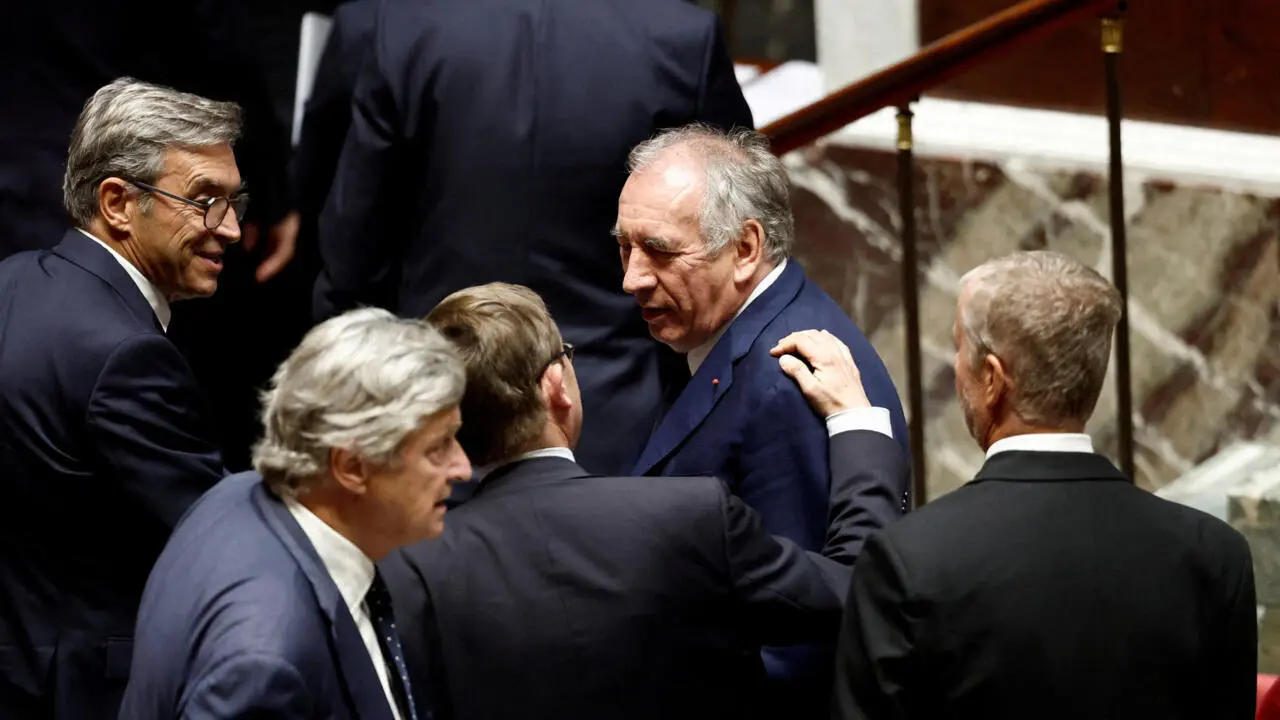
(Analysis) In a stark reminder of France’s deepening instability, Prime Minister François Bayrou resigned on September 9, 2025, after his government collapsed in a crushing parliamentary vote the day before.
This marks the third prime ministerial change in just over a year—and the fourth in under two—leaving President Emmanuel Macron scrambling to appoint a successor amid a paralyzing fiscal crisis that threatens not just France, but the heart of Europe’s economy.
Bayrou, a seasoned centrist who had served only nine months, called the confidence vote himself in a desperate bid to rally support for his austerity measures.
But lawmakers from across the spectrum—far-right, left-wing, and beyond—united in rejection, voting 364-194 to oust him.
As Bayrou handed in his resignation to Macron today, the president vowed to name a new leader “in the coming days,” rejecting calls for snap elections or his own exit. For now, the government limps on in caretaker mode, frozen on key decisions like the 2026 budget.
The roots of this chaos trace back to June 2024, when Macron gambled on early legislative elections to counter the surging far-right National Rally (RN) led by Marine Le Pen.
The bet failed spectacularly: No party won a majority, creating a “hung” parliament divided into fractious blocs—Macron’s centrists, RN’s nationalists, and a leftist alliance anchored by the radical France Unbowed (LFI).
This gridlock has toppled governments repeatedly: First, Gabriel Attal in July 2024; then Michel Barnier in December 2024 over budget battles; now Bayrou.
Opposition voices, from Le Pen’s RN to LFI’s firebrands, are howling for fresh polls or Macron’s impeachment, decrying the “failed policies” that have left France “ungovernable.”
But Macron, with two years left in his term, holds the cards—he can dissolve the assembly again, though that risks even greater turmoil. At its core, this isn’t just political theater; it’s a desperate struggle against a ballooning debt mountain.
France’s public debt has swelled to 114% of GDP, the eurozone’s highest among major economies, with last year’s deficit hitting 5.8% of GDP—nearly double the EU’s 3% cap.
This year, it’s projected at 5.4%, and the tab keeps growing: Debt accumulates at $5,840 per second, while interest payments alone will devour $88 billion next year.
Bayrou‘s ill-fated plan sought to slash this with $51 billion in spending cuts and tax hikes, targeting welfare freezes, the scrapping of two public holidays, and other belt-tightening to trim the 2026 deficit to 4.6% of GDP.
Lawmakers balked, viewing it as punishing ordinary citizens amid stagnant growth (France’s economy expanded just 0.2% in Q2 2025) and rising costs.
Credit agencies agree: Moody’s downgraded France to Aa3 in December 2024, citing “strained finances,” while S&P and Fitch followed suit earlier.
Markets have felt the tremors. France’s CAC 40 index has slumped 3.3% over the past year (excluding dividends), lagging Europe’s Stoxx 600’s 5.4% gain and Germany’s DAX’s 25% surge.
The 10-year French bond yield eased to 3.41% on September 8, but the premium over safer German bonds widened to 77 basis points, signaling investor jitters.
Yet, the euro held firm today, buoyed by expectations of U.S. Federal Reserve rate cuts, with eurozone sovereign spreads narrowing slightly as analysts bet the drama won’t spark a broader shock.
For outsiders, this matters because France isn’t an isolated actor—it’s the eurozone’s second-largest economy, a linchpin for trade, defense, and stability.
Prolonged gridlock could stall EU-wide initiatives, from green energy to Ukraine aid, and fuel extremism: RN polls at 30% nationally, while LFI hovers around 25%.
If debt spirals unchecked, it might force “eurobonds”—joint EU debt issuance to pool risks, as seen in the €800 billion pandemic recovery fund.
But that’s divisive: Frugal northern states like Germany (debt at 66% of GDP) fear it rewards fiscal laxity, potentially eroding sovereignty and igniting backlash.
Globally, ripples could hit your wallet—higher European borrowing costs might slow exports, inflate commodity prices, or unsettle stock markets from New York to Tokyo.
In poignant terms, it’s a cautionary tale of how elite gambles and unchecked spending can trap a proud nation in a cycle of paralysis, burdening future generations with yesterday’s bills while everyday lives hang in the balance.
All figures, claims, and details in this narrative are drawn directly from verified reports across English, Spanish, and Portuguese sources, including Reuters, The Guardian, France 24, G1 Globo, BBC Mundo, and real-time X posts from outlets like AFP and DW Europe—no fabrications, assumptions, or embellishments.
This article was produced by The Rio Times’ automated newsroom system. How we use AI · Report an error
Read More from The Rio Times