Emzor Borrows at 19% to Finish Its Sagamu Drug-Ingredient Plant
NIGERIA · PHARMACEUTICALS
Key Facts
The raise: Emzor Pharmaceutical Industries has listed a N26.7 billion (about US$19.8 million) five-year bond at a 19% coupon on Lagos’s FMDQ Exchange. Part of the proceeds is to complete its active pharmaceutical ingredient — API, the substance that makes a medicine work — plant at Sagamu.
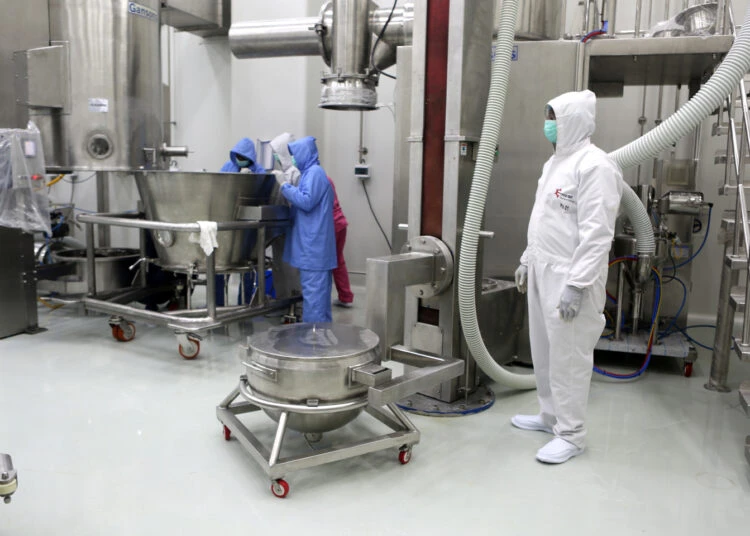
The plant: The Sagamu facility carries a reported cost of about US$23 million and is described as the first full-scale antimalarial API plant in Africa. More than 90% of the civil works are complete and critical equipment is installed.
What it has done already: The company’s in-house laboratory has synthesised five antimalarial APIs, among them artemether and lumefantrine. Antimalarials are the first product line, with HIV antiretrovirals and other essential medicines intended to follow.
The delays: The facility was first targeted for 2024, then for late 2025, then for early 2026, and remains unfinished. No revised commissioning date was published with the bond.
The company: Stella Okoli founded what became Emzor as a small Lagos chemist’s shop in 1977, using 5,000 naira (about US$4 at today’s exchange rate) and her father’s house as collateral. It now makes more than 140 products.
The cost of money: A 19% coupon is a heavy price for capital, and it reflects Nigerian naira rates rather than the project’s risk alone. The plant has to earn well above that to justify the debt.
The Emzor API plant at Sagamu, billed as Africa’s first full-scale antimalarial drug-ingredient facility, is being finished with a N26.7 billion (about US$19.8 million) bond raised at a 19% coupon. The project is more than 90% built and has already missed several announced start dates. All dollar conversions in this story use a rate of roughly 1,350 naira to the dollar.
Why an Emzor API plant is harder than it sounds
Most African pharmaceutical manufacturing is formulation: importing the active ingredient and turning it into tablets, syrups and capsules. That is a real industry, and it is also the least valuable part of the chain.
The active pharmaceutical ingredient, or API, is the molecule that does the work, and making it is chemistry rather than assembly. It needs different plant, different regulatory approval and a different class of engineer.
Almost nobody in sub-Saharan Africa does it at scale, which is why a continent that manufactures a great deal of its own medicine still imports the substance inside it. India and China supply most of the world’s APIs.
That dependence became politically visible during the pandemic, when export restrictions on ingredients exposed how thin the buffer was. Emzor’s Sagamu project is a direct answer to that exposure.
What has been built, and what has not
More than 90% of the civil works are complete, critical equipment is installed, and Emzor’s research laboratory has already synthesised five antimalarial APIs, including artemether and lumefantrine, under a technology-transfer agreement with India’s Mangalam Drugs & Organics. That is a meaningful technical milestone rather than a press release.
Antimalarials are the logical starting point for Nigeria, which carries about 27% of the world’s malaria cases and 31% of its malaria deaths. The stated plan is to expand afterwards into HIV antiretrovirals and other essential medicines.
But the plant was first promised for 2024, then for late 2025, and then for early 2026, and none of the dates held. The project was part-funded by a €13.85 million (about US$15 million) loan from the European Investment Bank, and the new bond exists precisely because the project ran past its funding.
No revised commissioning date has been published with the bond. Readers should treat any completion timeline for the plant as unconfirmed.
A 19% coupon is the story inside the story
The Series 1 bond, listed on the FMDQ Exchange on August 18 through a vehicle called Emzor Pharma Funding SPV Plc, sits inside a wider N40 billion (about US$30 million) issuance programme and was oversubscribed, according to BusinessDay. Renaissance Securities (Nigeria) was lead sponsor, with FirstCap and UCML Capital as co-sponsors.
Raising N26.7 billion (about US$19.8 million) at 19% is expensive money by any standard, and it says as much about Nigerian interest rates as about Emzor. Naira borrowing costs have been punishing for two years.
For a manufacturer, that arithmetic is brutal. The plant has to generate returns comfortably above 19% in naira terms merely to service the debt, before anything reaches shareholders.
Emzor does bring some credit history to the table. It repaid a N5.13 billion (about US$3.8 million) commercial paper issue in August 2025 and holds an A- credit rating, and this is its second domestic bond. Still, a 19% coupon shows what even a rated, established borrower pays for five-year naira money.
The counterweight is import substitution. If the plant works, Emzor replaces a dollar-denominated import with naira-denominated production, which is a natural hedge in a country where foreign exchange is the constraint.
From a chemist’s shop to the hardest problem in African pharma
Stella Okoli opened a small chemist’s shop in Lagos in 1977 with 5,000 naira (about US$4 at today’s exchange rate) and her father’s house as collateral. Emzor, incorporated in 1984, now produces more than 140 products and distributes across West Africa and beyond.
That trajectory is the reason the Sagamu project is credible at all. Building an ingredient plant is not a natural extension of retail pharmacy, and few formulators anywhere have attempted the jump.
Latin American readers will recognise the ambition. Brazil and Argentina both built domestic active-ingredient capacity through a mix of public procurement guarantees and protected margins, and both found that the chemistry was easier than the economics.
The lesson from those programmes is that ingredient plants survive on committed offtake, not on cost advantage. Nigeria has the demand, and whether it has the procurement discipline is the open question.
There is a second, quieter obstacle that rarely makes announcements. An ingredient plant only sells if regulators and international buyers certify its output, and that qualification process takes years rather than months. Emzor says it is pursuing World Health Organization pre-qualification for key antimalarial products, but no accreditation timetable for the Sagamu site has been disclosed.
What is still unverified
The completion percentage and the synthesis milestones come from the company and have not been independently audited, and no firm commissioning date exists. Reports of the plant’s total cost have varied between US$23 million and higher figures; this story uses the US$23 million figure Emzor has cited most consistently.
This report is based on BusinessDay’s coverage of the August 18, 2026 bond listing and Emzor company statements, corroborated by Premium Times, Punch and Unitaid.
More: Nigeria news in English, every day from The Rio Times.
Frequently Asked Questions
How much has Emzor raised and at what cost?
Emzor has listed a N26.7 billion (about US$19.8 million) five-year bond at a 19% coupon on the FMDQ Exchange. Part of the proceeds will complete its antimalarial active pharmaceutical ingredient plant at Sagamu.
Where is the plant and what stage is it at?
The facility is at Sagamu in Ogun State and is more than 90% built, with critical equipment installed. The company’s laboratory has already synthesised five antimalarial drug ingredients.
Why is an ingredient plant significant?
Most African pharmaceutical manufacturing is formulation, meaning the active ingredient is imported, mostly from India and China. The Sagamu plant is billed as Africa’s first full-scale antimalarial ingredient facility.
Has the project been delayed?
Yes. It was first targeted for 2024, then for late 2025, then for early 2026, and remains unfinished. No revised commissioning date has been published.
Who founded Emzor?
Stella Okoli founded the business in 1977 as a small chemist’s shop in Lagos, using 5,000 naira (about US$4 at today’s exchange rate) and her father’s house as collateral. The company now makes more than 140 products.
Connected Coverage
Making at home what Africa has always imported is the theme running through Africa: The New Scramble, from clinker to drug ingredients. Nigeria’s industrial and trade picture is covered in its export shift toward China, with more on our Western Africa hub.
This article was produced by The Rio Times’ automated newsroom system. How we use AI · Report an error · Editorial responsibility: Matthias Camenzind, Editor-in-Chief