Key Facts
- Bitcoin edged down 0.41% to US$84,035, broadly flat on the day, after strong US purchasing-managers data earlier in the week kept the odds of an October Federal Reserve rate increase near 70%, according to futures-based estimates in market reports.
- Solana was the session’s clear outperformer, closing up 4.27% at US$122.01, while XRP rose 2.30% to US$1.5684 as traders rotated into cheaper alternatives.
- The market absorbed a hack of the Bitget exchange that Bitget first put at US$351.6 million, with later reports citing about US$387.5 million; attackers drained hot and warm wallets across multiple blockchains, and cold wallets were not affected.
- The Federal Reserve proposed stablecoin rules under the GENIUS Act on Thursday, requiring issuers it supervises to back tokens fully with safe assets and creating an application process for banks.
- In Brazil, stablecoins represented 98% of US$6.9 billion in first-quarter 2026 crypto turnover, according to central-bank data, supported by Pix instant payments and central-bank virtual-asset rules that took effect on February 2, 2026.
- In El Salvador, digital-currency remittances reached US$35.4 million in the first half of 2026, according to the central bank, up 39.1% but still only 0.7% of total remittances, showing limited everyday use despite official Bitcoin policy.
Today’s Focus
Bitcoin closed at US$84,035 on Friday, September 25, down 0.41% but effectively flat after an early dip below US$84,000. The anchor was macro: Wednesday’s S&P Global flash US composite PMI of 58.4, the strongest in more than five years, kept the odds of an October Federal Reserve rate increase near 70% and Treasury yields near their highest since 2007.
The cyclical coins did better. Solana closed up 4.27% at US$122.01 and XRP rose 2.30% to US$1.5684, while Ethereum inched up 0.12% to US$2,690. The divergence reflects rotation rather than a broad rally: traders moved capital from the heavyweights into smaller, higher-beta tokens even as the Bitget hack and the Federal Reserve’s new stablecoin proposals demanded attention.
For Latin America, the session’s real message was in stablecoins. Circle and Tether froze roughly US$318,000 in USDC and USDT tied to the Bitget attacker, but much of the stolen loot had already been swapped into ETH, which issuers cannot freeze.
That matters in a region where stablecoins made up 32.1% of cross-border crypto value by June 2026, according to Chainalysis. In Brazil, first-quarter turnover was 98% stablecoin-driven.
What matters today. The macro squeeze on Bitcoin and the Bitget hack are temporary, but the Federal Reserve’s stablecoin rules will shape how Latin America’s dollar-linked savings and remittance rails actually work.
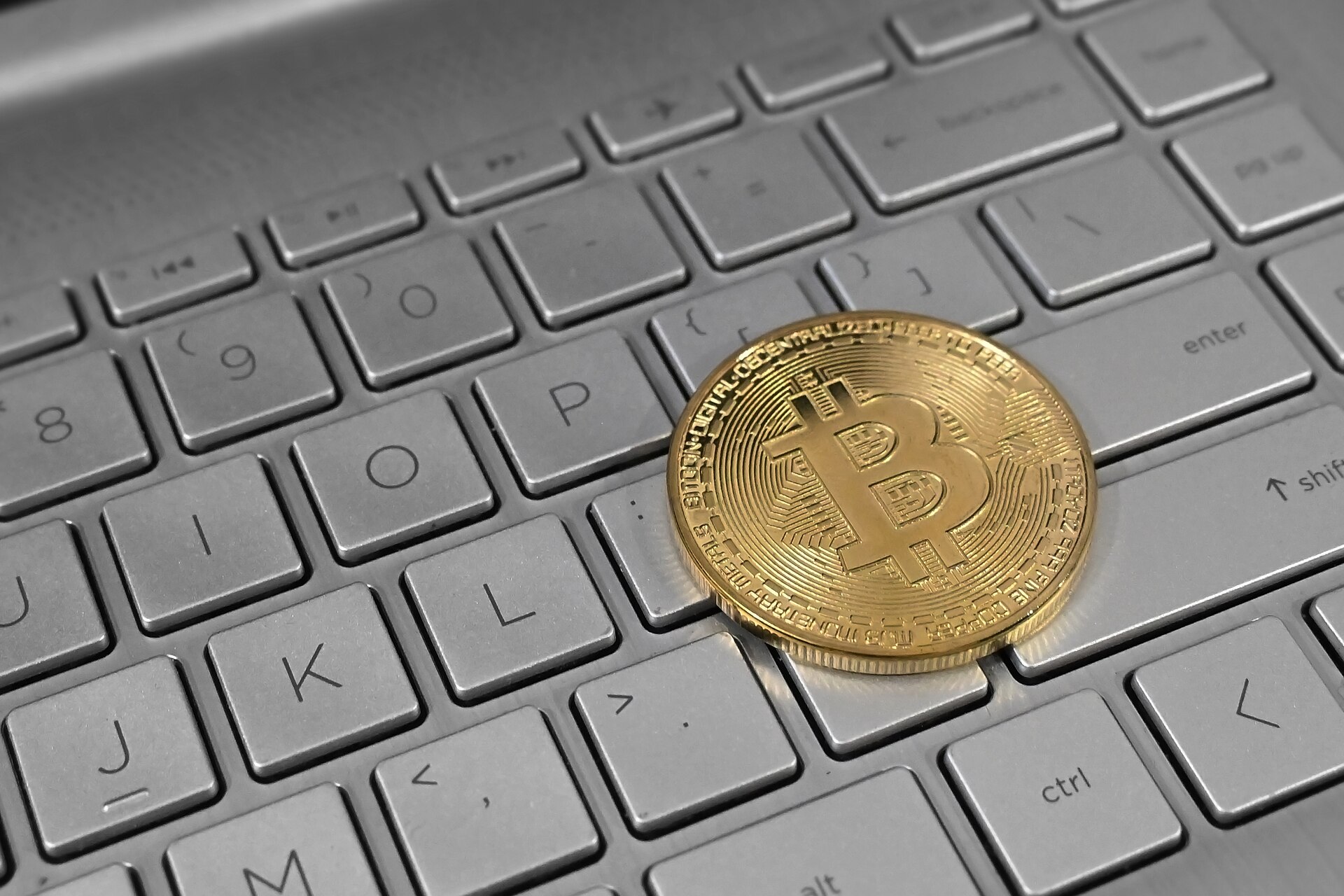
01 The session in one read
Bitcoin closed at US$84,035 on Friday, September 25, down 0.41% and broadly flat after an early dip below US$84,000. The anchor was Wednesday’s US purchasing-managers survey at 58.4, which kept the odds of a Federal Reserve rate increase in October near 70%, according to futures-based estimates in market reports.
That macro squeeze kept Treasury yields near their highest since 2007 and capped Bitcoin’s upside, but it did not produce a sell-off. Solana climbed 4.27% to US$122.01 and XRP added 2.30% to US$1.5684, rotation that suggests traders were repositioning rather than fleeing.
Bitcoin’s refusal to break down despite higher US yields and a major exchange hack shows underlying demand, but sideways trading is likely until the Federal Reserve’s October decision is priced in. The variable to watch is the US 10-year yield, near its highest since 2007: further rises would pressure Bitcoin and Ethereum more than Solana or XRP, which are trading on their own momentum.
02 The board
Ethereum closed at US$2,690, up just 0.12%, lagging the smaller majors but refusing to break lower. The real story on the board is dispersion: Bitcoin and Ethereum traded essentially flat while Solana and XRP caught bids, the classic signature of capital rotating down the risk curve within crypto.
The board shows spot prices for the four largest traded coins. The day’s price action shows no broad conviction, only selective appetite for the more volatile names.
| Asset | Level | Change |
|---|---|---|
| Bitcoin | US$84,035 | -0.41% |
| Ethereum | US$2,690 | +0.12% |
| Solana | US$122.01 | +4.27% |
| XRP | US$1.5684 | +2.30% |
Source: RT close, 2026-09-25. Where a commodity has no spot feed, an exchange-traded tracker or leading producer is shown as a labelled proxy.
Live Market IntelligenceThe live market board
Rio Times · Live Market Intelligence
Latin America — Cross-Market Board
| Instrument | Last | Change | YoY | Prev. | High | Low | Volume |
|---|---|---|---|---|---|---|---|
| IBOV | 183,476.86 | -0.27% | +21.85% | 183,965.91 | 168,310 | 167,142 | — |
| IPSA | 11,255.90 | -0.39% | — | 11,299.82 | 11,210 | 10,984 | 1,513,213,483 |
| IPC MEX | 64,651.92 | +0.60% | +12.17% | 64,264.16 | 66,121 | 65,405 | 108,886,187 |
| MERVAL | 2,893,751 | -1.57% | +30.51% | 3,022,485 | 3,042,365 | 2,991,150 | — |
| COLCAP | 2,584.72 | -0.95% | — | 9.04 | 9.05 | 9.02 | 4,133 |
| BVL PERÚ | 59,934.37 | +1.27% | — | — | — | — | — |
| USD/BRL | 5.16 | +0.01% | -5.13% | 5.16 | 5.18 | 5.14 | — |
| EUR/BRL | 5.95 | +1.01% | -5.83% | 5.89 | 5.98 | 5.94 | — |
| USD/MXN | 17.06 | -0.24% | -8.58% | 17.10 | 17.08 | 17.01 | — |
| USD/CLP | 913.98 | +0.04% | -5.67% | 913.65 | 915.11 | 906.68 | — |
| USD/COP | 3,140 | +0.03% | -22.04% | 3,139 | 3,141 | 3,105 | — |
| USD/PEN | 3.36 | -0.66% | -4.82% | 3.38 | 3.38 | 3.35 | — |
| USD/ARS | 1,493 | +0.10% | +12.96% | 1,491 | 1,494 | 1,480 | — |
| USD/UYU | 40.27 | +1.24% | +1.80% | 39.77 | 40.27 | 40.23 | — |
| USD/PYG | 5,939 | +1.68% | -19.54% | 5,841 | 5,939 | 5,925 | — |
| USD/BOB | 11.64 | -0.76% | +72.04% | 11.73 | 11.72 | 11.64 | — |
| USD/DOP | 58.34 | +1.25% | -3.44% | 57.62 | 58.34 | 58.04 | — |
| USD/CRC | 445.92 | +0.89% | -9.71% | 441.97 | 448.50 | 445.92 | — |
03 What moved it
The dominant driver was US macro. Wednesday’s purchasing-managers index at 58.4 suggested the economy is still running hot, keeping the odds of a Federal Reserve rate increase in October near 70%. Higher rate expectations make holding non-yielding assets like Bitcoin less attractive relative to dollars and Treasuries.
The second driver was the Bitget hack, detected late on Thursday, which the exchange first put at US$351.6 million and later reports put at about US$387.5 million. Attackers drained hot and warm wallets across multiple blockchains, while cold wallets were not affected.
Circle and Tether froze about US$318,000 in stablecoins tied to the attacker. Much of the stolen EVM-chain loot had already been swapped into about 67,982 ETH, worth roughly US$183 million according to on-chain trackers, and issuers cannot freeze ETH.
On Thursday the Federal Reserve also proposed stablecoin rules under the GENIUS Act, requiring issuers it supervises to back tokens fully with safe assets and meet capital standards. The proposals are open for public comment and are a structural positive for stablecoin credibility, but macro pressure dominated price action.
04 The Latin American read
The session’s centre of gravity for Latin America is not Bitcoin’s US$84,035 close but the stablecoin news. The Federal Reserve’s proposals under the GENIUS Act would create a formal framework for banks to issue stablecoins, which matters deeply to a region where stablecoins have become the default dollar substitute.
Central-bank data show stablecoins represented 98% of US$6.9 billion in Brazil’s first-quarter 2026 crypto turnover, supported by Pix instant payments and central-bank virtual-asset rules that took effect on February 2, 2026.
In Argentina, USDT and USDC accounted for more than 70% of crypto purchases on Bitso in 2025, according to the exchange’s Crypto Landscape in Latin America report.
El Salvador’s state treasury holds more than 7,700 BTC, and digital-currency remittances reached US$35.4 million in the first half of 2026, up 39.1% but still only 0.7% of the total, according to the central bank. Across Latin America, Chainalysis reported on September 23 that stablecoins accounted for 32.1% of cross-border crypto value by June 2026.
05 The names to watch
Circle and Tether are the names that mattered on Friday, because their freeze of US$318,000 in USDC and USDT tied to the Bitget attacker showed both the power and the limits of centralised stablecoin control. Much of the stolen loot escaped into ETH, which issuers cannot freeze, a reminder that not all crypto rails are the same.
The Federal Reserve is the other name to watch, because its proposed rules on reserves, redemptions and bank issuance under the GENIUS Act will determine whether stablecoins become a legitimised part of the US financial system. That in turn affects how Brazilian and Argentine users access dollar-linked savings and payments.
06 The outlook
Bitcoin’s failure to break lower despite Treasury yields near their highest since 2007 and the Bitget hack is quietly constructive, but the next move depends on the Federal Reserve’s October meeting. With rate-hike odds near 70%, any further strength in US economic data would tighten the screw on Bitcoin and Ethereum.
The rotation into Solana and XRP may continue near-term as traders look for returns away from the macro-sensitive heavyweights, and the stablecoin regulatory push under the GENIUS Act is a long-run tailwind for Latin American dollar access. The near-term risk is a hawkish Federal Reserve, the near-term opportunity is the formalisation of stablecoin rails.
07 What to watch
- US 10-year Treasury yield: It closed Friday at 5.165%, just below Thursday’s 5.205%, near its highest since 2007; further rises would pressure Bitcoin and Ethereum more than Solana or XRP.
- Federal Reserve stablecoin rules: The GENIUS Act proposals on reserves and bank issuance will determine how Latin American stablecoin rails evolve.
- Bitget hack fund flows: Much of the stolen loot was swapped into ETH, which issuers cannot freeze, and tracing where they ultimately settle may reveal broader liquidity stress.
- Bitcoin’s US$85,000 line: Bitcoin closed 0.41% lower at US$84,035; a daily close above US$85,000 would signal the macro overhang is absorbed.
Frequently Asked Questions
Why did Bitcoin fall on Friday when Solana and XRP rose?
Strong US business-activity data released on Wednesday kept the odds of an October Federal Reserve rate increase near 70%, according to futures-based estimates in market reports, which weighed on Bitcoin. Traders rotated into smaller, higher-beta tokens like Solana and XRP.
What was the Bitget hack and why does it matter?
Attackers drained Bitget’s hot and warm wallets across multiple blockchains, with losses first put at US$351.6 million and later reported at about US$387.5 million; cold wallets were not affected. Circle and Tether froze only about US$318,000 because much of the stolen loot had already been swapped into ETH, which issuers cannot freeze.
How do stablecoins affect Latin America?
Chainalysis reported that stablecoins accounted for 32.1% of Latin America’s cross-border crypto value by June 2026, and central-bank data show they made up 98% of Brazil’s first-quarter 2026 crypto turnover. They function as dollar-linked savings and payment instruments.
What are the Federal Reserve’s proposed stablecoin rules?
Under the GENIUS Act, the Fed proposed on Thursday, September 24, that issuers it supervises back tokens fully with safe assets and meet capital standards. It also proposed an application process for banks it supervises to issue stablecoins.
Market data: RT live market data
This article was produced by The Rio Times’ automated newsroom system. How we use AI · Report an error
LatAm Markets: Live Signals → — real-time movers, turnover leaders and FX across Latin America.
Read More from The Rio Times