Ecuador Declares Partial State of Emergency to Combat Drug Violence
Ecuador has taken a bold step to address rising drug-related violence. President Daniel Noboa declared a partial state of emergency on Thursday, October 3, 2024.
This measure affects Quito and six of Ecuador’s 24 provinces. The decision aims to curb the growing threat from drug trafficking groups.
The state of emergency will last 60 days. It covers key areas including Guayas, Manabí, Los Ríos, Santa Elena, El Oro, and Orellana.
Quito and the canton of Camilo Ponce in Azuay are also included. This move marks a significant effort to combat organized crime.
A curfew has been implemented alongside the emergency declaration. Twenty localities will observe this curfew from 10:00 PM to 5:00 AM for 60 days.
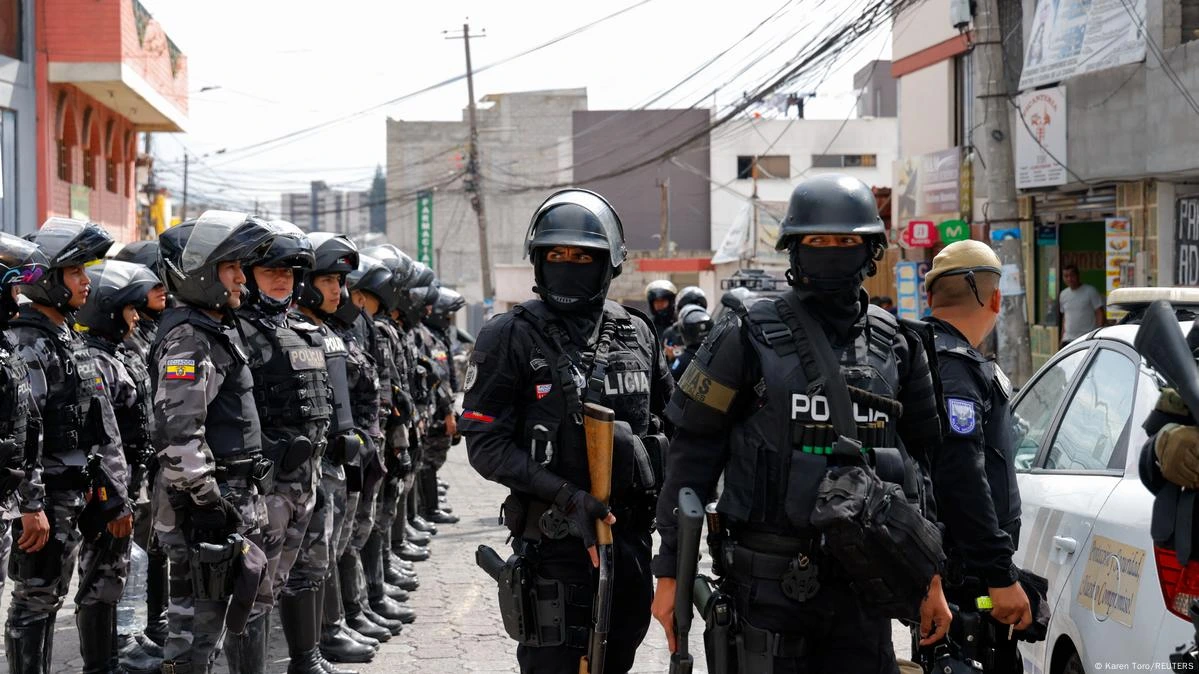
Essential services will continue to operate during these hours. The curfew aims to reduce nighttime criminal activities and protect citizens.
Ecuador’s struggle with drug-related violence has intensified recently. The country’s Pacific coast location makes it attractive to drug traffickers.
Rising Violence and Drug Trafficking in Ecuador
Criminal groups use Ecuador to transport cocaine from Colombia and Peru. This has led to violent clashes between rival gangs. The violence has also affected Ecuador’s prisons.
Since 2021, over 460 inmates have died in brutal massacres. These incidents highlight deep-rooted problems in the correctional system. They also show the influence of organized crime within prisons.
President Obama’s administration has taken a strong stance against these criminal organizations. The government has declared an “internal armed conflict” in the country.
This allows military intervention to restore order on the streets. The approach includes mobilizing armed forces and implementing stricter security measures.
Recent events underscore the urgency of the situation. On January 9, 2024, at least 11 people died due to criminal gang activities across Ecuador. This incident likely influenced the decision to declare a state of emergency.
Ecuador’s efforts to combat drug trafficking have regional implications. Neighboring countries and international partners are closely watching the situation.
The outcome could impact the broader fight against the global drug trade. As Ecuador implements these measures, the government faces a delicate balancing act.
It must address immediate security threats while respecting civil liberties. Long-term solutions are also needed to address the root causes of violence and organized crime.
More: Ecuador news in English, every day from The Rio Times.
This article was produced by The Rio Times’ automated newsroom system. How we use AI · Report an error · Editorial responsibility: Matthias Camenzind, Editor-in-Chief