China Targets U.S. Defense Firms Amid Rising Tensions Over Taiwan
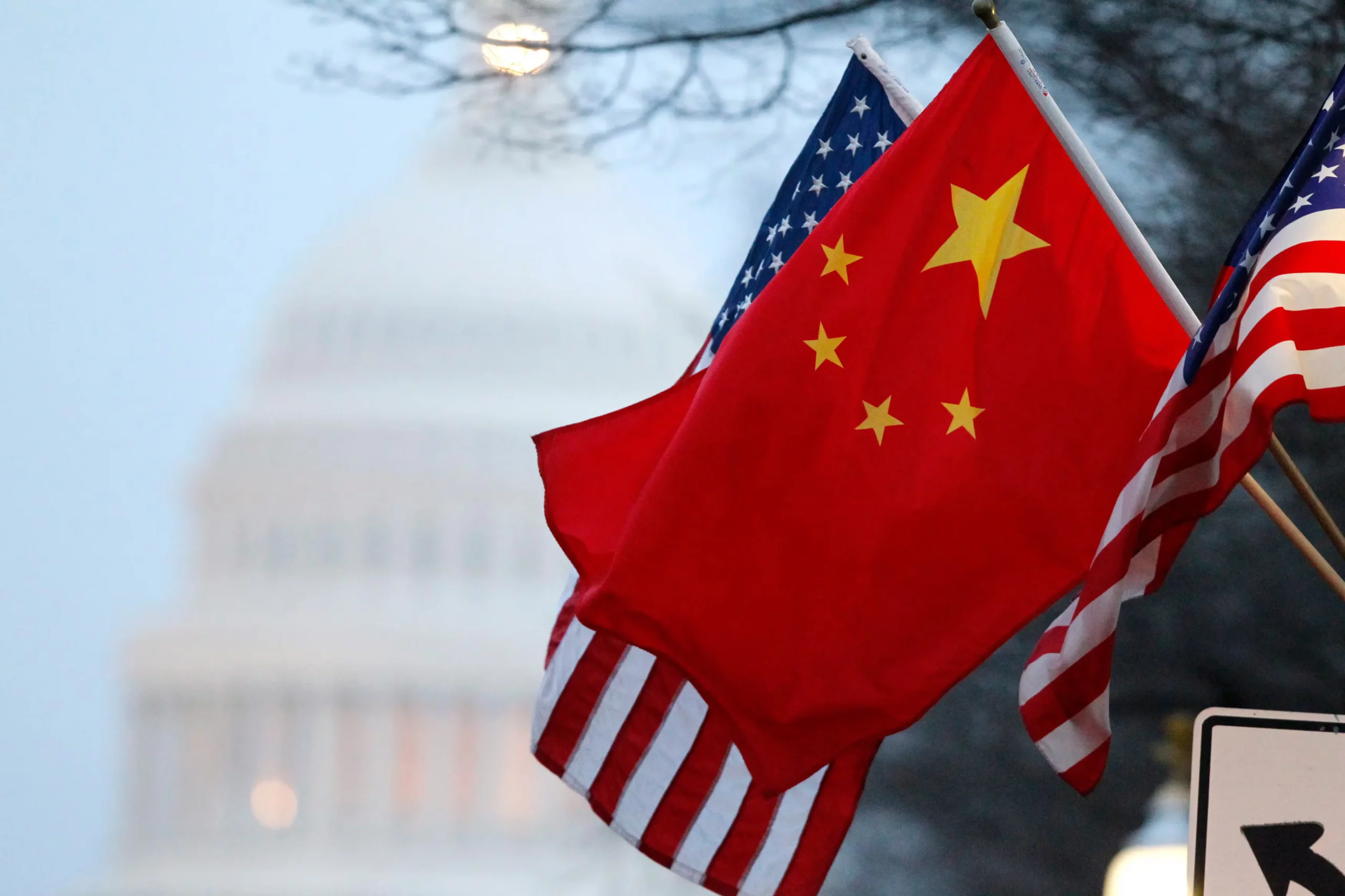
China has imposed sanctions on 13 American defense companies in retaliation for a recent $385 million arms deal between the U.S. and Taiwan.
This deal, which includes spare parts and support for F-16 fighter jets, is seen by China as a direct challenge to its claims over Taiwan, a territory it considers a breakaway province.
The companies affected by these sanctions include Teledyne Brown Engineering, BRINC Drones, and Shield AI. The sanctions freeze their assets in China and restrict the business activities of six executives from major firms like Raytheon and BAE Systems, limiting their travel to China.
These actions underscore the escalating tensions between the U.S. and China regarding Taiwan. Historically, the U.S. has supported Taiwan’s defense, a practice that has intensified under the Biden administration.
[arve url=”https://www.riotimesonline.com/wp-content/uploads/1733/27/China-US-2.mp4″ /]
China’s Foreign Ministry argues that these sanctions are essential for protecting its sovereignty. As Taiwan strengthens its international ties, including recent diplomatic visits by President William Lai, China’s firm stance indicates its resolve.
It aims to counter perceived threats to its territorial integrity. This situation highlights the delicate balance of power in East Asia and raises significant concerns about regional stability.
China Targets U.S. Defense Firms Amid Rising Tensions Over Taiwan
Beyond Taiwan, the U.S. and China are also engaged in a broader conflict over technology and trade. The first circuit of sanctions focuses on semiconductors, with the U.S. imposing strict export controls to limit China‘s access to advanced chip technology.
Recently, the Biden administration targeted 140 Chinese firms to curb their technological advancements. Additionally, a third circuit is emerging around critical materials necessary for semiconductor production.
China has recently restricted exports of essential minerals like gallium and germanium to the U.S., vital for manufacturing high-tech products. These interconnected sanction circuits reflect a complex struggle for technological dominance.
They also highlight the geopolitical influence between the two nations. As tensions rise, the implications for global trade and security become increasingly significant, shaping the future dynamics of U.S.-China relations.
China Targets U.S. Defense Firms Amid Rising Tensions Over Taiwan
This article was produced by The Rio Times’ automated newsroom system. How we use AI · Report an error · Editorial responsibility: Matthias Camenzind, Editor-in-Chief