Chancellor Merz’s Gambit: Can Germany Lead NATO Without Losing Europe’s Trust?
(Analysis) Chancellor Friedrich Merz’s government faces mounting scrutiny over its sweeping military reforms, a response to NATO’s call for heightened readiness against Russia’s expanding war economy.
While critics warn the policies risk reviving historical tensions, Merz insists the measures are essential to counter a Kremlin producing artillery shells at seven times NATO’s capacity.
The Bundeswehr’s overhaul follows NATO’s 2023 declaration of a “fundamentally altered security landscape” after Russia’s full-scale invasion of Ukraine.
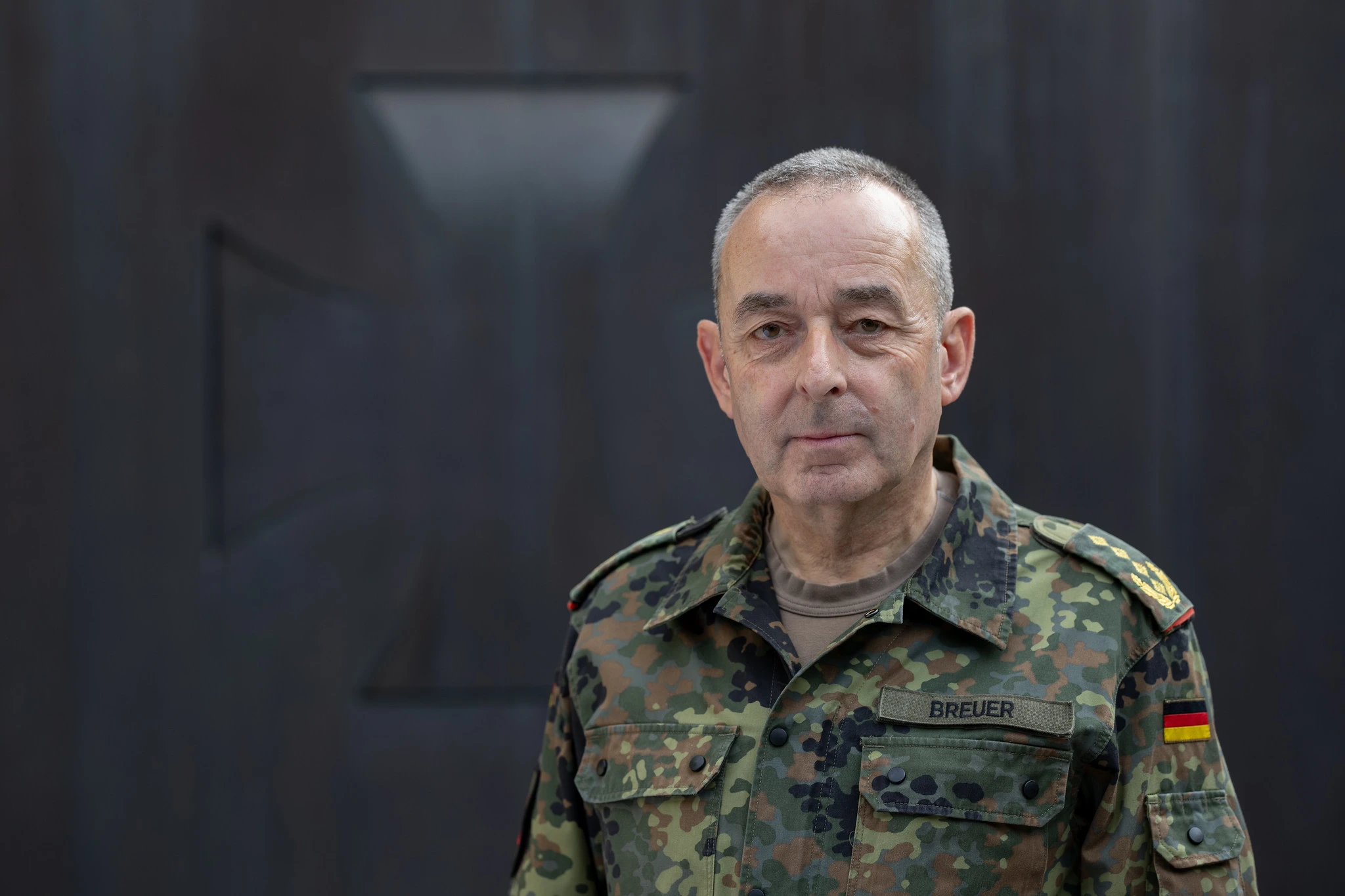
General Carsten Breuer’s directive, signed May 19, 2025, mandates full operational readiness by 2029, including quadrupled air defenses and long-range strike capabilities.
Germany met NATO’s 2% GDP defense spending target in 2024 (€90 billion), but Merz now champions a contentious 5% target by 2032, aligning with proposals endorsed at May’s NATO summit.
Lithuania Deployment Stirs Debate
A permanent deployment of 4,800 troops to Lithuania’s Rudninkai base—Germany’s first foreign garrison since World War II—has drawn mixed reactions. The €1.5 billion project, set for completion by 2027, includes rail upgrades and housing.
Lithuanian officials project a €5 billion GDP boost from Germany’s planned military base, a landmark foreign deployment marking Berlin’s post-1945 policy shift.
Separately, Russia stationed 600,000 troops near Finland’s border in 2023, a direct response to its NATO accession that brought the alliance within 830 miles of St. Petersburg, per a 2025 Finnish intelligence report.
Treaty Tensions
Defense Minister Boris Pistorius’s controversial proposal to reintroduce conscription by 2026—a cornerstone of Merz’s plan to expand the Bundeswehr to 460,000 troops—has intensified scrutiny of Germany’s compliance with the 1990 Two Plus Four Agreement.
The treaty, negotiated with Russia, France, the U.K., and the U.S., caps Germany’s military at 370,000 personnel. Exceeding this limit would require renegotiation, a process Pistorius acknowledged as “diplomatically fraught” during a recent Bundestag hearing.
Russia vetoed a similar troop-increase proposal in 2021, citing treaty violations, and has signaled opposition to Merz’s current agenda.
Meanwhile, 65% of Bundestag lawmakers rejected the conscription push in May 2025 debates, arguing it risks reviving Cold War-era distrust and would breach the Two Plus Four framework without Allied consensus.
Economic Fallout
The EU’s trade with Russia has plummeted to 3% of total exports, down from 8% before the Ukraine invasion, European Commission data shows.
Germany’s €60 billion automotive sector remains vulnerable to potential Russian energy cuts, which could spike gas prices by 70%.
Border Tensions Rise as Finland’s NATO Membership Forces Russian Military Response
Meanwhile, Rheinmetall’s unconfirmed €10 billion defense contracts—potentially creating 10,000 jobs—highlight the uneasy balance between economic gains and ethical debates over militarization.
The Nord Stream Wildcard
German prosecutors complicated Merz’s narrative in June 2024 by implicating Volodymyr Z, a Ukrainian national, in the 2022 Nord Stream pipeline sabotage while finding no evidence of state involvement.
This revelation, detailed in a federal investigation report, fueled skepticism among critics who argue the government overstates direct Russian threats.
The doubts intensified after investigative journalist Seymour Hersh alleged in a 2023 Substack report—citing a single anonymous source—that the U.S. orchestrated the sabotage with Norwegian assistance to weaken Europe’s reliance on Russian gas .
Though Hersh’s claims were dismissed by the White House as “complete fiction”, they amplified debates about whether Russia’s role as a geopolitical boogeyman is overstated to justify Germany’s militarization.
Historical Ghosts
Opposition leaders and 80% of citizens (ARD-DeutschlandTrend poll, May 2025) oppose conscription, fearing a return to mid-20th-century militarism.
“We cannot let NATO’s urgency erase 80 years of cautious statecraft,” said Social Democrat leader Lars Klingbeil during a heated Bundestag session.
Historic Shift: German Tanks Return to Russia’s Doorstep After Eight Decades
The Road Ahead
As Russia’s defense budget climbs to an estimated $150 billion (SIPRI, 2024) and NATO conducts its largest Nordic exercises since the Cold War, Germany’s pivot underscores a broader dilemma.
Can Europe deter Moscow without reigniting the very tensions its post-war frameworks sought to contain?
For Merz, the answer lies in artillery stockpiles and Patriot batteries. For his detractors, it rests on diplomacy’s fragile art.
Sources: NATO expenditure reports, SIPRI Military Balance 2024, European Commission trade data, German Federal Prosecutor’s Office.
Chancellor Merz’s Gambit: Can Germany Lead NATO Without Losing Europe’s Trust?
This article was produced by The Rio Times’ automated newsroom system. How we use AI · Report an error · Editorial responsibility: Matthias Camenzind, Editor-in-Chief
Read More from The Rio Times