Agri Business
Business - Brazil
Brazil’s Potential for Agricultural Expansion on Degraded Pastures
·
February 19, 2024
·
2 min read
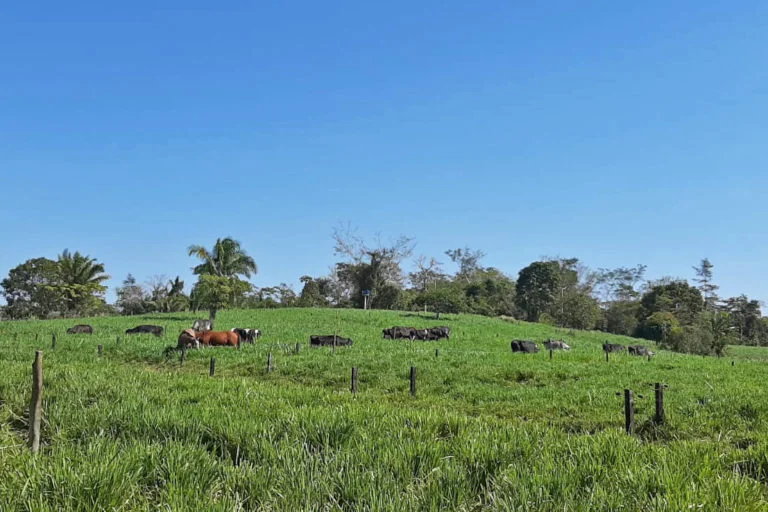
A groundbreaking study by Embrapa, spotlighted in the journal Land, unveils Brazil’s untapped agricultural potential, showcasing about 28 million hectares of underutilized pastures.
Brazil’s pastureland, covering some 177 million hectares, displays a considerable portion afflicted by degradation, undercutting productivity and production capacity.
More: Brazil news in English, every day from The Rio Times.
This article was produced by The Rio Times’ automated newsroom system. How we use AI · Report an error · Editorial responsibility: Matthias Camenzind, Editor-in-Chief
Read next
Most read in BrazilBrazil Election Polls 2026: Runoff Poll TrackerMost read in BrazilSantiago Hailstorm Triggers Chile Red AlertIn depth · BrazilBrazil Economy 2026: GDP, Interest Rate, Inflation, OutlookThe Rio Times · Power Map
See who really holds power in Latin America
Click to open the Power Map →