Brazil’s Coffee Harvest Sees 8% Growth in 2023
Brazil is set to harvest over 55 million coffee bags in 2023, marking an 8% increase from 2022.
The latest estimate from Conab, Brazil’s agricultural agency, reveals a positive trend in coffee production.
This growth is mainly attributed to a surge in the Arabica variety, which is expected to witness a 6.8% increase, constituting 70.6% of the country’s overall coffee output.
In contrast, Conilon coffee production is anticipated to decline by 11.2%, contributing to 29.4% of the total national coffee supply.
Despite the usual biennial low cycle, Brazil’s coffee production in 2023 surpasses that of previous years.
This upturn can be traced back to factors such as reduced rainfall in 2022, prolonged periods of drought, and high temperatures in key coffee-producing regions.
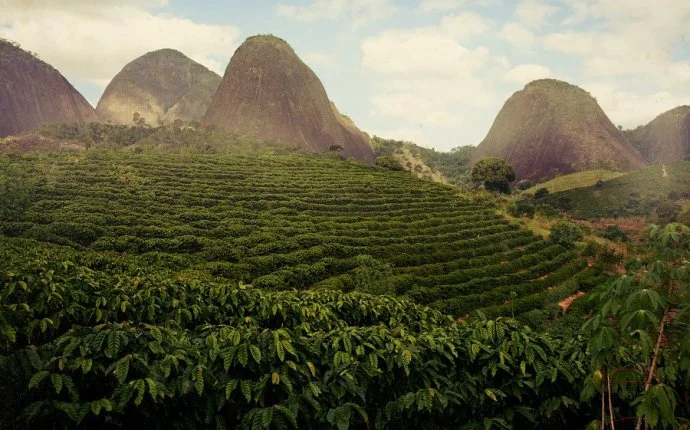
Conab notes that increased coffee production has boosted domestic supply recovery and significantly raised exports from August onward.
As we approach the end of 2023, the volume of coffee exports is expected to come close to the levels seen in 2022.
Examining the cultivation landscape, the total cultivated area has expanded by 1.8% compared to 2022, covering 1.87 million hectares.
Concurrently, the area under formation has decreased by 9.5%, reaching 361.6 thousand hectares.
This results in a nearly stable total area of 2.23 million hectares dedicated to coffee plantations in Brazil, in comparison to the 2.24 million hectares recorded in the previous year.
Total cultivated area has expanded by 1.8%
Noteworthy adjustments have taken place in São Paulo, the third-largest coffee-producing state, where older coffee plantations were eradicated at the end of 2022.
Additionally, those facing climatic challenges over the last two production cycles were also removed.
This initiative, particularly seen in the Franca region, known for its highly technified coffee cultivation, involves a tradition of radical pruning during low-yield crops.
This practice aims to enhance the productivity of coffee plantations in subsequent cycles.
The data highlights how regional methods and external influences shape Brazil’s coffee production.
More: Brazil news in English, every day from The Rio Times.
This article was produced by The Rio Times’ automated newsroom system. How we use AI · Report an error · Editorial responsibility: Matthias Camenzind, Editor-in-Chief