Brazil Markets: Ibovespa & the Real — September 1, 2026
Key Facts
- Ibovespa closes up 1.00% to reach 177,419 points, recovering from a lacklustre August
- Petrobras leads the charge jumping 2.63% to R$49.52, alongside broad gains for Brazil’s big banks
- The real strengthens slightly settling at 5.181 per US dollar, a 0.29% gain on the session
- Materials and banks fuel the rally while retail and discretionary names continue to lag the broader market
- Regional picture is mixed with Mexico’s IPC down 0.67% and Argentina’s Merval up 1.83%
Runoff · Sunday, 25 October
Brazil Runoff 2026: Lula vs Flávio
Date, polls, debates, odds and how the runoff works, updated every day.
Brazil runoff polls · Polymarket and Kalshi odds · When results come
Prediction markets · who wins the runoff
Implied chance of winning Brazil’s presidency on 25 October, from traders’ prices.
Polymarket
Flávio Bolsonaro 77.6% · Lula 21.5% (US$185 million traded)
Kalshi (regulated in the US by the CFTC)
Flávio Bolsonaro 78% · Lula 23%
As of 16 October, 9:00 pm ET (02:00 Lisbon), updated every 20 minutes. Prices are bets, not polls, and can move fast.
Why we show this: prediction markets turn real-money bets into a live probability that moves within minutes of the news, which is why investors, campaigns and newsrooms in the United States now follow them closely. We show them next to polls and official results, never instead of them.
Today’s Focus
Brazil’s main stock index, the Ibovespa, climbed 1.00% to close at 177,419 points on Monday, ending a weak August on a firmer footing. The session was led by heavyweight commodity and financial names, with state-controlled oil giant Petrobras jumping 2.63%.
The real — Brazil’s currency — also firmed, closing at 5.181 per US dollar, a 0.29% gain. This came as global investors took a breather from a run of heavy selling that had pushed the index down 0.33% for the month.
The session’s gains were concentrated in banks and materials, with Banco do Brasil, Bradesco and Itaúsa all rising more than 1%. Retail and consumer names lagged, reflecting continued concern about Brazilian household debt.
What matters today. A classic value-led rebound in Brazil’s heavyweight banks and commodity exporters lifted the main index, even as global stocks were mixed.
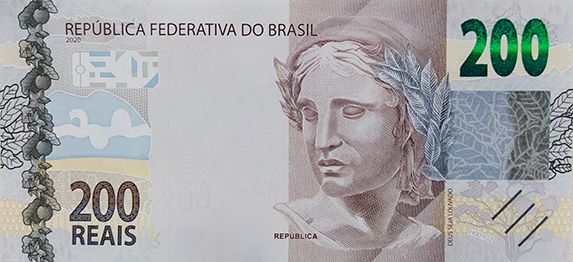
01 The session in one read

São Paulo’s trading floor ended August with a proper bounce. The Ibovespa — Brazil’s benchmark stock index, which tracks the biggest and most traded companies listed on the B3 exchange — rose exactly 1.00% to 177,419 points, clawing back a chunk of the month’s losses.
The gains were reassuringly broad among the market’s heavyweights, but they were not universal. Petrobras, the state-controlled oil producer, and the big retail banks provided most of the muscle.
Yet the session was not a story of a bullish stampede. It was a selective rebound, led by investors buying beaten-down blue chips in materials and finance, while shunning the consumer names that depend on hard-pressed Brazilian households.
For a foreign investor, the takeaway is simple: Brazil’s market can still rally when its commodity and financial giants stabilise, even if the domestic economy looks tired.
The Ibovespa’s 1% rise on the final session of August was a relief but not a reversal of the underlying caution. Local media reports note that foreign investors have been net sellers of Brazilian stocks, and household debt remains a drag on consumption. The rally was narrowly led by a rebound in cheap, liquid blue chips — exactly the kind of move that can fade quickly if global risk appetite worsens. The key variable to watch is whether foreign inflows return in September or whether this was merely end-of-month position squaring.
02 The day’s numbers
| Measure | Level | Change | Read |
|---|---|---|---|
| Ibovespa | 177,419 | +1.00% | A rebound from the weak close of August |
| USD/BRL (the real) | 5.181 | −0.29% | A slightly firmer currency, meaning the dollar buys fewer reais |
| 52-week high | 198,657 | — | The index remains about 10.7% below its 52-week peak |
| 52-week low | 139,864 | — | The market is well above its trough, leaving room for volatility |
| Key technical level | 175,664 | — | The prior close, which the index decisively reclaimed |
The table shows a market that is down significantly from its 12-month high but far from panic territory. The real’s small gain to 5.181 per dollar suggests that currency traders were not chasing the stock rally, but were also not betting against Brazil.
At 177,419, the Ibovespa sits roughly in the middle of its 52-week range. That positioning means the index has plenty of headroom if global sentiment improves, but also space to fall if local fiscal worries intensify. Rio Times · Live Market Intelligence
Live Market IntelligenceBrazil — Live Market Board
Brazil — Live Market Board
Instrument Last Change YoY Prev. High Low Volume
IBOV
205,430.33
+0.54%
+21.85%
204,324.26
168,310
167,142
—
USD/BRL
5.16
+0.01%
-5.13%
5.16
5.18
5.14
—
SELIC
14.00%
—
—
—
—
—
PETR4
41.64
-0.05%
+35.19%
41.66
41.97
41.15
41,499,400
VALE3
72.97
+0.83%
+30.75%
72.37
73.54
72.66
17,658,000
ITUB4
38.60
-1.03%
+4.57%
39.00
39.34
38.39
29,487,800
BBDC4
16.85
+0.36%
+3.50%
16.79
16.90
16.67
19,416,900
BBAS3
19.37
+0.47%
+0.73%
19.28
19.44
19.16
11,069,200
B3SA3
14.26
-0.21%
+12.73%
14.29
14.47
14.11
33,037,800
ABEV3
14.89
-0.80%
+21.91%
15.01
15.07
14.81
16,453,100
WEGE3
47.59
+0.49%
+29.99%
47.36
48.08
47.36
3,364,600
PRIO3
59.14
-0.19%
+50.67%
59.25
59.81
58.74
3,325,600
SUZB3
41.33
+2.35%
-23.55%
40.38
41.48
40.35
3,914,900
RENT3
34.68
-0.09%
+0.84%
34.71
34.96
34.35
7,979,100
AZZA3
15.89
-2.63%
-53.76%
16.32
16.42
15.82
1,330,300
CSNA3
4.30
+0.47%
-42.65%
4.28
4.41
4.26
10,076,100
GGBR4
24.69
+2.19%
+51.38%
24.16
24.85
24.18
7,047,600
ENEV3
24.21
-1.38%
+70.49%
24.55
24.64
23.99
9,297,000
Live Company IntelligencePetroleo Brasileiro Petrobras SA ADR — the full investor dossier
Wall Street view
Valuation & profitability
Price & risk
$10.6552-wk high
$25.96
Revenue trend · 6y
Ownership
Dividend
03 Why it moved — A value-led bounce in banks and oil
The session’s leadership came from the most liquid, cheapest names in the Brazilian market. Petrobras gained 2.63% to R$49.52, helping to carry the index higher. Vale, the giant iron ore exporter, rose a modest 0.80% to R$79.21.
The banking complex also found buyers. Banco do Brasil rose 2.08% to R$20.59, Bradesco gained 1.26% to R$15.23, and Itaúsa — the holding company that controls Itaú Unibanco — advanced 1.24% to R$13.11.
This looks like domestic and foreign investors rotating back into value stocks, which offer cheap valuations and steady dividends. Local media report that foreign investors had pulled money out of Brazilian stocks through much of August, so the rebound may also reflect short-covering.
Yet the market’s confidence is tempered. Brazilian households are heavily indebted — a local survey suggests that debt consumes R$3 of every R$10 of disposable income. That explains why retail and consumer discretionary names lagged, even as banks rose.
04 The day’s movers
| Driver | Level / Move | Change | Note |
|---|---|---|---|
| Petrobras | R$49.52 | +2.63% | The oil major led the blue-chip rebound |
| Banco do Brasil | R$20.59 | +2.08% | State-controlled bank attracted value seekers |
| B3 | R$16.30 | +1.62% | The exchange operator rose in step with trading volumes |
| Bradesco | R$15.23 | +1.26% | Private-sector bank joined the broad bank rally |
| WEG | R$49.68 | −0.60% | Electrical equipment maker bucked the positive trend |
The table tells a clear story: the big banks and commodity names did the heavy lifting. Petrobras was the standout, suggesting energy prices or a re-rating of its valuation supported the move.
Turnover figures for these names were not confirmed in the session scan, but the price action alone shows where buyers were most active. WEG’s small decline is a reminder that not every industrial name participated in the recovery.
05 The regional scoreboard
| Index | Country | Change |
|---|---|---|
| Ibovespa | Brazil | +1.00% |
| IPC | Mexico | −0.67% |
| IPSA | Chile | −1.14% |
| Merval | Argentina | +1.83% |
| COLCAP | Colombia | −1.34% |
Latin America was far from unified on Monday. While Brazil’s Ibovespa rose 1%, Chile’s IPSA fell 1.14% and Colombia’s COLCAP dropped 1.34%, reflecting different local political and commodity exposures.
Argentina’s Merval jumped 1.83%, staying true to its reputation for wild swings. The divergence across the region is a useful reminder that Latin American stocks are not a single trade — local stories matter as much as global ones.
06 The technical picture
The Ibovespa reclaimed its prior close of 175,664 without much trouble, a positive short-term signal. At 177,419, it now sits just under 10.7% below its 52-week high of 198,657, leaving ample room for a move in either direction.
The key test is whether the index can hold above the 175,000-176,000 area. If it does, momentum traders may extend the rebound. A slide back below that would suggest Monday’s rally was little more than month-end bargain hunting.
07 What to watch
- Foreign flows: Whether foreign investors return to Brazilian stocks after heavy selling in August
- Household debt: How consumer-facing stocks respond to Brazil’s high levels of household debt
- Commodity prices: Oil and iron ore prices, which directly affect Petrobras and Vale, respectively
- US dollar: The dollar’s direction against the real, which shapes foreign investor returns
Background: Brazil Markets Rise as Court Halts Oil Export Tax.
More: Brazil news in English, every day from The Rio Times.
Background: our usd brl outlook real focus guide.
Frequently Asked Questions
What is the Ibovespa?
It is Brazil’s main stock market index, tracking the biggest and most traded companies on the B3 exchange in São Paulo.
Why did the real strengthen?
The currency firmed to 5.181 per US dollar as global markets calmed, but the move was modest, suggesting traders remain cautious.
Which stocks led the rally?
Petrobras, Banco do Brasil, Bradesco and B3 were among the strongest names, as investors bought cheap, liquid blue chips.
Was this a turning point for Brazil’s stock market?
Not necessarily. The rebound was narrow and may largely reflect end-of-month position squaring after a weak August.
Ibovespa — Market data: RT; exchange figures from B3
This article was produced by The Rio Times’ automated newsroom system. How we use AI · Report an error · Editorial responsibility: Matthias Camenzind, Editor-in-Chief
LatAm Markets: Live Signals → — real-time movers, turnover leaders and FX across Latin America.