Brazil 6×1 Work Schedule Faces a Decision Week in Congress

BRAZIL · POLITICS
Key Facts
What happened: Lula, Hugo Motta and Davi Alcolumbre agreed on 26 August to push five priority bills through Congress this week.
The big one: The Senate’s constitution committee votes on Wednesday on ending the Brazil 6×1 work schedule, six workdays for one rest day.
What would change: A 40-hour week over five days, two paid rest days and no pay cut, phased in gradually.
The catch: Senate president Alcolumbre has not guaranteed a floor vote, and an amendment needs 49 of 81 senators, twice.
Who pushes back: Industry and commerce groups want the vote after the election and price the change at up to R$267 billion (US$51.6 billion) a year.
What comes next: The Chamber votes Monday on killing the 20 percent “blusinhas tax” on imports under US$50; the measure lapses 8 September.
Brazil’s Congress opens its last full voting week before the October elections on Monday, after a pact between President Lula and the heads of both chambers put the end of the Brazil 6×1 work schedule and the “blusinhas tax” on small imports at the top of the agenda.
A pact at the presidential palace
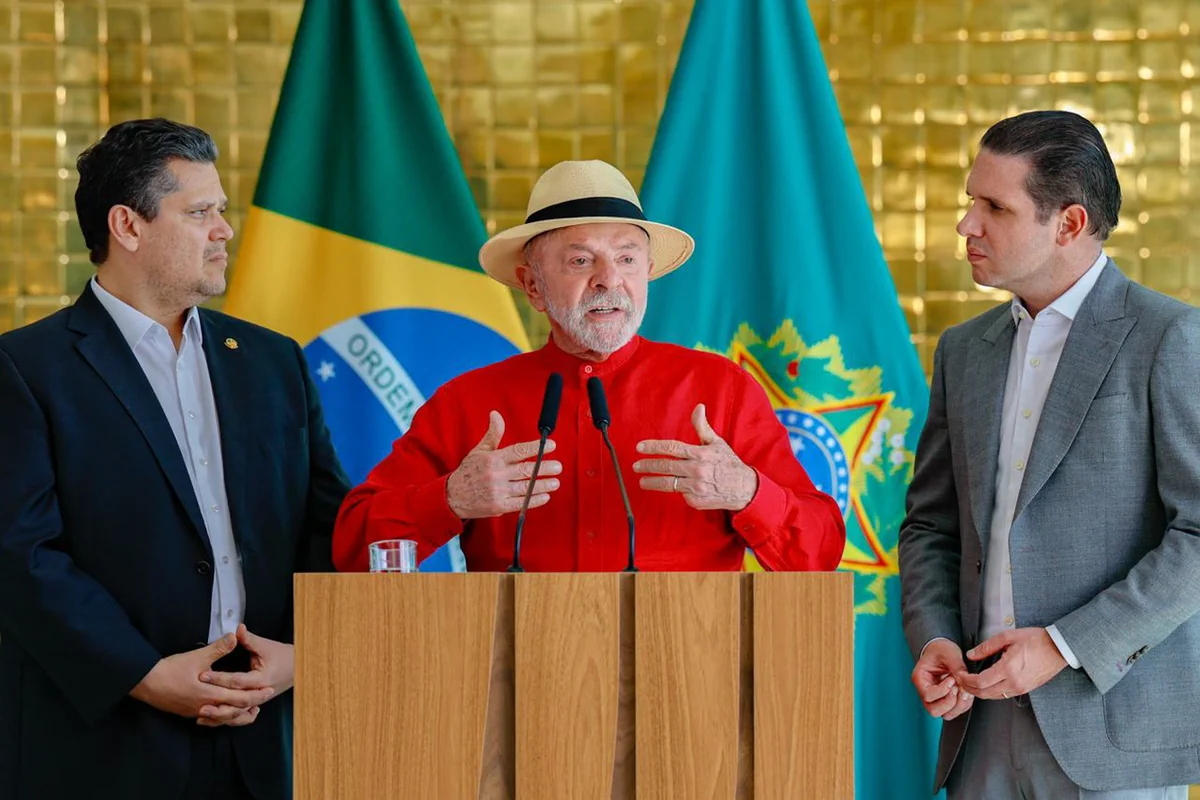
The deal was sealed on Wednesday 26 August at the Palácio da Alvorada, the president’s official residence. President Luiz Inácio Lula da Silva sat down with Chamber Speaker Hugo Motta and Senate President Davi Alcolumbre.
The three men fixed a five-item agenda for the week of 31 August to 4 September. Congress calls this an “esforço concentrado”, a concentrated-effort week with votes scheduled from Monday to Friday.
The list covers the amendment ending the Brazil 6×1 work schedule and a public-security amendment. It adds the measure killing the blusinhas tax, a critical-minerals bill and a tax regime for data centres.
Alcolumbre left the meeting with a public promise. He said the Senate would deliberate these matters during the effort week, the last before the October election.
The meeting mattered because the two men had barely spoken for months. Lula needs Senate movement to turn campaign promises into law before voters cast their ballots.
What ending the Brazil 6×1 work schedule would change
The Brazil 6×1 work schedule means six days of work for one day of rest. It is the standard week in shops, restaurants, pharmacies and private security across Brazil.
The government says about 14 million Brazilians work under it. That is roughly one third of all formal jobs registered in the country’s labour database.
The Chamber of Deputies has already approved the constitutional amendment in two rounds. The votes were 472 to 22 and then 461 to 19, an unusually broad majority.
The approved text sets a maximum week of 40 hours spread over five days. It guarantees two days of paid rest, forbids any salary cut and phases the change in gradually.
We covered the Chamber vote and the Senate’s earlier hesitation. The links sit at the end of this article.
Wednesday in the constitution committee
The next test comes on Wednesday 2 September in the Senate’s Committee on Constitution and Justice, known by its Portuguese initials CCJ. The committee decides whether the Brazil 6×1 work schedule amendment is constitutional before any floor vote.
The rapporteur is Senator Omar Aziz of the PSD party, from Amazonas state. Alcolumbre said Aziz told him the report is being written for presentation on Wednesday.
The opposition can still request a 24-hour review, which would push the committee vote by a day. That is a standard procedural tool and is widely expected.
Here is the catch. Alcolumbre has promised committee deliberation, not a floor vote, and an amendment needs 49 of 81 senators in two separate plenary rounds.
Only weeks ago the Senate president said such amendments would wait until after the election. His language this week was careful: the matter, he said, is now “processing properly” under house rules.
Business wants the vote after the election
The loudest resistance to the Brazil 6×1 work schedule comes from employers. The National Confederation of Industry, the CNI, leads a manifesto signed by 869 business entities, including 27 state industry federations.
The document calls the debate legitimate but asks Congress to postpone the decision until after October. An election-season vote, it argues, pressures lawmakers into a technical decision without technical debate.
The CNI prices the 40-hour week at up to R$267 billion (US$51.6 billion) a year in extra payroll costs. That would raise formal labour costs by as much as 7 percent economy-wide.
Industry alone would absorb around R$88 billion (US$17 billion), an increase of about 11 percent. Commerce and services federations have joined the campaign with their own demands.
Their proposal is a slower law with sector-by-sector and regional adjustments. They point to the pension and tax reforms, which took years of negotiation, as the model to follow.
CNI president Ricardo Alban took the case directly to Speaker Motta earlier this year. Motta promised a balanced process, and the Chamber’s final text already softened the original 36-hour demand to 40.
The blusinhas tax runs against a deadline
The second front is cheaper imports. A provisional measure issued in May, numbered MP 1.357/2026, zeroed the 20 percent import tax on international online purchases worth up to US$50.
Brazilians nicknamed that charge the “taxa das blusinhas”, the little-blouse tax, because it hit cheap clothing bought on foreign apps. The measure loses validity on 8 September if Congress does not convert it into law.
The Chamber votes on the text on Monday, with the Senate to follow. Alcolumbre gave a guarantee on this one: the measure, he said, will not expire.
Domestic retailers want the tax back and warn of job losses, an argument we covered last week. The government reads the exemption as a pocketbook win for lower-income voters, especially women.
What to watch from here
Monday brings the Chamber vote on the blusinhas measure. Wednesday brings the CCJ votes on the Brazil 6×1 work schedule amendment and the public-security amendment.
If the amendment clears the committee, the question becomes the Senate floor calendar. Without an Alcolumbre scheduling decision, the Brazil 6×1 work schedule survives the week unchanged.
If the import measure fails by 8 September, the 20 percent tax returns weeks before the election. No faction in Congress wants to own that outcome.
More: Brazil news, every day from The Rio Times.
Frequently Asked Questions
What is Brazil’s 6×1 work schedule?
It is a pattern of six workdays for one rest day, standard in shops, restaurants and security. About 14 million Brazilians work under it, roughly a third of formal jobs.
What did Lula, Motta and Alcolumbre agree on 26 August?
They set five priorities for the 31 August to 4 September voting week, including the 6×1 amendment and the measure ending the blusinhas tax. It is the last full voting week before the October election.
What would the 6×1 amendment change?
The Chamber-approved text sets a 40-hour week over five days, with two paid rest days and no pay cut. The change would phase in gradually.
What is the blusinhas tax?
It is a 20 percent import tax on online purchases from abroad worth up to US$50. The provisional measure ending it expires on 8 September unless Congress votes it into law.
Will the Senate vote on the 6×1 amendment this week?
The constitution committee votes on Wednesday 2 September. Senate president Davi Alcolumbre has not guaranteed a floor vote, which needs 49 of 81 senators in two rounds.
Connected Coverage
We covered the Senate report stage in Brazil’s Senate Advances the End of the 6×1 Work Schedule, Monday’s Chamber calendar in Brazil’s Chamber Votes Monday to End the Blusinhas Tax and the committee race in Brazil’s Congress Races to Kill the Blusinhas Tax. The retail warning ran in Brazil Industry Warns End of Blusinhas Tax Threatens 109,000 Jobs, and the commuter angle in Ending Brazil’s 6×1 Work Week Could Push Bus Fares Up 8%.
Sources: CNN Brasil, G1, Agência Senado, Congresso em Foco, Estadão, DIAP.
This article was produced by The Rio Times’ automated newsroom system. How we use AI · Report an error · Editorial responsibility: Matthias Camenzind, Editor-in-Chief