IBOV 177,418.78 ▲ 1.00% IPSA 11,315.26 ▼ 1.14% IPC MEX 65,430.32 ▼ 0.08% MERVAL 3,033,848 ▲ 1.83% COLCAP 2,425.08 ▼ 1.33% BVL PERÚ 59,928.30 ▼ 0.80% USD/BRL5.18▲ 0.01% USD/MXN17.00▲ 0.01% USD/CLP933.85▼ 0.04% USD/COP3,210▲ 0.28% USD/PEN3.36▼ 0.13% USD/ARS1,509▼ 0.28% USD/UYU40.29▲ 0.05% USD/PYG5,892▼ 0.13% USD/BOB11.84▲ 0.51% USD/DOP58.64▲ 0.51% USD/CRC446.47▼ 0.04% USD/GTQ7.62▼ 0.02% USD/HNL26.84— 0.00% USD/NIO36.62▲ 0.14% USD/VES796.33▲ 0.29% USD/PAB1.00— 0.00% USD/BZD2.00— 0.00% USD/JMD 157.28 — 0.00% USD/TTD6.69▼ 0.37% EUR/BRL6.01▲ 0.02% BRENT 88.88 ▼ 0.03% WTI 83.11 ▼ 0.11% IRON ORE 161.91 — — COPPER 6.61 ▲ 0.03% GOLD 4,461 ▲ 1.78% SILVER 65.59 ▲ 1.26% SOY 1,184 ▲ 3.20% CORN 480.50 ▲ 10.02% WHEAT 655.00 ▲ 3.93% COFFEE 317.25 ▼ 5.51% SUGAR 16.43 ▼ 1.79% ORANGE JUICE 138.55 ▼ 0.47% COTTON 85.03 ▲ 2.33% COCOA 5,719 ▲ 3.18% BEEF 223.60 ▼ 3.93% CATTLE 339.10 ▼ 3.16% LITHIUM 75.20 ▲ 1.47% PETR4 41.64 ▼ 0.05% VALE3 72.97 ▲ 0.83% ITUB4 38.60 ▼ 1.03% BBDC4 16.85 ▲ 0.36% ABEV3 14.89 ▼ 0.80% BBAS3 19.37 ▲ 0.47% B3SA3 14.26 ▼ 0.21% WEGE3 47.59 ▲ 0.49% PRIO3 59.14 ▼ 0.19% SUZB3 41.33 ▲ 2.35% RENT3 34.68 ▼ 0.09% AZZA3 15.89 ▼ 2.63% CSAN3 3.22 ▼ 1.83% RAIZ4 0.25 — 0.00% PCAR3 2.75 ▼ 0.36% GMAT3 3.65 ▼ 1.08% PSSA3 48.13 ▼ 0.54% CVCB3 1.33 ▼ 2.92% POSI3 3.36 ▲ 2.44% SLCE3 13.34 ▲ 0.30% NATU3 8.14 ▼ 0.73% IBOV 177,418.78 ▲ 1.00% IPSA 11,315.26 ▼ 1.14% IPC MEX 65,430.32 ▼ 0.08% MERVAL 3,033,848 ▲ 1.83% COLCAP 2,425.08 ▼ 1.33% BVL PERÚ 59,928.30 ▼ 0.80% USD/BRL 5.16 ▲ 0.01% USD/MXN 17.06 ▼ 0.24% USD/CLP 913.98 ▲ 0.04% USD/COP 3,140 ▲ 0.03% USD/PEN 3.36 ▼ 0.66% USD/ARS 1,493 ▲ 0.10% USD/UYU 40.27 ▲ 1.24% USD/PYG 5,939 ▲ 1.68% USD/BOB 11.64 ▼ 0.76% USD/DOP 58.34 ▲ 1.25% USD/CRC 445.92 ▲ 0.89% USD/GTQ 7.62 ▲ 2.21% USD/HNL 26.79 ▲ 1.57% USD/NIO 36.62 ▲ 0.69% USD/VES 762.44 ▼ 0.13% USD/PAB 1.00 — 0.00% USD/BZD 2.00 — 0.00% USD/JMD 157.28 — 0.00% USD/TTD 6.70 ▲ 0.61% EUR/BRL 5.95 ▲ 1.01% BRENT 88.88 ▼ 0.03% WTI 83.11 ▼ 0.11% IRON ORE 161.91 — — COPPER 6.61 ▲ 0.03% GOLD 4,461 ▲ 1.78% SILVER 65.59 ▲ 1.26% SOY 1,184 ▲ 3.20% CORN 480.50 ▲ 10.02% WHEAT 655.00 ▲ 3.93% COFFEE 317.25 ▼ 5.51% SUGAR 16.43 ▼ 1.79% ORANGE JUICE 138.55 ▼ 0.47% COTTON 85.03 ▲ 2.33% COCOA 5,719 ▲ 3.18% BEEF 223.60 ▼ 3.93% CATTLE 339.10 ▼ 3.16% LITHIUM 75.20 ▲ 1.47% PETR4 41.64 ▼ 0.05% VALE3 72.97 ▲ 0.83% ITUB4 38.60 ▼ 1.03% BBDC4 16.85 ▲ 0.36% ABEV3 14.89 ▼ 0.80% BBAS3 19.37 ▲ 0.47% B3SA3 14.26 ▼ 0.21% WEGE3 47.59 ▲ 0.49% PRIO3 59.14 ▼ 0.19% SUZB3 41.33 ▲ 2.35% RENT3 34.68 ▼ 0.09% AZZA3 15.89 ▼ 2.63% CSAN3 3.22 ▼ 1.83% RAIZ4 0.25 — 0.00% PCAR3 2.75 ▼ 0.36% GMAT3 3.65 ▼ 1.08% PSSA3 48.13 ▼ 0.54% CVCB3 1.33 ▼ 2.92% POSI3 3.36 ▲ 2.44% SLCE3 13.34 ▲ 0.30% NATU3 8.14 ▼ 0.73%
since 2009
Tuesday, September 1, 2026

Latin America Argentina

Argentine Peso Pauses After Volatile Week While Economic Pressures Persist

By · April 11, 2025 · 2 min read

Daily Brief

The morning intel from across Latin America. Free.

By subscribing you agree to our privacy policy. We never share your email.

Data published on April 11, 2025, at 07:17 UTC shows the Argentine peso held steady against digital dollars at 1,372.22 ARS per USDC. The currency pair registered no change during early morning trading, marking a brief respite from recent market turbulence.

This stability follows a chaotic week that witnessed dramatic price swings, including a steep climb toward 1,400 pesos and an abrupt drop to nearly 1,320 pesos on April 10. Financial experts interpret this pause as a temporary consolidation rather than a meaningful reversal in sentiment.

The peso trades considerably above both its 50-day and 200-day moving averages, continuing the upward trajectory that emerged in late March. Technical patterns indicate persistent pressure despite today’s calm trading session.

The exchange chart displays a consistent series of higher lows and higher highs since late March, revealing ongoing depreciation forces. This pattern reflects deep concerns about Argentina’s economic fundamentals, with inflation surpassing 290 percent annually.

The nation’s dwindling foreign reserves, currently estimated at $26 billion, compound market anxieties and encourage citizens to seek dollar protection. Market participants highlight critical levels to watch in upcoming sessions.
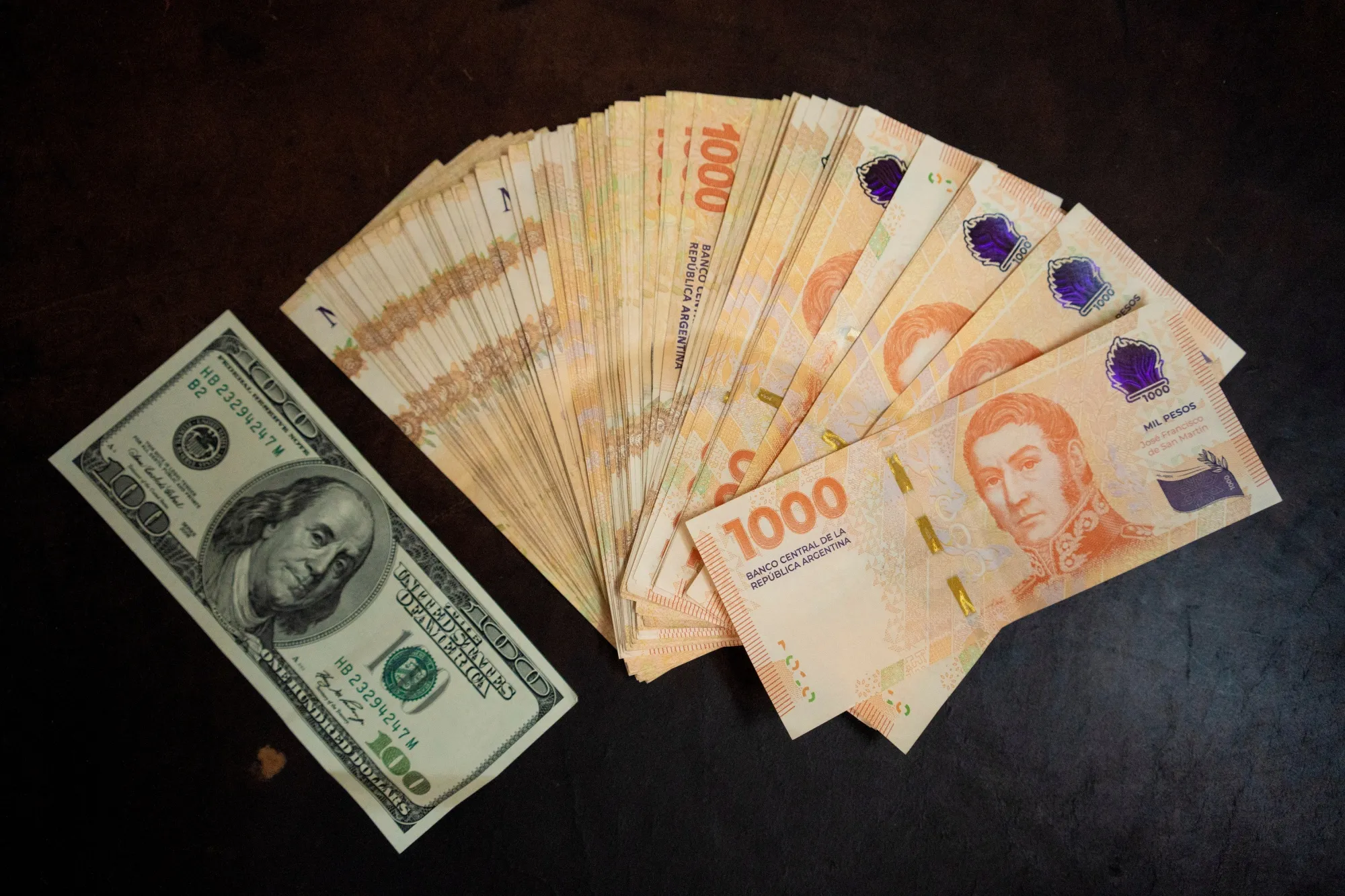
Argentine Peso Pauses After Volatile Week While Economic Pressures Persist
Argentine Peso Pauses After Volatile Week While Economic Pressures Persist. (Photo Internet reproduction)
One-stop reference
Company Intelligence
Every listed company in Latin America — financials, ownership and structure for 1,450+ companies across 26 exchanges, in one place.
Browse the directory →
RT
Ask Rio Times
17 years of Latin America reporting, on demand.
Open the full Ask Rio Times →

Support exists around 1,350 pesos, while resistance remains strong near the recent high of 1,400 pesos. Trading volume increased significantly during recent volatility, indicating heightened institutional interest in Argentine currency movements.

Navigating Structural Issues and External Pressures

Today’s price stability masks deeper structural problems facing Argentina’s currency system. The persistent gap between official and parallel rates creates economic distortions throughout the economy.

This differential encourages capital flight and hampers monetary policy effectiveness for authorities struggling to rebuild market trust. External factors also impact the peso’s performance, as recent dollar strength puts additional pressure on emerging market currencies.

Domestic political developments and negotiations with international creditors, especially the IMF, remain decisive factors that could trigger new volatility. The current consolidation pattern typically resolves with another directional move once market consensus emerges.

Given underlying economic conditions and technical indicators, most analysts anticipate eventual continuation of the upward trend. Currency traders maintain cautious positions while awaiting further economic signals from Argentine authorities.

For ordinary citizens, the weakening peso translates to diminishing purchasing power and financial uncertainty. Many Argentines convert peso savings to dollars whenever possible, perpetuating the cycle of currency depreciation.

This behavior stems from deeply rooted skepticism about long-term peso stability based on historical experience with economic crises and currency devaluations.

The chart shows multiple technical indicators, including moving averages in orange, light blue, and dark blue, confirming the broader uptrend despite short-term fluctuations.

This article was produced by The Rio Times’ automated newsroom system. How we use AI · Report an error

Read More from The Rio Times

The Rio Times · Power Map
See who really holds power in Latin America
Click to open the Power Map

Rotate for Best Experience

This report is optimized for landscape viewing. Rotate your phone for the full experience.