Argentina’s Peso Plunges as Milei Dismantles Currency Controls
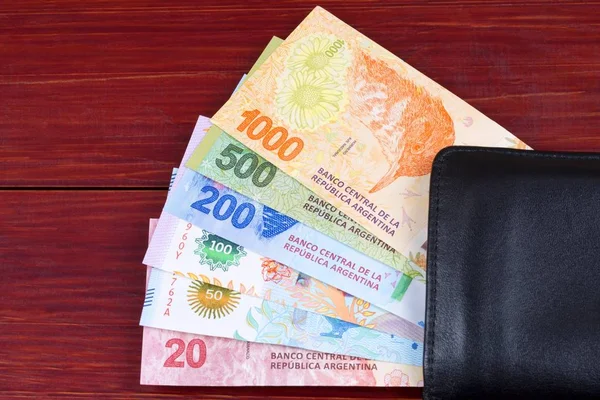
Argentina’s peso tumbled approximately 17% today as President Javier Milei’s government implemented its radical overhaul of the country’s currency system.
The new exchange regime, which took effect today, April 14, 2025, allows the peso to float freely within a band of 1,000 to 1,400 pesos per dollar. This marks the end of the strict currency controls known locally as “el cepo” (the trap).
According to the latest data, the official exchange rate has moved significantly, with the peso now trading at around 1,260 pesos per dollar. This represents a sharp depreciation from Friday’s official rate of 1,097 pesos.
Meanwhile, the parallel “blue dollar” rate, which had been trading at approximately 1,375 pesos before the policy change, has started to converge with the official rate. This aligns with the government’s intentions.
This currency liberalization comes alongside a massive financial support package. The IMF approved a $20 billion extended fund facility on April 11, with an initial disbursement of $12 billion being released immediately to strengthen Argentina’s central bank reserves.
The total financial support package for Argentina in 2025 will reach approximately $28 billion. This includes $15 billion from the IMF, $6.1 billion from other multilateral lenders, and $2 billion from global banks. Additionally, it includes $5 billion from extending a currency swap with China.
The elimination of currency controls represents a dramatic shift in Argentina’s economic policy. For years, Argentinians were limited to purchasing only $200 in foreign currency per month.
This led to the flourishing of the parallel “blue dollar” market, where individuals could exchange currencies at more favorable rates through unofficial channels known as “cuevas” (caves).
Argentina Enters “Phase Three” of Economic Program
Economy Minister Luis Caputo described the move as entering “phase three” of the government’s economic program.
The Central Bank has clarified that the 1,400 pesos upper limit is not a preset exchange rate but the maximum value in a band within which the peso will fluctuate according to market conditions.
While Argentine bonds showed signs of recovery with some maturities gaining over 4 cents on the dollar, concerns remain about potential inflation pressures.
The weaker peso could lead to higher prices for imported goods in the short term. This may potentially increase living costs for Argentinians.
The Milei administration, which took office in late 2023, believes these measures will ultimately unlock economic potential. This potential has been suppressed for decades due to restrictive policies.
The success of this economic overhaul will depend on consistent policy implementation. It will also require the ability to navigate potential social and economic challenges in the coming months.
The international financial community is closely watching Argentina’s economic experiment. It represents one of the most dramatic shifts in economic policy for a major Latin American economy in recent years.
More: Argentina news in English, every day from The Rio Times.
This article was produced by The Rio Times’ automated newsroom system. How we use AI · Report an error · Editorial responsibility: Matthias Camenzind, Editor-in-Chief
In depth