Amazon and Beyond: Brazil Faces Historic Year of Devastating Fires
In 2024, Brazil faced its worst wildfire season ever, according to official data from MapBiomas and the National Institute for Space Research.
Fires burned about 30 million hectares across the country—an area almost as big as Italy. This is 62% more than the average since 1985. The Amazon rainforest suffered the most, with more than half of all burned land—over 15 million hectares—lost to fire.
The Cerrado, a large savanna region, also saw huge losses, making up over a third of the total area burned. The Pantanal, the world’s largest tropical wetland, and the Atlantic Forest, which is already very fragmented, also experienced big increases in burned areas.
Most of the land that burned was native vegetation. Forest areas burned much more than usual, with a 287% increase compared to past years.
Fires were also larger than before. In 2024, nearly a third of the total burned area came from very large fires, each covering more than 100,000 hectares.
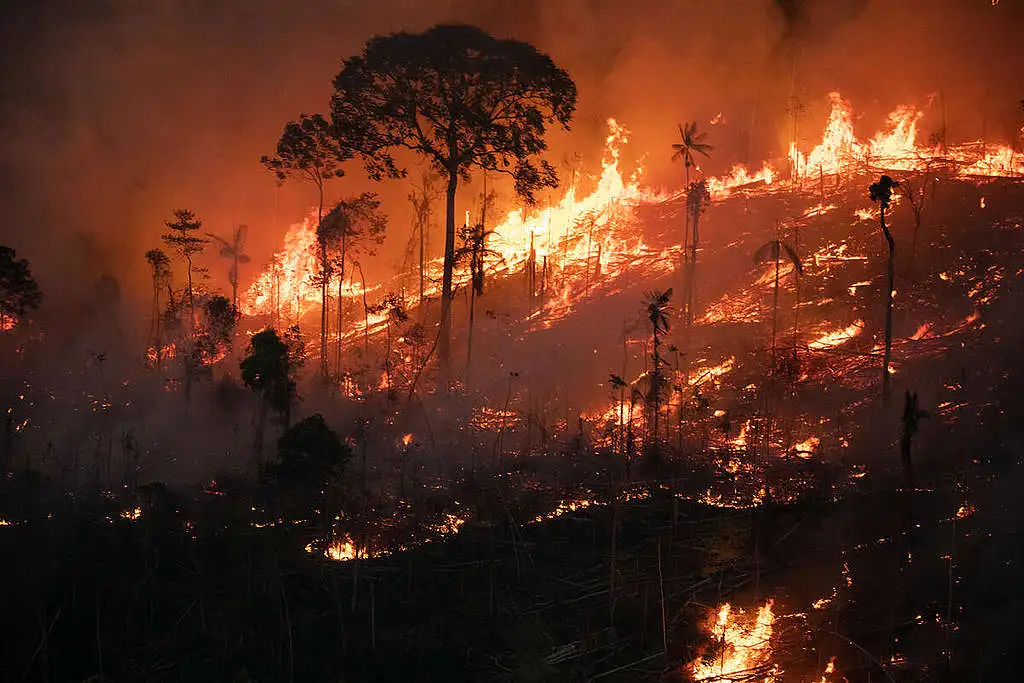
Experts and official reports point to people as the main cause. Most fires started at the edges of forests or near roads, not deep in untouched forest.
This shows that many fires were set on purpose, mainly to clear land for farming and cattle. Severe drought made the problem worse.
Almost 2,000 cities faced extreme drought, which helped the fires spread quickly and made them harder to stop. These wildfires have serious effects. They destroy forests and habitats for many plants and animals.
They also release large amounts of smoke and carbon dioxide, which can harm people’s health and make climate change worse. The fires also threaten Brazil’s farming industry, which is important for the country’s economy and exports.
This article was produced by The Rio Times’ automated newsroom system. How we use AI · Report an error · Editorial responsibility: Matthias Camenzind, Editor-in-Chief
Read More from The Rio Times