Alligator burger? The world’s largest producer of this meat is in Brazil
By Carlos Eduardo Oliveira
At a huge gourmet barbecue event, with dozens of options for hundreds of diners, there is a continuous, endless line, the longest of all.
Around midnight, the movement drops, and it’s time to try to get closer.
But it is no use: the meat is gone. Alligator meat.
The most requested and consumed meat of the day.

Taking this into consideration, the statement made by businessman Raul Amaral makes sense:
“Today, we are the world’s largest producer of alligator meat.”
“The alligator meat is falling in the taste of a part of the Brazilian consumer”.
Amaral is an entrepreneur passionate about the Pantanal and runs Caimasul in Corumbá (Mato Grosso do Sul).
The name is derived from the species caiman, popularly known as the alligator of the Pantanal.
“The caiman is from the same family as the crocodile, only smaller. In our registry, we cannot, for example, work with alligators from other origins, from the Amazon.”
“It is not allowed. It has to be the alligator of the Pantanal”, says Amaral.
It works like this: after a population study in the region to assess the number of existing animals, this spreadsheet is presented to Imasul (which operates in the region as the Ibama), which in turn provides a limit for the extraction of eggs – yes, eggs – since hunting and capture are strictly prohibited in the Pantanal.
EXOTIC BUT MILD FLAVORED
From there, the company has its matrices – today, there are about 1800.
When they are born, all animals, without exception, are registered at Imasul, which counts precisely with how many animals Caimasul works with. Nowadays, the production counts on 70% of animals from egg collection and 30% are born in captivity.
The feeding is a separate chapter. “As crocodilians can’t absorb vegetable protein, we create an animal-based ration, buying pork and cattle slaughterhouse by-products unsuitable for human consumption, and processing them until they become a powder with protein balance”.
Slaughter takes place around two and a half years old when the animals reach seven to eight kilos – and yes, as with cattle, the process has to do with the tenderness of the meat.
“The earlier the slaughter takes place, the better since it limits the incidence of osteoderms in the animal’s skin,” says Amaral. The company has a license to slaughter 100,000 animals a year.

The skin, by the way, is an extremely valued secondary product in Caimasul’s production line: exported to the US, Mexico, and parts of Asia, it originates handbags, wallets, and especially shoes in general.
“We use the animal practically as a whole. The bones and fat, for example, become cat food.
“In my opinion, the great differential is that alligator meat is considered the leanest in the world,” says Amaral.
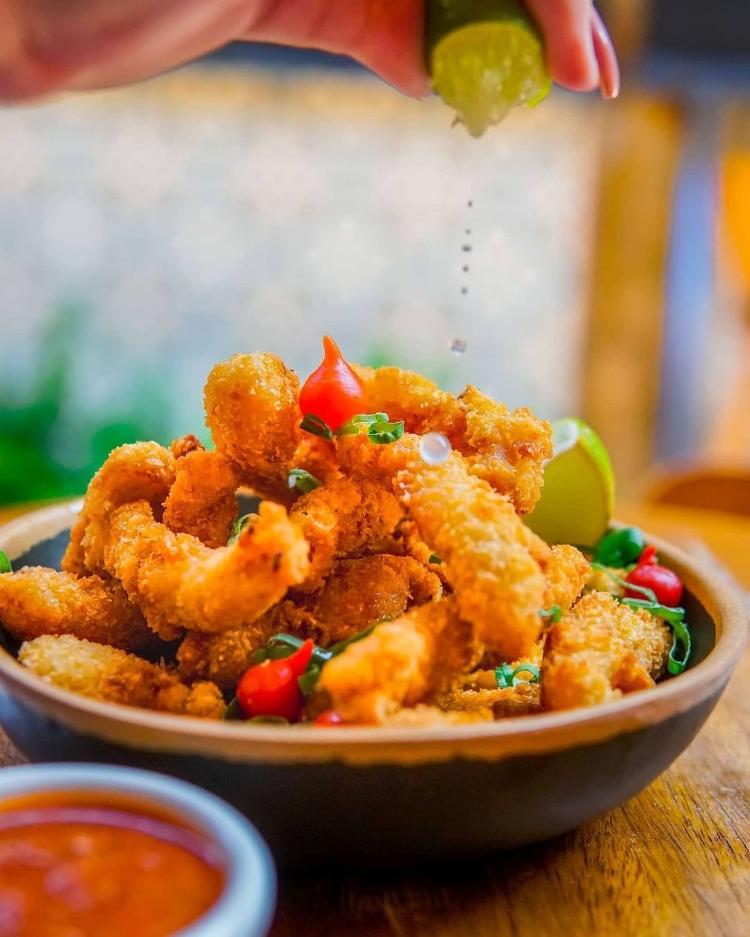
It is white meat, with no fat in between, and has a mild flavor despite being considered exotic. It has 200 times more fiber than salmon and 24% protein, while beef has an average of 20%.
On the grill, in the frying pan, boiled, oven-baked – alligator meat is versatile in its preparation.
“For me, the best seasoning is garlic, olive oil, and a little salt,” teaches the businessman.
By the way, the price is a bit steep: R$160, on average, the packages of 400 grams of filets, distributed and found in delicatessens and boutique units of some major supermarkets.
There is also an industrialized line at Caimasul, which includes pre-prepared skewers, sausages, and, who would say, even alligator burgers.
With information from UOL
This article was produced by The Rio Times’ automated newsroom system. How we use AI · Report an error · Editorial responsibility: Matthias Camenzind, Editor-in-Chief
Read More from The Rio Times