Unpacking Mass Migration from Cuba, Nicaragua, and Venezuela
Under authoritarian shadows, Cuba, Nicaragua, and Venezuela face massive migration waves, reshaping many lives.
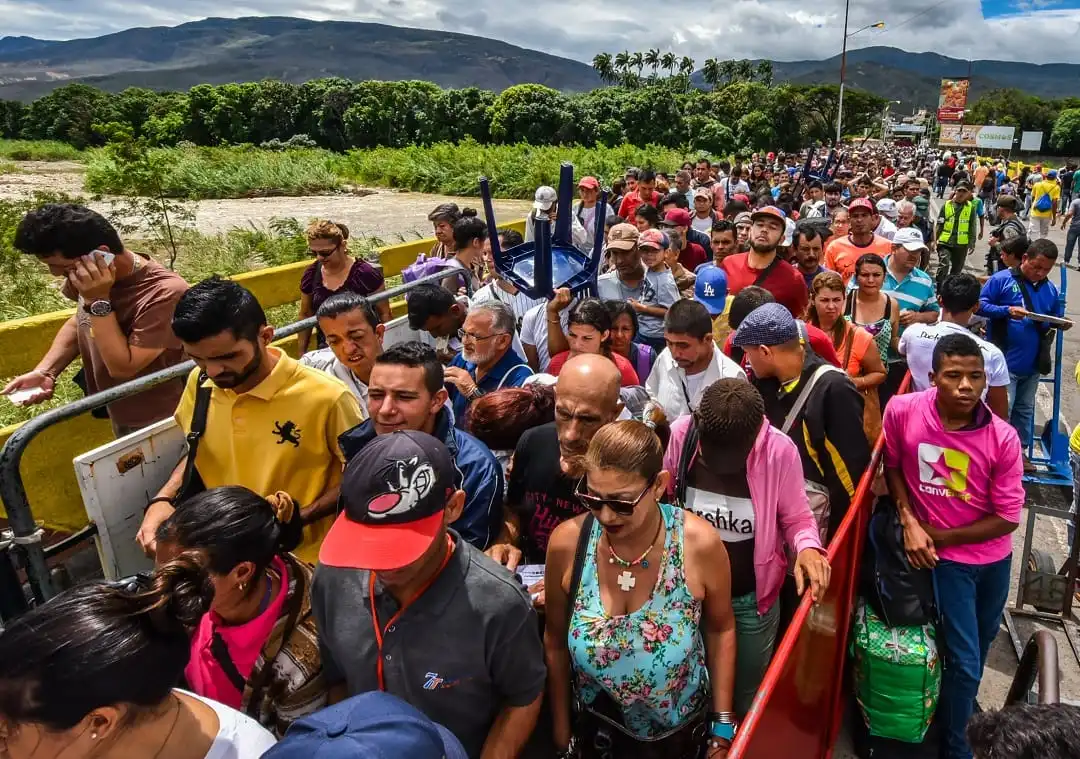
Since 2018, over 7.7 million Venezuelans have fled, as per the UN Refugee Agency. This massive departure ranks as the second-largest globally.
This significant migration trend also affects Nicaragua and Cuba, marking a historic shift.
Specifically, from 2020 to 2023, U.S. Customs and Border Protection detained over 645,000 Cubans. Furthermore, since 2023, another 106,757 Cubans have gained temporary U.S. residency.
These numbers eclipse prior migration events such as the Freedom Flights, the Mariel boatlift, and the 1994 rafters’ crisis.
Cuba currently battles a severe economic crisis and growing dissatisfaction with its government, prompting a notable emigration of its youth and skilled workers.
Remarkably, about 10% of Cuba’s population has left since 2020. In 2022 alone, 33% of these emigrants were professionals or managers, reflecting the national employment ratio.
In Nicaragua, government seizures of educational and cultural institutions have triggered a significant intellectual exodus.
Since the 2018 political crisis, around 700,000 Nicaraguans, or 10% of the population, have emigrated.
These professionals often find themselves barred from career advancement at home, pushing many to depart.
This outflow financially aids the Nicaraguan government via remittances, supporting its weak economy.
However, the diaspora experiences historical disconnection and fear, with their academic and personal records often erased.
Similarly, Venezuela’s latest migration wave primarily includes young adults; over 7.7 million have left, facing reduced educational and professional opportunities abroad.
This demographic shift underscores the urgent need for policies that allow the diaspora to contribute to their homeland’s recovery.
This narrative highlights a profound governance crisis in these nations.
Authoritarianism not only suppresses freedoms but also depletes crucial human resources, leaving significant social and economic impacts and altering millions of futures.
More: Latin America news in English, every day from The Rio Times.
This article was produced by The Rio Times’ automated newsroom system. How we use AI · Report an error · Editorial responsibility: Matthias Camenzind, Editor-in-Chief