Venezuela’s Isolation Deepens as U.S. Confiscates Another Government Jet
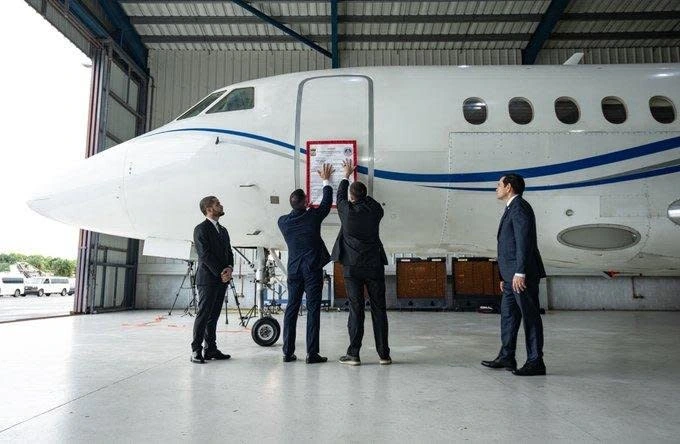
The U.S. confiscated a Venezuelan government jet in the Dominican Republic during Secretary of State Marco Rubio’s regional tour.
This marks Washington’s second seizure of a Venezuelan aircraft in six months, escalating efforts to isolate President Nicolás Maduro’s regime amid stalled diplomatic talks.
Officials targeted a Dassault Falcon 200 owned by state oil firm PDVSA, used by Maduro and aides for trips to Russia, Iran, and Cuba. The U.S. Department of Justice confirmed the plane violated sanctions by using American-made parts after 2017 export bans.
Dominican authorities had grounded the jet since 2023 at Washington’s request, with Rubio approving $230,000 from frozen Venezuelan funds to cover storage costs. This action follows a September 2024 seizure of a $13 million Dassault Falcon linked to a Caribbean shell company.
Both aircraft provided intelligence on Maduro’s inner circle, including VP Delcy Rodríguez and Defense Minister Vladimir Padrino López. Analysts note these moves reflect a broader U.S. strategy to cripple Maduro’s access to global financial systems while gathering leverage for negotiations.
Sanctions have slashed Venezuela’s oil revenue by 99% since 2017, worsening a crisis that displaced 7.7 million people. Though Biden temporarily eased restrictions in 2022 to stabilize energy markets, penalties were reinstated in 2024 after Maduro barred opposition candidates.
Venezuela’s Economic Struggles and U.S. Sanctions
The economic toll—73% GDP contraction since 2013—underscores risks for investors in emerging markets reliant on commodity exports. Days before the seizure, Trump envoy Richard Grenell secured six Americans’ release from Venezuelan detention, signaling tentative diplomatic engagement.
Maduro condemned the plane confiscations as “piracy” but called talks a “first step” toward normalization. Meanwhile, Rubio’s Latin America tour highlighted friction with Panama over Canal fees, revealing challenges in maintaining regional alliances.
For policymakers, the seizures exemplify growing U.S. reliance on extraterritorial asset forfeiture to pressure adversarial regimes. Critics argue such measures disproportionately harm civilians while enabling elite corruption.
With Venezuela’s oil output at a 50-year low, the strategy risks deepening humanitarian crises that drive migration and regional instability. Investors tracking emerging markets should note escalating sanctions’ knock-on effects, from disrupted supply chains to volatile energy prices.
As Maduro eyes 2030 elections, Washington’s dual approach—economic pressure paired with selective diplomacy—will test whether financial isolation can spur political change without exacerbating collapse. The outcome may reshape strategies for engaging sanctioned states globally.
More: Venezuela news in English, every day from The Rio Times.
This article was produced by The Rio Times’ automated newsroom system. How we use AI · Report an error · Editorial responsibility: Matthias Camenzind, Editor-in-Chief