Senegal Warns of Storms Through 6 October as Late Rainy Season Returns
Senegal · AGRICULTURE
Key Facts
- —The country Senegal is a West African coastal state of about 19 million people. Its economy was worth about US$37 billion in 2025, smaller than the US state of Vermont’s.
- —Why it matters Farming is about 17% of output and roughly 30% of jobs, World Bank data show. Most crops depend on the June–October rains, known locally as the hivernage.
- —Why now The season started late and ran short of rain in several farming areas. The state is also in a debt crisis and awaiting final approval of an IMF loan.
- —What happened On 2 October 2026, ANACIM, Senegal’s civil aviation and weather agency, forecast storms nationwide from Friday 2 to Tuesday 6 October.
- —The numbers For 24 to 26 September, ANACIM put Dakar and 15 departments on red alert for over 100 mm (four inches) of rain.
- —What it means for you Expect flooded roads in the east and south and standing water in Dakar’s low-lying districts. Check ANACIM’s daily bulletins before travelling inland.
- —Still open Whether the late rains rescue the harvest, and whether the IMF board approves the US$2.2 billion loan in October.
Senegal’s weather agency says the rainy season is not over. Storms will return nationwide from 2 to 6 October, after weeks of patchy rain.
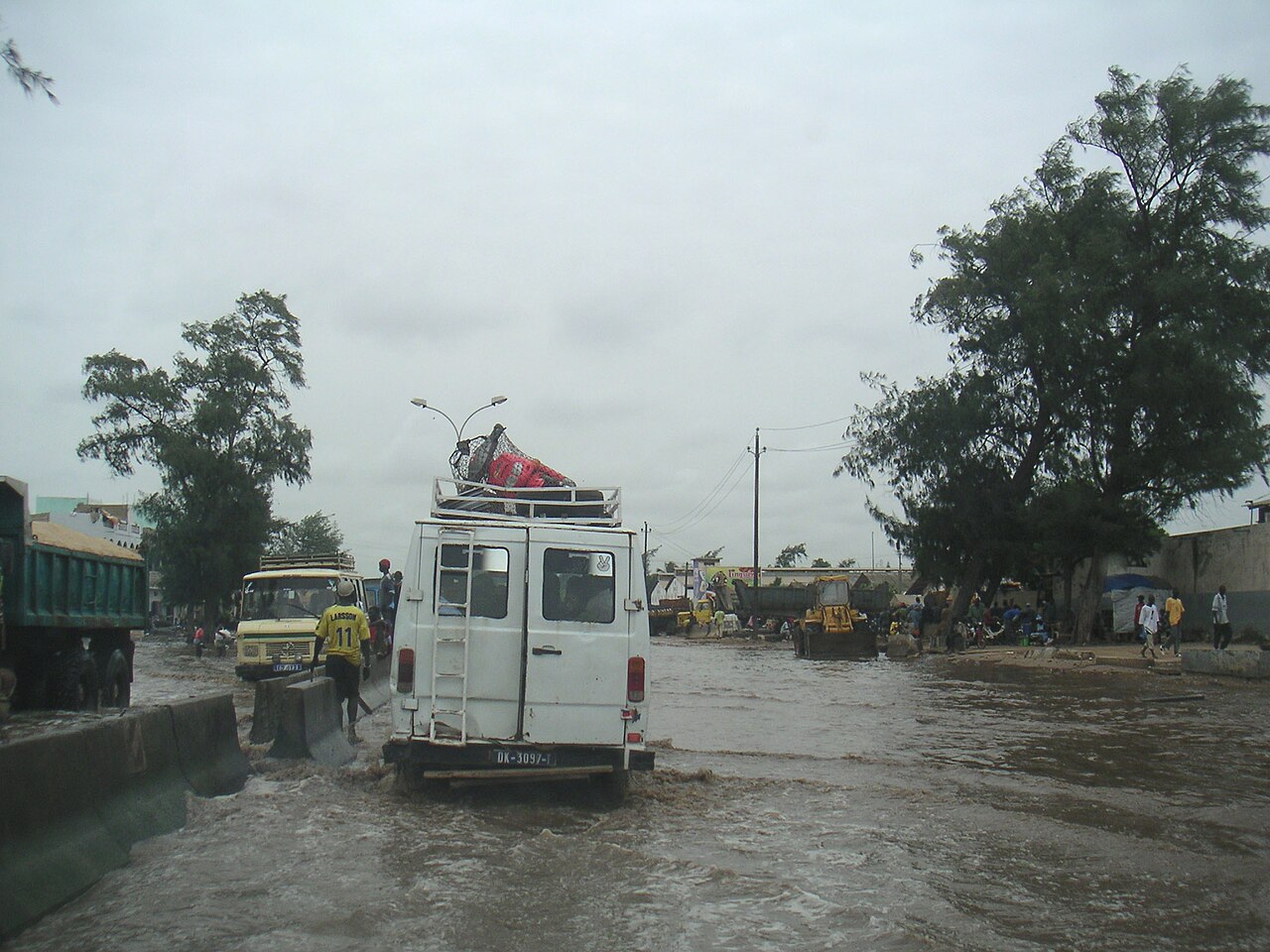
Senegal, a West African country of about 19 million people, relies on a single rainy season to grow most of its food. On Friday 2 October 2026, its weather agency said the Senegal rainy season would bring fresh storms through Tuesday.
The agency is ANACIM, the national civil aviation and meteorology agency. Its forecast matters beyond farming, because a weak harvest would add pressure to a government already in a deep debt crisis.
What ANACIM forecast for 2 to 6 October
ANACIM’s statement was published by the news site Seneweb. Rain and storms would return “after a period marked by sometimes insufficient rainfall in several agricultural zones”, it said.
The first storms were expected on Friday 2 October in the south, around Kédougou, Kolda, Sédhiou and Ziguinchor. The east, around Tambacounda and Matam, was also in the path.
From Saturday 3 to Monday 5 October, the storms were forecast to spread to the whole country. On Tuesday 6 October, weaker rain could still fall on the coast, the centre and the south.
ANACIM said it would publish daily updates from Saturday 3 October. It called the episode a possible “encouraging development” for the farming season and for harvest prospects.
A late and uneven Senegal rainy season
The Senegal rainy season, known locally as the hivernage, normally runs from about June to October. It is the only window for rain-fed crops such as millet and groundnuts.
In May, ANACIM forecast a late start and below-normal rainfall, the state news agency APS and the site PressAfrik reported. In mid-August, its fourth seasonal update warned of a likely deficit in September.
On 18 September, the agency said the season would end in stages. The north, around Saint-Louis and Louga, should dry out in the first half of October.
Dakar, Thiès, Kaolack and the centre should follow around mid-October, and the south and east later that month.
“The drop in storm activity in September does not mean the end of the hivernage,” ANACIM said, according to the news site SeneNews.
Storms have already hit cities and roads
The dry spells have been broken by violent bursts of rain.
For 24 to 26 September, ANACIM put Dakar and 15 other departments on red alert. It forecast more than 100 millimetres (about four inches) of rain.
The red alert covered the capital and its suburbs Pikine and Guédiawaye, as well as Thiès, Mbour, Diourbel, Kaolack and Fatick. The agency warned of floods, standing water in low-lying districts, cut roads and crop damage.
In the east, torrential rain in late September flooded the commune of Bélé, in the Bakel department near the Malian border. The bridge at Diala was submerged on 29 September, cutting villages off from the main national road, Seneweb reported.
This is the pattern ANACIM described in May: a late, deficient season with rain packed into shorter, more intense spells. Hard, dry ground absorbs heavy rain poorly, which raises the risk of flash floods.
Why the rains matter for the economy
Agriculture, forestry and fishing made up about 17% of Senegal’s economic output in 2025, according to World Bank data. The sector employs roughly 30% of workers, a modelled estimate shows.
A poor harvest means more food imports and higher prices for households. It also means pressure for emergency spending at a time when the state has very little room.
Senegal is one of the most indebted countries in sub-Saharan Africa. Total public-sector debt was estimated at 132% of gross domestic product (GDP) at the end of 2024, AFP reported.
The crisis followed the discovery of unreported debt under former president Macky Sall, who governed from 2012 to 2024. A previous US$1.8 billion International Monetary Fund (IMF) programme was suspended as a result.
The IMF deal and the creditors
In early September, Senegal reached a staff-level agreement with the IMF on a three-year loan of about US$2.2 billion, AFP reported. A staff-level deal is a preliminary agreement that still needs the IMF board’s approval.
That approval was expected at or before the IMF’s annual meetings in October.
Senegal also plans to treat its debt under an “enhanced” G20 Common Framework. That is a debt-relief mechanism set up by major economies.
Finance Minister Cheikh Diba said the deal would create room for more social support, AFP reported. But energy subsidies will be limited to families “in need”, so other households will lose that support.
President Bassirou Diomaye Faye, in office since April 2024, also faces political friction. He dismissed prime minister Ousmane Sonko in May, and Sonko now leads the National Assembly, where his Pastef party dominates.
What it means for visitors and investors
For travellers, the next few days bring a real risk of flooded roads in the south and east. In Dakar, heavy storms can leave low-lying districts under water within hours.
For investors, the late-season rain is a swing factor for the harvest, food import needs and the budget. The weather outlook and the debt talks are now closely linked.
What to watch next
ANACIM’s daily bulletins from Saturday 3 October will show how widely the storms spread. The end of the season, expected between early and late October depending on the region, will then set the harvest outlook.
On the finance side, the key test is the IMF board vote on the US$2.2 billion loan. Talks with creditors on how Senegal’s debt will be treated are the next step.
Frequently Asked Questions
What did ANACIM forecast for early October 2026?
ANACIM, Senegal’s civil aviation and weather agency, forecast rain and thunderstorms from Friday 2 to Tuesday 6 October 2026. Storms were to start in the south and east, then spread to the whole country from 3 to 5 October.
When does the Senegal rainy season end in 2026?
ANACIM said on 18 September that the season would end in stages, from early October in the north. Dakar and the centre follow around mid-October, the south and east later.
Why does the rainy season matter for Senegal’s economy?
Farming is about 17% of Senegal’s output and roughly 30% of jobs, World Bank data show. A weak harvest would raise food imports and spending while the country works through a debt crisis.
Where does Senegal’s IMF loan stand?
In early September 2026, Senegal reached a staff-level agreement with the IMF on a three-year loan of about US$2.2 billion, AFP reported. The deal still needs approval by the IMF board, expected at or before its October meetings.
Connected Coverage
Sources
- Seneweb: ANACIM announces return of rains and storms (2 Oct 2026)
- SeneNews: end of rainy season by region (18 Sep 2026)
- PressAfrik: Dakar and 15 departments on red alert (21 Sep 2026)
- Seneweb: floods in Bakel (29 Sep 2026)
- France 24 / AFP: Senegal has an IMF loan, now what? (3 Sep 2026)
- World Bank: Senegal data
This article was produced by The Rio Times’ automated newsroom system. How we use AI · Report an error
Read More from The Rio Times