U.S.-China Trade Truce Cuts Tariffs to 10%, Retains Fentanyl Levies in 90-Day Pause Deal
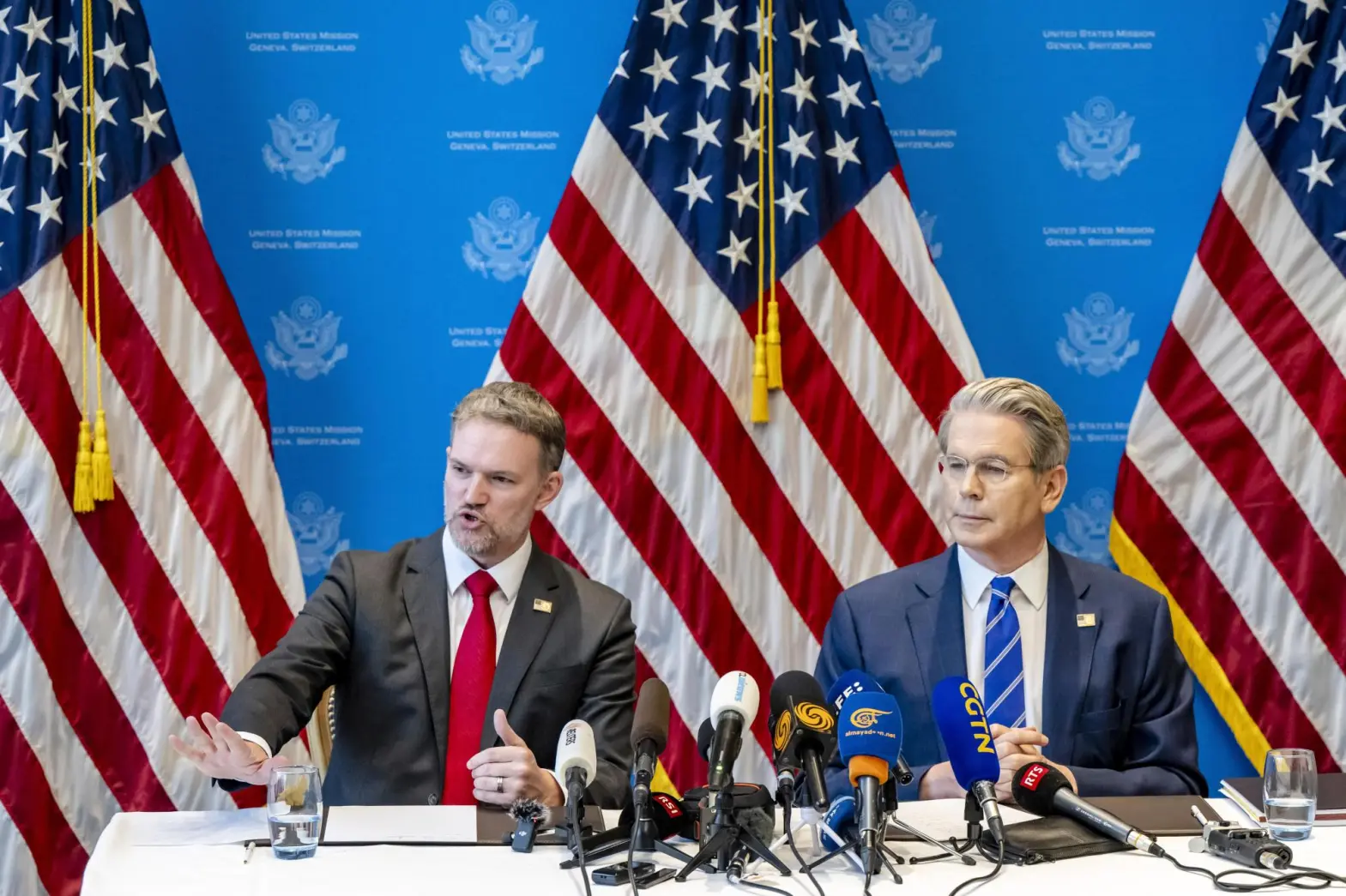
Geneva officials announced Monday that the US and China will slash reciprocal tariffs from 125% to 10% under a 90-day agreement, halting a months-long trade standoff.
The deal suspends measures imposed after April 2 but preserves Trump-era tariffs, including a 20% levy on Chinese fentanyl-related imports enacted earlier this year.
The truce stabilizes a bilateral trade relationship facing a $1.2 trillion U.S. goods deficit, which stalled after tit-for-tat measures disrupted global supply chains and fueled stagflation fears.
US Treasury Secretary Scott Bessent called the agreement a “shared interest in balanced trade,” while Chinese Vice Premier He Lifeng praised the “constructive dialogue” that established a consultation platform for future talks.
Both nations dropped 115 percentage points from peak rates but retained pre-existing tariffs, leaving US imports facing a 30% effective rate when combined with prior duties.
Tariff reductions focus on reciprocal levies introduced April 2, when the US imposed a 34% duty targeting China’s $1.2 trillion goods trade surplus.
U.S.-China Trade Truce Cuts Tariffs to 10%, Retains Fentanyl Levies in 90-Day Pause Deal
The deal excludes structural disputes like China’s state-led economy but creates breathing room to address fentanyl trafficking and long-term imbalances.
US Trade Representative Jamieson Greer noted “surprising progress” on curbing precursor chemicals, building on China’s 2018 fentanyl ban and strict domestic drug laws.
Negotiations nearly collapsed in May after China accused the US of “unilateral coercion” and Washington criticized Beijing’s “asymmetrical retaliation.”
Swiss mediators facilitated breakthroughs during outdoor sessions at a Geneva estate, where compromises emerged under what Bessent described as a “large, beautiful tree.”
The agreement follows weeks of quiet US coordination with 18 trading partners to reduce tariffs, addressing manufacturing losses from offshoring.
Domestic pressures influenced both sides. US manufacturers sought relief from input shortages, while China grapples with industrial overcapacity and sluggish demand.
The 90-day window tests whether pragmatic dialogue can replace tariff brinkmanship, with failure risking a return to embargo-like barriers.
Bessent blamed deficits on unfair trade terms, currency issues, and U.S. fiscal overspending, vowing fiscal discipline.
Greer credited repaired communication channels, neglected under Biden, for enabling talks, leveraging Trump’s rapport with Xi.
Bessent rejected decades of failed WTO talks, defending tariffs to rebuild manufacturing, with Switzerland’s $297 billion U.S. investment aiding revival.
Markets reacted positively, with Hong Kong’s Hang Seng surging 3% and European indices opening higher.
Critical questions linger about non-tariff barriers, intellectual property disputes, and the US’s $1.2 trillion trade deficit.
The deal avoids addressing Biden-era tech tariffs, steel/aluminum duties, or China’s retaliatory measures on US agricultural goods.
For now, businesses welcome reduced costs and clearer rules, though lasting peace hinges on bridging divides that fueled the costliest trade war since the 1930s.
As Bessent concluded, “Neither side wants decoupling. We want trade-just on fairer terms.”
This article was produced by The Rio Times’ automated newsroom system. How we use AI · Report an error
Read More from The Rio Times