Geneva Talks Strike Fragile Truce in U.S.-China Trade Recalibration, Details Pending
Geneva trade negotiators announced a potential de-escalation of the U.S.-China tariff conflict Sunday after marathon talks yielded a framework for future discussions, though critical details on tariff reductions remain unresolved.
According to sources familiar with the discussions, both nations agreed to establish a formal consultation mechanism to address disputes, marking the first high-level economic dialogue since President Trump imposed 145% tariffs on Chinese imports in April 2025.
The breakthrough follows months of economic strain, with China retaliating via 125% duties on U.S. goods, effectively freezing $600 billion in annual bilateral trade.
U.S. Treasury Secretary Scott Bessent and Chinese Vice Premier He Lifeng led the two-day negotiations, which focused on mitigating a trade war that has disrupted global supply chains and threatened 10 million Chinese jobs.
Official statements described the talks as “constructive,” but neither side confirmed whether the U.S. would lower its tariffs below the 80% threshold Trump proposed Friday.
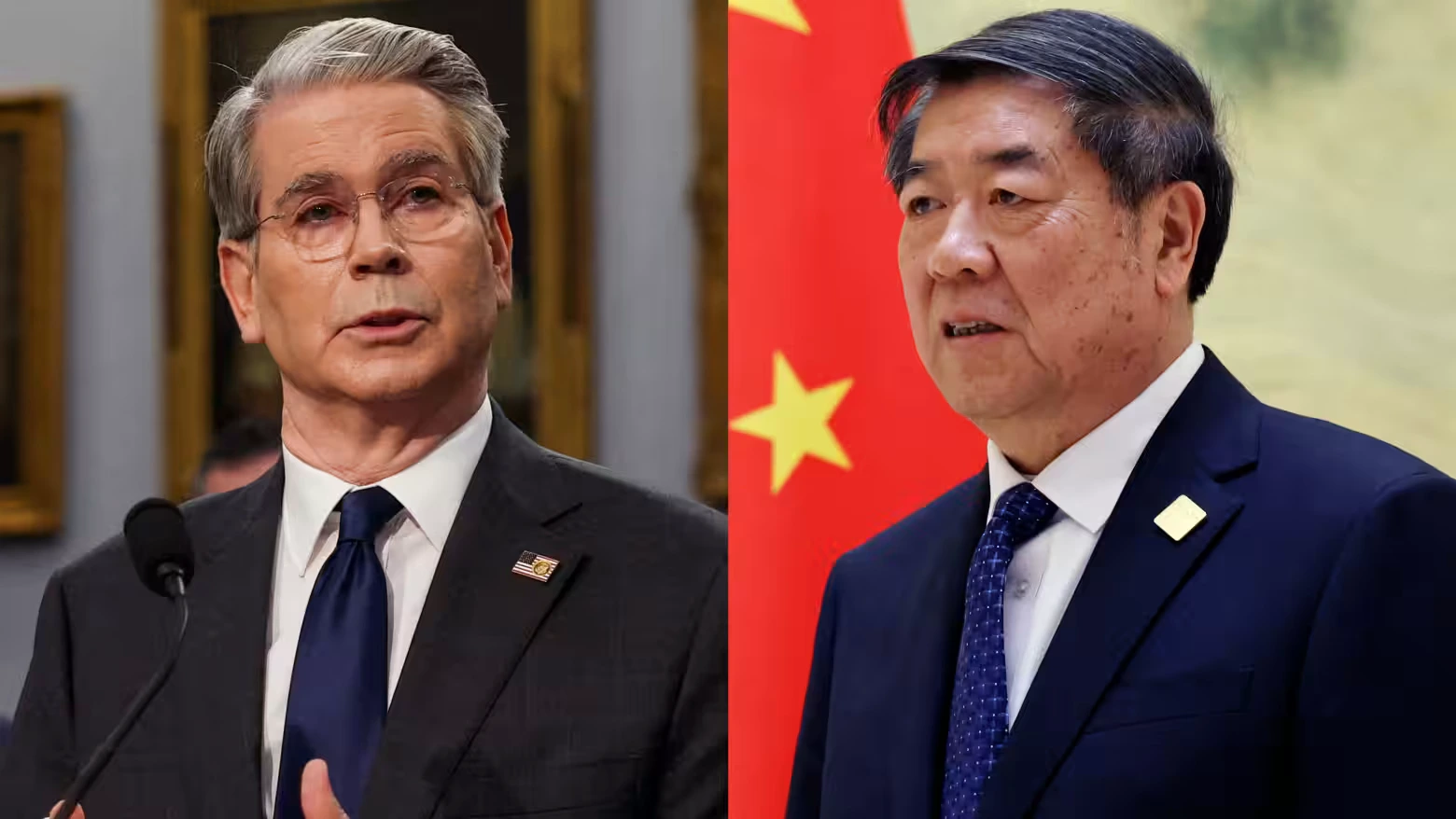
China insisted on “equal dialogue” while Bessent emphasized America’s leverage as the deficit nation, referencing the $295 billion U.S. trade gap with China in 2024.
Trump’s Tariff Surge Triggers Uneasy U.S.–China Trade Reset
The consultations occurred against a backdrop of escalating protectionism. Trump’s tariffs, initially levied at 20% in February 2025, surged to 145% after China rejected demands to curb industrial subsidies and open markets.
Beijing responded by slashing tariffs for other trading partners to 10%, isolating U.S. exporters. White House Economic Advisor Kevin Hassett noted China’s “eagerness” to rebalance trade, but U.S. officials stressed no unilateral concessions would occur without reciprocal moves.
Financial markets reacted cautiously to the announcement, awaiting Monday’s joint statement for concrete measures. Analysts warn the 145% U.S. tariff-triple China’s retaliatory rate-could persist unless Beijing addresses intellectual property concerns and market access barriers.
While both nations hailed progress, the lack of immediate tariff relief leaves businesses grappling with inflated costs. The new consultation platform aims to prevent further escalation but faces skepticism given past dialogue forums that failed to alter China’s state-driven economic model.
President Trump declared the talks a “total reset” on social media, aligning with his strategy to leverage tariffs as negotiation tools rather than permanent measures. The outcome hinges on China’s willingness to compromise, as its export-reliant economy faces mounting strain.
With global recession fears lingering, Monday’s statement will reveal whether this détente signals genuine rapprochement or merely delays another clash in the world’s most consequential trade relationship.
This article was produced by The Rio Times’ automated newsroom system. How we use AI · Report an error
Read More from The Rio Times