
UGANDA · ECONOMY
Key Facts
- —The country Uganda is a landlocked East African economy that, according to its central bank, grew 6.4% in the fiscal year to June 2026.
- —What happened The Bank of Uganda’s Business Tendency Indicator fell to 55.8 in September 2026 from 57.7 in August, below a forecast of 59 on economic calendars.
- —What the index measures It is built from a monthly survey of firms; readings above 50 signal optimism and readings below 50 signal pessimism.
- —Biggest drag Order volumes with suppliers fell to 56.5 from 65.2, and order books dropped to 40.8 from 49.5.
- —Sectors Wholesale trade slipped below 50 to 49.3 and agriculture fell to 53.3, while financial services rose to 85.5.
- —What it means for you Ugandan firms remain optimistic overall, but weaker orders and tight credit are an early warning for investors in the country’s growth story.
- —Still open The central bank published the figures without commentary; the next reading is due on Wednesday 4 November 2026.
Uganda business confidence fell to 55.8 in September from 57.7 in August, according to the Bank of Uganda’s latest Business Tendency Indicator. Firms in the East African country stayed optimistic overall, but new orders dropped sharply.
That matters for US and other foreign investors betting on Uganda’s oil- and mining-driven growth, because orders are an early signal of demand. The reading was the weakest since June and came in well below the 59 that economic calendars had pencilled in.
What the Business Tendency Indicator Measures
The Bank of Uganda is the country’s central bank, led by Governor Michael Atingi-Ego. Every month it surveys companies about how business is going and what they expect next.
The answers feed the Business Tendency Indicator, the central bank’s gauge of Uganda business confidence, where 50 is the dividing line. A reading above 50 means positive expectations and a reading below 50 means pessimism.
The survey asks about the present business situation, the outlook three months ahead, orders, jobs, selling prices, finances and access to credit. It covers construction, manufacturing, wholesale trade, agriculture, other services and financial services.
The bank revised the method in July 2025 to follow a United Nations handbook on business surveys. Sector weights now reflect each sector’s share of the economy.
Falling Orders Drove the September Drop
Uganda business confidence lost 1.9 points in September, and orders explain most of the slide. Order volumes with suppliers fell to 56.5 from 65.2, the steepest fall of any main indicator.
Order books dropped to 40.8 from 49.5, deep below the 50 line. Firms also rated their present business situation lower, at 53.4 against 55.9 in August.
Money was tighter too. The financial situation index slipped to 51.9 from 53.2, and access to credit fell to 40.4 from 41.7, the weakest of the main indicators.
Current employment eased to 51.6 from 53.0, a sign that fewer firms are adding staff. Compared with September 2025, when the index stood at 59.1, confidence is now more than three points lower.
Which Sectors Lost Confidence
Uganda business confidence weakened in five of the six sectors the bank tracks. Only financial services improved.
Wholesale trade, the merchants who move goods into shops across Uganda, fell to 49.3 from 54.1. That puts the sector on the pessimistic side of the line, as its present-situation score dropped to 41.8 from 49.6.
Agriculture, which includes the country’s coffee growers, fell to 53.3 from 56.3. Farm order books collapsed to 34.4 from 53.6, and the farm employment score fell to 50.1 from 55.8.
Manufacturing eased to 53.0 from 54.8 as orders with suppliers cooled. Construction stayed below 50 at 47.7, down from 48.8, even though builders rated their present situation better.
Other services slipped to 59.0 from 60.3. Financial services rose to 85.5 from 80.2, the strongest reading of any sector.
Why Firms Still Expect Better Months Ahead
The forward-looking part of Uganda business confidence did not sour. Firms’ view of business three months ahead edged up to 60.5 from 59.8, and expected hiring rose to 56.7 from 55.4.
The selling-price gauge climbed to 59.9 from 58.0, a sign that more firms are pushing prices up. In August, the central bank put inflation below its 5% target and saw core inflation averaging 4.0% to 4.5% over the next year.
In August the bank held its Central Bank Rate, the benchmark for borrowing costs, at 9.75%. It projects growth of 7.0% to 7.5% in the fiscal year 2026/27, after 6.4% in 2025/26.
The bank names higher investment in mining and oil as a support for growth. It also cites the Ten-Fold Growth Strategy, Uganda’s official plan to multiply the size of the economy.
That plan, and the push to expand private credit, depend on firms being able to borrow. The survey shows that borrowing remains hard.
What It Means for US Readers
For US investors in East African bonds, banks or frontier-market funds, Uganda business confidence is one of the earliest monthly reads on demand. A sharp fall in orders can show up later in tax revenue, loan quality and import bills.
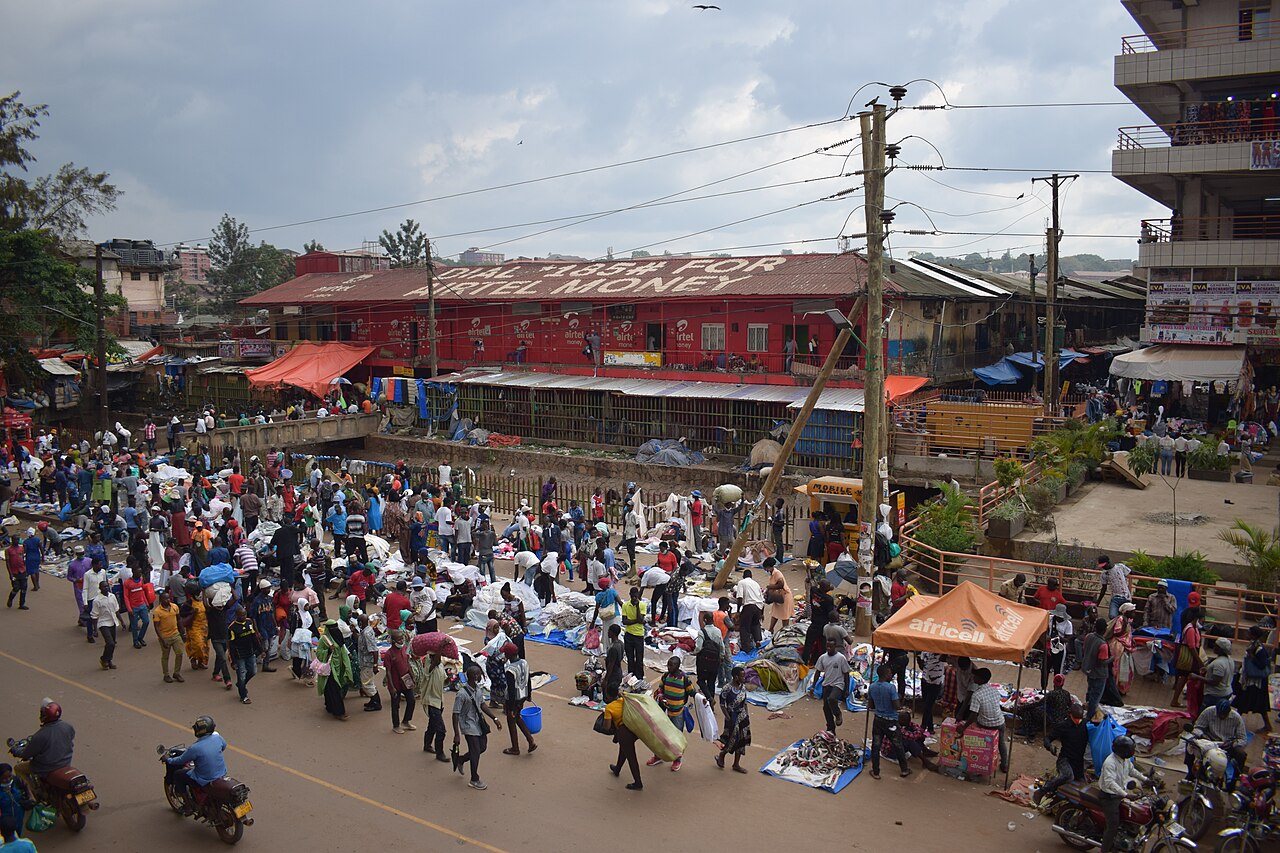
Oil projects are the long-term draw for foreign money, and Uganda’s oil timeline remains a big swing factor. In the meantime, farming, trade and services carry much of the economy, and those sectors weakened in September.
Coffee buyers and food importers should watch the farm numbers, because order books show how much business farms have lined up. The shilling stood at about 3,920 to the US dollar on 7 October 2026.
The central bank also lists risks that matter to American visitors and businesses. It flags higher energy prices from geopolitical tensions and the residual effects of health-related travel advisories on tourism.
What Is Not Known
The Bank of Uganda published the September indices on Monday 5 October as a data table, without a statement explaining the fall in orders. It is not yet clear whether the dip in Uganda business confidence is a one-month swing or the start of a slowdown.
The data file does not say how many firms answered in September. The next Business Tendency Indicator is scheduled for Wednesday 4 November 2026, which will show whether orders recovered in October.
More: Uganda news in English, every day from The Rio Times.
Frequently Asked Questions
What is Uganda’s Business Tendency Indicator?
It is a monthly index of Uganda business confidence compiled by the Bank of Uganda from a survey of firms. A reading above 50 signals optimism and a reading below 50 signals pessimism.
What did the September 2026 reading show?
The index fell to 55.8 from 57.7 in August, below a forecast of 59 published on economic calendars. It was the weakest reading since June 2026.
Why did Uganda business confidence fall?
Orders drove the drop. Order volumes with suppliers fell to 56.5 from 65.2, order books fell to 40.8 from 49.5, and access to credit weakened to 40.4.
Are Ugandan firms now pessimistic?
No. At 55.8 the overall index is still above 50, and firms’ three-month outlook improved slightly. Wholesale trade and construction, however, are now below the 50 line.
When is the next reading due?
The Bank of Uganda has scheduled the next Business Tendency Indicator for Wednesday 4 November 2026. It will cover October.
Sources: Bank of Uganda, Business Tendency Indicators (data file, September 2026), 5 October 2026; Bank of Uganda, Statistical Portal: Business Tendency Indicators, 7 October 2026; Bank of Uganda, Monetary Policy Statement at a glance, August 2026.
This article was produced by The Rio Times’ automated newsroom system. How we use AI · Report an error · Editorial responsibility: Matthias Camenzind, Editor-in-Chief
LatAm Markets: Live Signals → — real-time movers, turnover leaders and FX across Latin America.