Trump Pushes for US-UK Trade Deal, Offers Tariff Relief Amid Strategic Talks
Donald Trump announced that his administration is advancing trade negotiations with the United Kingdom, signaling potential tariff relief if a deal materializes.
Speaking from the Oval Office on February 27, Trump revealed that senior officials, including Vice President JD Vance and Treasury Secretary Scott Bessent, are spearheading discussions.
He expressed optimism about reaching a preliminary agreement soon, emphasizing the importance of fostering stronger economic ties with Britain.
Trump suggested that the UK could avoid tariffs under the proposed agreement, even as the US plans to impose duties on European Union imports. He described the UK as a “great and friendly” partner distinct from the EU, positioning the deal as a priority.
The UK’s Prime Minister Keir Starmer confirmed that both nations aim to focus on advanced technology sectors in the agreement, highlighting opportunities in artificial intelligence and innovation.
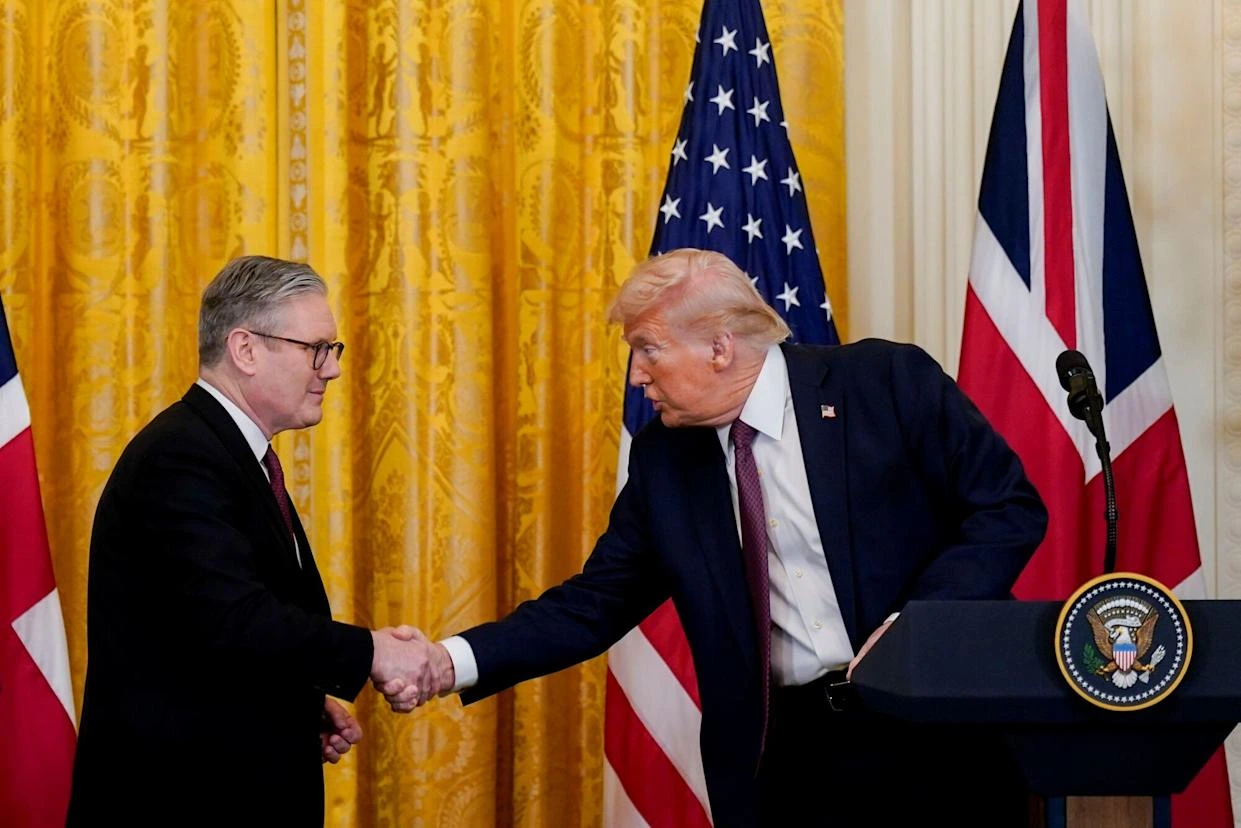
The US and UK already share a robust trading relationship worth $300 billion annually, dominated by services and high regulatory standards. A new trade deal would diversify Britain’s post-Brexit economic strategy and align with Trump’s “America First” agenda.
US-UK Bilateral Talks
However, challenges remain, including reconciling regulatory differences and addressing US tariffs on British steel set to take effect in March 2025. During bilateral talks, Starmer also urged Trump to bolster military support for Ukraine amidst tensions with Russia.
Starmer requested US assistance in stabilizing Ukraine through air cover, heavy transport aircraft, intelligence support, and missiles. In exchange, he proposed European cooperation on regional security.
Trump declined direct military involvement but suggested economic agreements with Kyiv as an effective deterrent against Russian aggression. This announcement comes at a critical time for both nations.
For Britain, securing a trade deal with its largest single-country trading partner could strengthen its global economic position post-Brexit. For the US, deepening ties with the UK aligns with efforts to counter China’s influence and maintain strategic alliances.
Despite optimism, negotiators face significant hurdles in finalizing terms quickly. Both sides must address sensitive issues like tariffs and regulatory alignment while balancing broader geopolitical interests.
A successful agreement could redefine US-UK relations and set a precedent for future trade partnerships in an increasingly protectionist world.
This article was produced by The Rio Times’ automated newsroom system. How we use AI · Report an error · Editorial responsibility: Matthias Camenzind, Editor-in-Chief