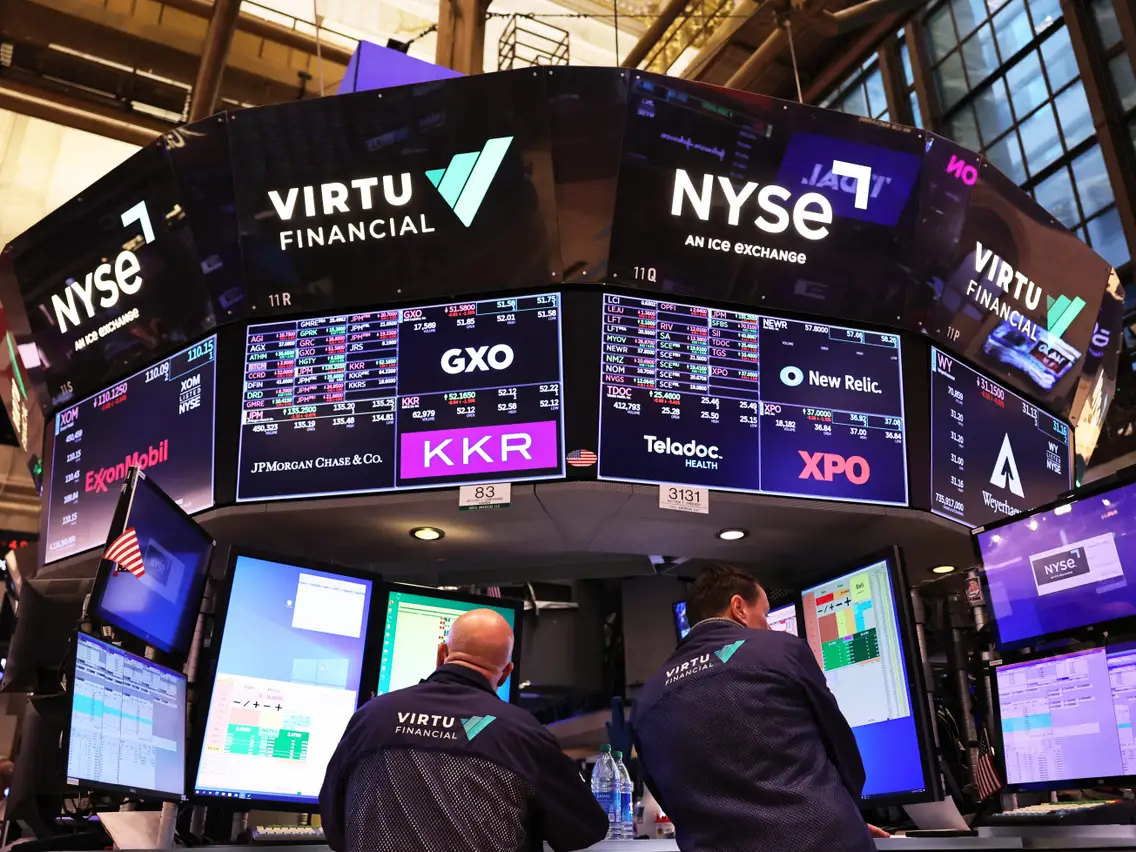
January’s positive impact on the American stock market is evident again, with the S&P 500 nearing the 5,000-point threshold.
This notable rise reflects a new peak in market capitalization. Major tech companies, Tesla excluded, have played a key role, outperforming other sectors and capturing investor interest.
The current state of the U.S. stock market aligns with our 2024 Outlook predictions.
The Federal Reserve‘s QE light policy has bolstered risk appetite, particularly benefiting technology stocks.
Even the substantial rise in 10-year interest rates this January hasn’t dampened this optimistic trend.
It’s important to note that the future clarity of market movements will become evident in time.
Despite geopolitical risks, the American economy’s prospects seem brighter than raw data suggest.
Echoing Howard Marks of Oaktree Capital Management, low or ultra-low interest rates are not a permanent fixture, indicating a significant structural shift that could benefit the financial market.
Higher interest rates can be advantageous, swiftly eliminating untenable projects and fostering market competition.
This necessitates continuous evolution among market players, curbing excessive leverage and preventing credit market bubbles.
If Marks’ view holds true, companies with easy access to capital, significant cash reserves, or high cash flow generation capabilities are likely to lead in securing scarce resources like technology and labor.
Analyzing the U.S. Market’s Performance
This edge should reflect in their stock prices, enhancing profitability and market premiums.
Tech companies are expected to excel in 2024, driven by innovations in products and services, including artificial intelligence integration.
Advances in hardware and software interactions, exemplified by Samsung’s latest S24 smartphone, will further stimulate this sector.
Segments like semiconductors, gaming, and animations are set for growth, while the biotech sector anticipates launching blockbuster drugs.
Recent Middle Eastern conflicts, including attacks on a U.S. base in Jordan and missile strikes on an oil tanker, have raised concerns.
These events, along with a significant decrease in WTI oil stockpiles in Cushing, Oklahoma, have led to a “backwardation” in commodity future prices, indicating tight supply conditions.
Oil stock fluctuations due to climatic changes or exploration dynamics are natural.
However, they can significantly impact oil prices when combined with external events. The base scenario remains, with oil prices expected to stay around $70-80.
Analysts continue to favor cash-generating companies with low debt and dividend distribution capabilities, such as Petrobras.
This article was produced by The Rio Times’ automated newsroom system. How we use AI · Report an error · Editorial responsibility: Matthias Camenzind, Editor-in-Chief