The Federal Reserve recently maintained its interest rates, marking the fourth consecutive meeting without change.
This decision signals a shift towards potential future rate reductions. During their two-day gathering, Fed officials shifted their stance from considering rate hikes to a more balanced perspective on future monetary policy.
This change is significant as it suggests a recalibration of the Fed’s approach in light of evolving economic conditions.
The Federal Open Market Committee (FOMC) noted that risks to their employment and inflation goals are becoming more balanced.
They emphasized a careful evaluation of incoming data, outlook developments, and risk balance before adjusting the federal funds rate.
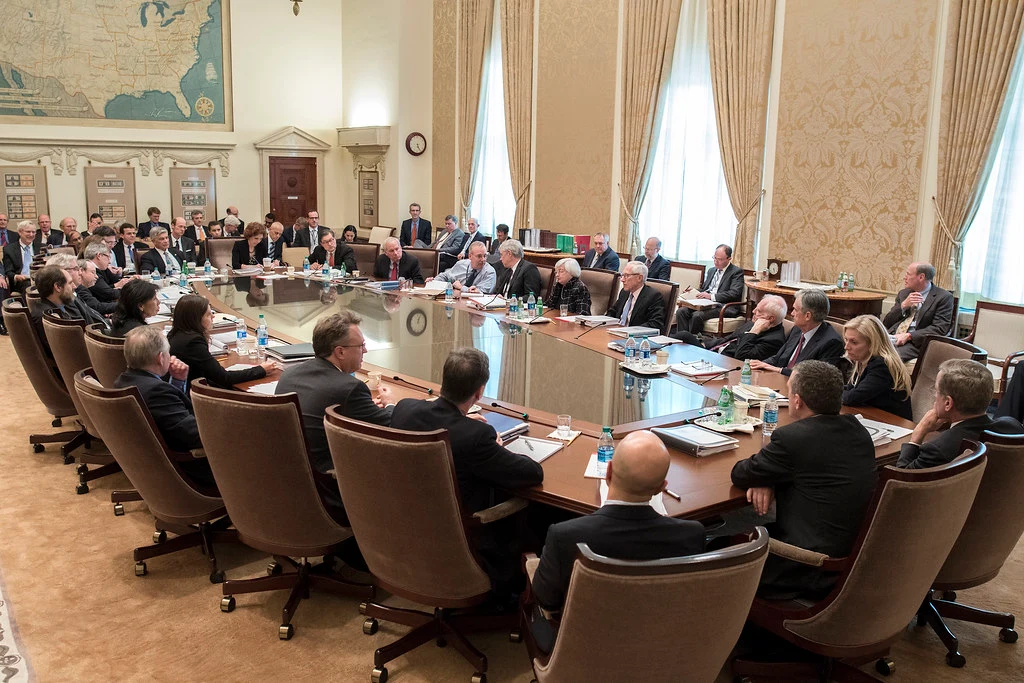
Despite this open stance, the FOMC expressed caution, indicating no immediate plans to lower rates.
They await greater assurance that inflation is steadily moving towards the 2% target.
This cautious approach underscores the Fed’s focus on stabilizing inflation without hastening policy changes.
The unanimous decision to keep the benchmark federal funds rate between 5.25% and 5.5% is notable.
It’s the highest level in 22 years. Additionally, the Fed plans to reduce its monthly balance sheet by $95 billion.
The economy’s performance surpassed policymakers’ expectations last year. The Federal Reserve’s preferred inflation measure ended at 2.6%, and the GDP grew by 2.5%.
The labor market also showed resilience, with a 3.7% unemployment rate in December.
Upcoming labor market data will be crucial in shaping the Fed’s future policy. Economists anticipate a solid yet slightly slowing labor market in early 2024.
This data will be vital for understanding the economy’s trajectory and guiding the Fed’s decisions.
The Fed’s current stance is particularly challenging. They aim to manage inflation through credit tightening without causing a recession.
Balancing act is complex
This balancing act is even more complex during a presidential election year in a politically divided United States.
In summary, the Fed’s recent decision and outlook reflect a careful approach to monetary policy in a changing economic landscape.
The balance between fostering economic growth and containing inflation is critical, especially considering the broader political and economic context.
The Fed’s actions and future decisions will significantly impact the U.S. economy, influencing both national and global financial markets.
This article was produced by The Rio Times’ automated newsroom system. How we use AI · Report an error
Read More from The Rio Times