IBOV 206,505.98 ▼ 0.18% IPSA 10,966.21 ▼ 0.49% IPC MEX 66,790.35 ▼ 0.26% MERVAL 2,835,843 — 0.00% COLCAP 2,582.29 ▲ 0.46% BVL PERÚ 60,511.74 ▼ 1.60% USD/BRL5.03▲ 0.01% USD/MXN18.53▲ 0.18% USD/CLP984.17▼ 0.09% USD/COP3,192▲ 0.11% USD/PEN3.44▲ 0.16% USD/ARS1,513▼ 0.02% USD/UYU40.20▲ 3.25% USD/PYG5,684▲ 2.81% USD/BOB11.65▲ 1.40% USD/DOP61.07▼ 0.10% USD/CRC449.35▲ 1.80% USD/GTQ7.64▲ 3.17% USD/HNL26.86▲ 0.35% USD/NIO36.62▼ 0.07% USD/VES876.92▼ 0.13% USD/PAB1.00— 0.00% USD/BZD2.00— 0.00% USD/JMD 157.28 — 0.00% USD/TTD6.77▲ 2.81% EUR/BRL5.64▲ 0.23% BRENT 88.88 ▼ 0.03% WTI 83.11 ▼ 0.11% IRON ORE 161.91 — — COPPER 6.61 ▲ 0.03% GOLD 4,461 ▲ 1.78% SILVER 65.59 ▲ 1.26% SOY 1,184 ▲ 3.20% CORN 480.50 ▲ 10.02% WHEAT 655.00 ▲ 3.93% COFFEE 317.25 ▼ 5.51% SUGAR 16.43 ▼ 1.79% ORANGE JUICE 138.55 ▼ 0.47% COTTON 85.03 ▲ 2.33% COCOA 5,719 ▲ 3.18% BEEF 223.60 ▼ 3.93% CATTLE 339.10 ▼ 3.16% LITHIUM 75.20 ▲ 1.47% PETR4 41.64 ▼ 0.05% VALE3 72.97 ▲ 0.83% ITUB4 38.60 ▼ 1.03% BBDC4 16.85 ▲ 0.36% ABEV3 14.89 ▼ 0.80% BBAS3 19.37 ▲ 0.47% B3SA3 14.26 ▼ 0.21% WEGE3 47.59 ▲ 0.49% PRIO3 59.14 ▼ 0.19% SUZB3 41.33 ▲ 2.35% RENT3 34.68 ▼ 0.09% AZZA3 15.89 ▼ 2.63% CSAN3 3.22 ▼ 1.83% RAIZ4 0.25 — 0.00% PCAR3 2.75 ▼ 0.36% GMAT3 3.65 ▼ 1.08% PSSA3 48.13 ▼ 0.54% CVCB3 1.33 ▼ 2.92% POSI3 3.36 ▲ 2.44% SLCE3 13.34 ▲ 0.30% NATU3 8.14 ▼ 0.73% IBOV 206,505.98 ▼ 0.18% IPSA 10,966.21 ▼ 0.49% IPC MEX 66,790.35 ▼ 0.26% MERVAL 2,835,843 — 0.00% COLCAP 2,582.29 ▲ 0.46% BVL PERÚ 60,511.74 ▼ 1.60% USD/BRL 5.16 ▲ 0.01% USD/MXN 17.06 ▼ 0.24% USD/CLP 913.98 ▲ 0.04% USD/COP 3,140 ▲ 0.03% USD/PEN 3.36 ▼ 0.66% USD/ARS 1,493 ▲ 0.10% USD/UYU 40.27 ▲ 1.24% USD/PYG 5,939 ▲ 1.68% USD/BOB 11.64 ▼ 0.76% USD/DOP 58.34 ▲ 1.25% USD/CRC 445.92 ▲ 0.89% USD/GTQ 7.62 ▲ 2.21% USD/HNL 26.79 ▲ 1.57% USD/NIO 36.62 ▲ 0.69% USD/VES 762.44 ▼ 0.13% USD/PAB 1.00 — 0.00% USD/BZD 2.00 — 0.00% USD/JMD 157.28 — 0.00% USD/TTD 6.70 ▲ 0.61% EUR/BRL 5.95 ▲ 1.01% BRENT 88.88 ▼ 0.03% WTI 83.11 ▼ 0.11% IRON ORE 161.91 — — COPPER 6.61 ▲ 0.03% GOLD 4,461 ▲ 1.78% SILVER 65.59 ▲ 1.26% SOY 1,184 ▲ 3.20% CORN 480.50 ▲ 10.02% WHEAT 655.00 ▲ 3.93% COFFEE 317.25 ▼ 5.51% SUGAR 16.43 ▼ 1.79% ORANGE JUICE 138.55 ▼ 0.47% COTTON 85.03 ▲ 2.33% COCOA 5,719 ▲ 3.18% BEEF 223.60 ▼ 3.93% CATTLE 339.10 ▼ 3.16% LITHIUM 75.20 ▲ 1.47% PETR4 41.64 ▼ 0.05% VALE3 72.97 ▲ 0.83% ITUB4 38.60 ▼ 1.03% BBDC4 16.85 ▲ 0.36% ABEV3 14.89 ▼ 0.80% BBAS3 19.37 ▲ 0.47% B3SA3 14.26 ▼ 0.21% WEGE3 47.59 ▲ 0.49% PRIO3 59.14 ▼ 0.19% SUZB3 41.33 ▲ 2.35% RENT3 34.68 ▼ 0.09% AZZA3 15.89 ▼ 2.63% CSAN3 3.22 ▼ 1.83% RAIZ4 0.25 — 0.00% PCAR3 2.75 ▼ 0.36% GMAT3 3.65 ▼ 1.08% PSSA3 48.13 ▼ 0.54% CVCB3 1.33 ▼ 2.92% POSI3 3.36 ▲ 2.44% SLCE3 13.34 ▲ 0.30% NATU3 8.14 ▼ 0.73%
since 2009
Thursday, October 15, 2026

Analysis Argentina

South Atlantic Stakes: U.S. Counters China at Argentina’s Ushuaia Naval Hub

By · May 1, 2025 · 3 min read

(Analysis) The U.S. Southern Command Chief, Admiral Alvin Holsey, visited Argentina in late April 2025 to strengthen defense ties and review the Integrated Naval Base project in Ushuaia.

This visit, confirmed by official sources, highlights the growing competition between the United States and China for influence in southern South America and access to Antarctica.

Argentina has invested $8.3 million in the Ushuaia base so far, with total costs projected at $300 million. The base, started in 2022, will expand Argentina’s logistical and military presence in the South Atlantic and serve as a supply hub for Antarctic missions.

The project includes new port facilities, staff housing, and infrastructure improvements. The government plans to fund the works through the Public Works Ministry and the National Fund for Defense.

Argentina’s move responds to both commercial and strategic pressures. Ushuaia’s location, just 1,000 kilometers from Antarctica, gives it a logistical edge over Chile’s Punta Arenas and other southern ports.
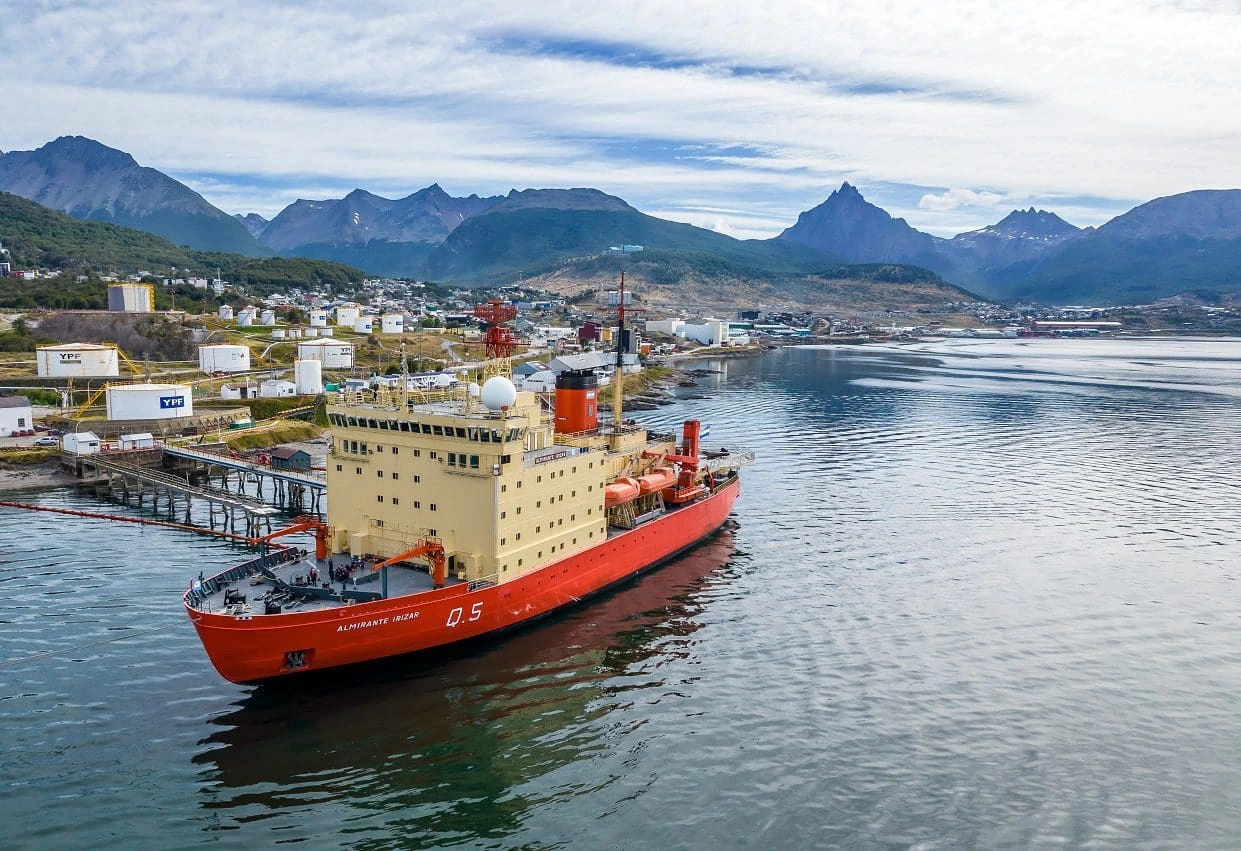
South Atlantic Stakes: U.S. Counters China at Argentina’s Ushuaia Naval Hub
South Atlantic Stakes: U.S. Counters China at Argentina’s Ushuaia Naval Hub.
RT
Ask Rio Times
17 years of Latin America reporting, on demand.
Open the full Ask Rio Times →

The base aims to attract shipping, tourism, and supply contracts for Antarctic expeditions, sectors currently dominated by Chile. Argentine officials see this as a way to catch up with Chile’s more advanced Antarctic logistics industry.

The LatAm Brief

One email, every weekday morning. What moved in Latin American markets, politics and expat life.

Yesterday’s subject line: “US lifts sanctions on Venezuela's Jorge Rodríguez”

Free. We send a confirmation link first — nothing arrives until you click it. Unsubscribe with one click in any edition. If you stop opening us for 30 days we stop sending by ourselves, as we assume the interest is no longer there. See our privacy policy. We never share your email.

Strategic Tensions in Ushuaia

The U.S. views the Ushuaia project as a counter to Chinese expansion in the region. China already operates four Antarctic bases and is building a fifth. Both China and Russia have shown interest in funding or participating in the Ushuaia base.

The U.S. Southern Command, not the commercial sector, brokered the current agreement with Argentina, signaling a focus on security and strategic control rather than trade alone.

U.S. officials worry about Chinese financing and possible operational control in a region they consider vital for maritime trade and resource access.

The U.S. has a long-standing policy of discouraging outside powers from gaining a foothold in Latin America, especially near sensitive trade routes like the Drake Passage and the Panama Canal.

Argentina’s current government, led by President Javier Milei, has shifted away from previous overtures to China. It now seeks closer alignment with the U.S.

This realignment has caused friction with some Argentine lawmakers and local officials, who fear foreign military presence could undermine national sovereignty or benefit rival interests, including the United Kingdom, which disputes the nearby Falkland Islands.

The rivalry over Ushuaia’s base reflects broader tensions as the U.S. and China compete for influence and trade in Latin America. Both powers seek to secure supply chains, control logistics, and shape future access to Antarctic resources.

Argentina’s investment in Ushuaia marks a significant step in this contest, with the outcome likely to affect regional trade flows and the balance of power in the South Atlantic for years to come. All details and figures in this report are based on official statements and public records.

This article was produced by The Rio Times’ automated newsroom system. How we use AI · Report an error · Editorial responsibility: Matthias Camenzind, Editor-in-Chief

The Rio Times · Power Map
See who really holds power in Latin America
Click to open the Power Map →

Rotate for Best Experience

This report is optimized for landscape viewing. Rotate your phone for the full experience.