Solar energy on leased land gives extra income to farmers in Brazil
The rental market will gain traction with the accelerated growth of the energy source in the country and allow extra income to farmers and ranchers.
Solar energy companies have sought to lease rural land, many of them arable, to install their photovoltaic generation plants, creating a new income opportunity for Brazilian farms, which can obtain stable, long-term remuneration, and even higher than that obtained with crops in some cases.
The agricultural land leasing market for solar projects has existed for some time in Brazil, but it should gain traction with the accelerated growth of this energy source in the country, which in the countryside allows for extra income for farmers and ranchers.

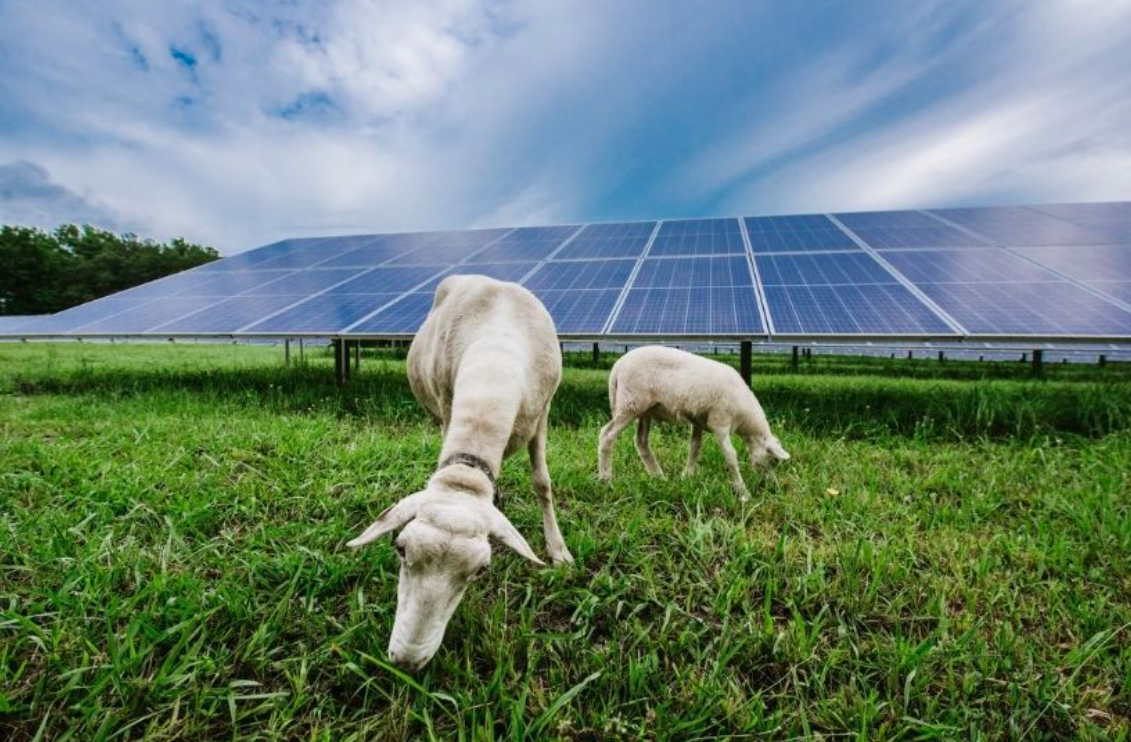
According to specialists, there is no area competition between solar generation and crops. On the contrary, the businesses are complementary. And, when there is indeed a consortium, they are called “agrivoltaics”.
In recent years, distributed generation – a modality that involves smaller plants of up to 5 megawatts – has boosted leases, normally of 10 to 20 hectares, which in this case are more interesting to the generator than buying the land.
The land leasing model for solar, already practiced for several years by wind energy generators in the Northeast, has been well accepted by agricultural producers, say companies that operate in this logic, such as Órigo Energia, GreenYellow, Sun Mobi and Apolo Renováveis.
According to the electric companies, one of the main benefits pointed out by the producers is the stability in remuneration, which helps in managing cash flow between harvests and guaranteeing resources to pay for other crops.
“The lease value for the manor is higher than (what is obtained with) most crops in some states, which today attracts the attention of small and medium-sized farmers. And the large producer, who will generally lease 5% or 10% of the farm for a solar plant, seeks a revenue that covers fixed costs,” explains Felipe Falcão, responsible for the development of distributed generation at Apolo Renováveis.
Apolo Renováveis already has around 80 megawatts-peak in solar distributed generation plants under development and has started a new portfolio of projects, which will be carried out within the scope of a partnership with Omega Energia, said Falcão.
For this second portfolio, the group is looking for 500 plots of land in four states – São Paulo, Goiás, Bahia and Pernambuco – for lease. The objective is to contract areas totaling between 5,000 and 10,000 hectares by July 2023, paying monthly amounts between 5,000 and 22,000 reais to landowners.
Another company that rents agricultural land for its plants is GreenYellow, a company that was controlled by the French group Casino and now has Ardian as its main shareholder.
With a portfolio of nearly 200 MWp in solar power plants in Brazil, GreenYellow has signed surface right contracts with 68 different owners across the country.
“We know that with respect to certain crops we cannot compete on value. However, even so, there are owners who prefer to close with us than to be at the mercy of the risks of the plantation,” says Marcelo Xavier, CEO of GreenYellow in Brazil.
In addition to remuneration, another attraction is associated with the security of the farms, since the implementation of a solar project requires monitoring the land through cameras and other forms of property security, noted Guilherme Susteras, partner at Sun Mobi, a company with power plants in the State of São Paulo.
He also points out that leasing solar energy can be a way for farmers to take advantage of land that is less conducive to agricultural cultivation or where it is difficult.
“We have everything (among the tenants)… even the guy who has a super farm, with cattle, composting garbage, soy plantation. He has a small piece of land with a stream running through the middle, he divided it into two subareas, so he preferred to lease it for photovoltaics because it was less work than doing something to plant something there ”, he exemplifies.
Órigo Energia, which has 100 lands leased under 30-year contracts in the Southeast and Northeast, points out that leasing for solar is also an option for owners to supplement their retirement or the inheritance of their heirs.
“In many cases, the rural exodus of families already worn out with attempts to produce efficiently on those lands is avoided,” said the company, which has among its investors the North American Augment, the TPG ART fund, MOV Investimentos and Mitsui.
“AGRIVOLTAICS”
Despite being attractive, solar energy should not compete in terms of area with other agricultural products, according to Maciel Silva, deputy technical director of the Confederation of Agriculture and Livestock of Brazil (CNA).
He claims that even in the case of large solar projects, which sometimes also resort to leasing, the areas are smaller than those used for agro-cultivation.
“It is difficult to give a perspective scenario, because it does not depend much on the producer, he is demanded in this circumstance, it is not a proactive initiative on his part (leasing)… The scenario depends a lot on some issues, including the demand for these energy sources.”
Camila Ramos, vice-president of the Absolar association, says that agricultural cultivation and solar energy can coexist and generate new business opportunities for producers under what is called “agrivoltaics.”
According to her, in some parts of Europe, farms are starting to take advantage of leased solar plants to set up crops associated with them, for example, growing berries below solar panels.
“These berries need to be grown in greenhouses. Instead of building a greenhouse, they build this solar panel roof, so they have a revenue from energy generation and another infrastructure for agricultural production.”
AGRI-CONSUMER
In addition to land leasing, agribusiness has also grown as an important consumer class of energy from solar plants.
According to data from Absolar, distributed generation for the rural class reached just over 2 GW of power in October this year, adding up to around 112,000 generation systems. To get an idea of the pace of growth, four years ago, power in the rural class totaled just 47 MW, and there were less than 3,000 systems.
According to Silva, from the CNA, the interest of agricultural producers in solar energy is due to the increase in tariffs in the regulated market and also to the higher quality of energy supply by these generation systems.
“(Solar’s growth) is very positive from an economic and also an environmental point of view… it is a democratic technology,” added Silva, recalling that there are several lines of financing, including the Safra Plan, for those who want to install their own solar plants.
With information from Forbes
More: Brazil news in English, every day from The Rio Times.
Editorial responsibility: Matthias Camenzind, Editor-in-Chief · Editorial standards · Report an error