China · Currencies
Key Facts
- Hedge shift Chinese firms now hold the yuan as a store of value, not just for payments, per a UOB report.
- Bond boom Dim sum bond issuance hit nearly 820 billion yuan (about US$120 billion) by 22 June, up 47% year on year.
- Brazil swap China and Brazil run a 190 billion yuan (about US$27 billion, roughly 157 billion reais) swap line, signed on 13 May 2025 for five years.
- Argentina swap Argentina’s 130 billion yuan (about US$19 billion) line was renewed on 6 August 2026 for five years.
- Active tranche A 35 billion yuan (about US$5 billion) tranche of the Argentina line has been usable since early 2023.
- Milei stance Argentina kept the swap framework and renewed it under President Milei, though it repaid most of the money it had drawn.
- BRICS talks Trade ministers met in Jaipur, India on 6-7 August 2026; reports differed on whether a single joint declaration emerged.
For years, Latin American leaders have preached de-dollarization with little proof. A bank report buried in trade data just supplied the evidence. The region’s swap lines with China now look less like lifelines and more like a strategic bet on the yuan.
If you have watched Latin America argue for years that the dollar’s grip is loosening, you have heard plenty of speeches and few facts. A new report from United Overseas Bank (UOB) changes that. It finds Chinese firms increasingly hold the renminbi as a hedge, not merely as a tool for settling invoices. That is hard evidence, from a bank, that de-dollarization is real.
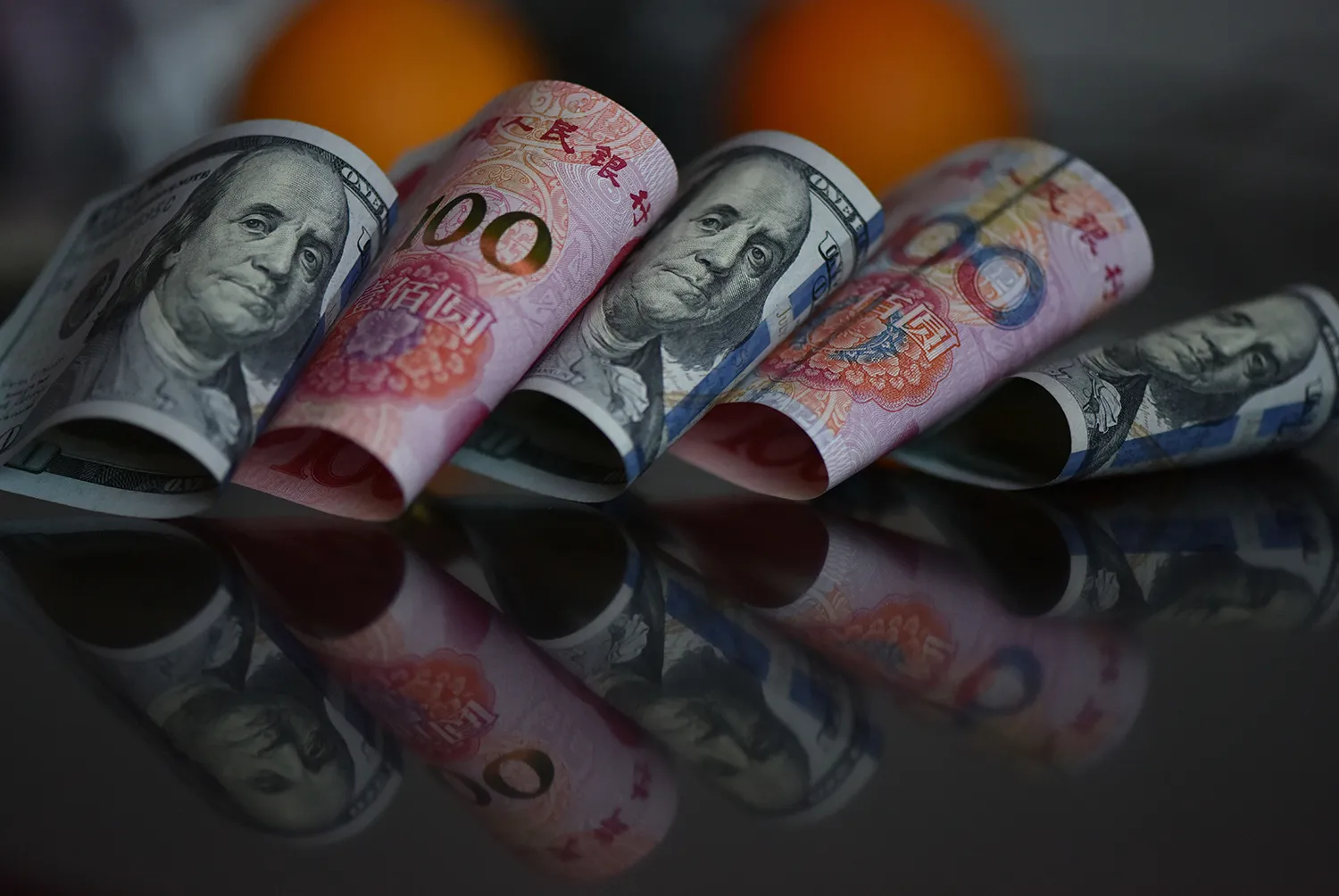
A bank report reveals a quiet shift in corporate China
The UOB report lands with a simple message. The yuan is no longer just a transactional instrument.
It is increasingly a hedging instrument, thanks to its stability.
The executive quoted, Zheng, put it plainly. Firms see the currency as a way to protect value, not just to pay for goods.
That is a change in behavior, not rhetoric.
Zheng pointed to hard market signals. Yuan-denominated bank loans are growing.
Yuan bonds are growing. Other yuan financing instruments are growing too.
This is not a government policy paper. It is UOB’s annual survey of 380 Chinese companies on expansion into Southeast Asia, and it says nothing about Latin America or the dollar’s reserve role.
When corporate treasurers start treating a currency as a store of value, the trend has legs.
The numbers behind the hedge: dim sum bonds surge
The bond market tells the same story. Dim sum bonds, which are yuan-denominated bonds sold outside mainland China, are booming.
Issuance reached nearly 820 billion yuan (about US$120 billion) so far this year as of 22 June. That is up 47% from the same period last year, according to Wind Info data reported by China Daily.
That growth is not a blip. It is a signal that international investors and issuers want yuan exposure.
They are not just trading with China; they are storing value in China’s currency.
The stability Zheng mentioned is the key. A currency that holds its value becomes a safe place to park money.
The yuan is passing that test for many corporate treasurers.
This is where Latin America enters the story. The region has long argued that the dollar’s dominance is slowly eroding.
Here is a piece of market evidence, from a bank, buried in a report about how Chinese firms manage cash.
Brazil and Argentina: the swap lines that anchor the region
Latin America’s de-dollarization argument has rested on central bank swap lines. Brazil and Argentina both hold yuan swap lines with China.
These are agreements to exchange currencies, providing yuan liquidity without using dollars.
Brazil’s line is substantial. It runs at 190 billion yuan (about US$27 billion, roughly 157 billion reais).
The line was signed on 13 May 2025 for five years.
Argentina’s arrangement is even more telling. The total line is 130 billion yuan (about US$19 billion).
An activated tranche of 35 billion yuan (about US$5 billion) has been usable since early 2023.
The Argentine line was renewed on 6 August 2026 for five years. That renewal happened under President Javier Milei, a leader who campaigned on dollarization.
Milei did not tear up the framework. But his government did repay most of the money Argentina had drawn, under pressure from Washington.
He renewed it. That is a powerful signal that even dollar-friendly governments see value in yuan access.
Why firms now hold the renminbi as a hedge, not just a payment rail
The UOB finding that firms treat the renminbi as a hedge rests on one quality: stability. A currency that swings wildly cannot store value.
The yuan has been comparatively steady.
That stability encourages borrowing and lending in yuan. It encourages bond issuance.
It encourages firms to hold yuan balances rather than convert them quickly back to dollars.
For Latin America, this matters deeply. The region has suffered from dollar shortages for decades.
When the dollar tightens, trade freezes and debt payments strain.
Yuan swap lines offer an alternative. They provide liquidity without needing dollars.
They let central banks settle trade and support imports.
The UOB report suggests this is not just a government-level preference. Private firms in China are making the same calculation.
They want yuan because it holds value, not because Beijing told them to use it.
That is the difference between a policy and a trend. Policies can be reversed.
Trends reflect underlying economic logic.
The BRICS meeting in Jaipur: a reality check on de-dollarization
The same week, BRICS trade ministers met in Jaipur, India, on 6-7 August 2026. They agreed a joint declaration and a proposal to study a trade-finance mechanism for smaller exporters.
Reports on the outcome differed. A Chair’s statement was issued, according to some accounts.
The Jaipur Consensus proposes studying a BRICS invoice discounting mechanism for smaller exporters; it is not a local-currency settlement plan.
The mixed picture is instructive. De-dollarization is not a straight line.
It is a messy, incremental process with setbacks and disagreements.
Brazil is a BRICS member; Argentina declined membership in December 2023, alongside China, Russia, India, South Africa and others. The bloc’s push to trade in local currencies reinforces the swap-line trend.
They do, however, temper expectations. A unified BRICS currency or a coordinated de-dollarization push remains distant.
The reality is more piecemeal.
That piecemeal reality is exactly what the UOB report captures. Individual firms, not governments, are driving the shift.
That may be more durable than any summit declaration.
What the UOB report means for Latin America’s dollar debate
For Latin America, the UOB report is a gift. It provides external validation for a position the region has held for years.
The region’s leaders have argued that the dollar system is unfair and fragile. They have called for alternatives.
Critics dismissed these calls as ideology.
The UOB report shows market behavior aligning with that critique. Chinese firms are voting with their balance sheets.
They are holding yuan because it works, not because of politics.
Brazil’s swap line and Argentina’s renewed line are practical tools. They give the region yuan access without dollar intermediation.
They reduce vulnerability to US monetary policy.
The timing is notable. Argentina renewed its line on 6 August 2026.
The BRICS ministers met the same week. The UOB report on yuan hedging circulated around the same period.
That convergence is not a coincidence. It is a snapshot of a system in transition.
The dollar is not collapsing, but it is no longer the only game in town.
The Latin America read: evidence beats ideology
The Latin America read of this report is straightforward. The region has a piece of the evidence it lacked.
Swap lines with China are real. They are sized in the tens of billions of dollars.
They are being renewed, even by governments that campaigned against them.
Dim sum bond issuance was up 47% year to date to 22 June, though full-year issuance grew far more slowly than that. That is capital flowing into yuan instruments, not out of them.
Chinese firms are holding yuan as a store of value. That is the UOB finding, and it suggests de-dollarization has some market roots, not just political ones.
None of this means the dollar is finished. The dollar remains the world’s primary reserve currency.
US markets are deep and liquid.
But the monopoly is broken. Latin America now has a credible alternative for trade settlement and reserve holdings.
The yuan is not just a payment rail; it is a hedge.
The region’s leaders should use this evidence. They can point to the UOB report, the swap lines, and the bond data.
They can show that de-dollarization is not a slogan.
It is a market trend, documented by a bank, with Latin America already plugged in.
Frequently Asked Questions
What did the UOB report actually find about the yuan?
The report found that Chinese firms increasingly hold the yuan as a store of value, not just for payments. A UOB executive named Zheng said the currency is seen as a hedging instrument thanks to its stability.
How big is the dim sum bond market right now?
Dim sum bond issuance reached nearly 820 billion yuan (about US$120 billion) so far this year as of 22 June. That is up 47% from the same period last year.
What is the size of the China-Brazil swap line?
The China-Brazil swap line is 190 billion yuan (about US$27 billion, roughly 157 billion reais). It was renewed in May 2025 for five years.
Did Argentina renew its yuan swap line under Milei?
Yes. Argentina’s 130 billion yuan (about US$19 billion) swap line was renewed on 6 August 2026 for five years.
The framework held, though Argentina repaid most of the activated tranche under Milei.
What happened at the BRICS trade ministers meeting in Jaipur?
Trade ministers met in Jaipur, India on 6-7 August 2026. They adopted a joint declaration and a “Jaipur Consensus” to settle more trade in local currencies.
Connected Coverage
Sources: UOB and China Daily (Adaline Zheng); Wind Info; People’s Bank of China; Banco Central do Brasil; Banco Central de la República Argentina; Reuters; India’s Ministry of Commerce (BRICS Jaipur).
This article was produced by The Rio Times’ automated newsroom system. How we use AI · Report an error
LatAm Markets: Live Signals → — real-time movers, turnover leaders and FX across Latin America.
Read More from The Rio Times