Rebuilding Rio Grande do Sul: A $21 Billion-Dollar Battle Against Flood Devastation
In the wake of catastrophic flooding, Rio Grande do Sul faces a formidable and significant reconstruction challenge.
Federasul projects a staggering need for R$110 billion ($21 billion), potentially escalating to R$176 billion ($33.5 billion) in adverse scenarios.
Fernando Marchet, a Federasul executive and CEO of Bateleur, led this detailed analysis.
During a virtual meeting this week, Marchet outlined the severe impact on agriculture and livestock.
He suggested actual damages could surpass estimates since some losses remain unrecorded.
“Without complete data, thorough analysis is challenging,” he noted, highlighting ongoing uncertainties.
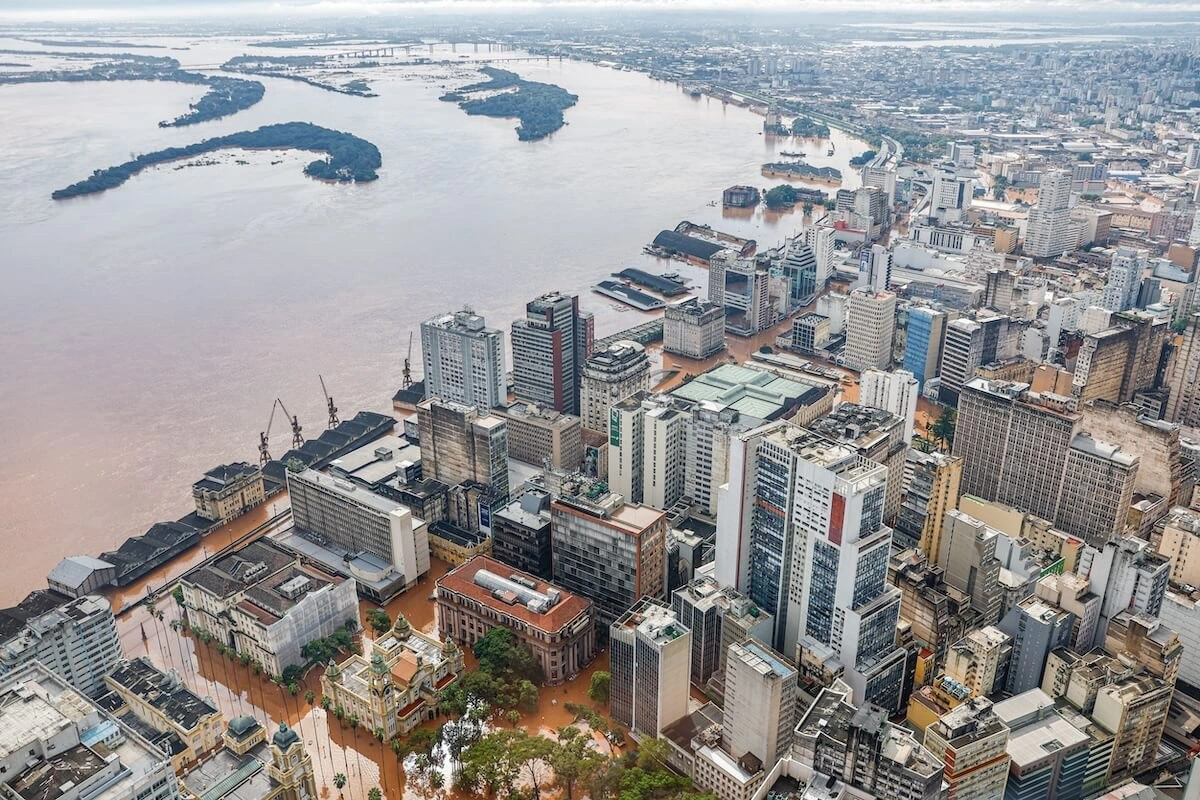
Historically, Rio Grande do Sul has endured about 20% of Brazil’s climate-related damages over three decades, amounting to R$100 billion ($19 billion).
The costs from recent floods are set to exceed these figures. This disaster could dramatically slow the state’s economic growth.
Initially expected to grow by 4% this year, the new forecast anticipates a decline to -0.77%.
“Although minor, this represents a five-point downturn from our earlier predictions,” Marchet stated. He also warned of a potential drop to -2%.
Additionally, accessing credit for reconstruction has become difficult, with many previous collaterals now submerged.
A $21 Billion-Dollar Battle Against Flood Devastation
Consequently, corporate debt has risen among the impacted businesses.
Moreover, Marchet criticized federal measures as inadequate for the required rebuilding efforts.
Current aid focuses on personal financial support and pausing state debt payments, which do not meet infrastructure needs.
“These actions are insufficient for reconstructing our state’s foundation,” he asserted, emphasizing the need for significant investments to fortify against future calamities.
In summary, reconstructing Rio Grande do Sul is a monumental task, crucial not just financially but for future regional stability and growth.
The recovery process is vital, highlighting the broader impacts of climate change on local economies and the need for sustainable infrastructure.
This article was produced by The Rio Times’ automated newsroom system. How we use AI · Report an error · Editorial responsibility: Matthias Camenzind, Editor-in-Chief
Read More from The Rio Times