Paraná Farm Production Hits Record US$41 Billion in 2025
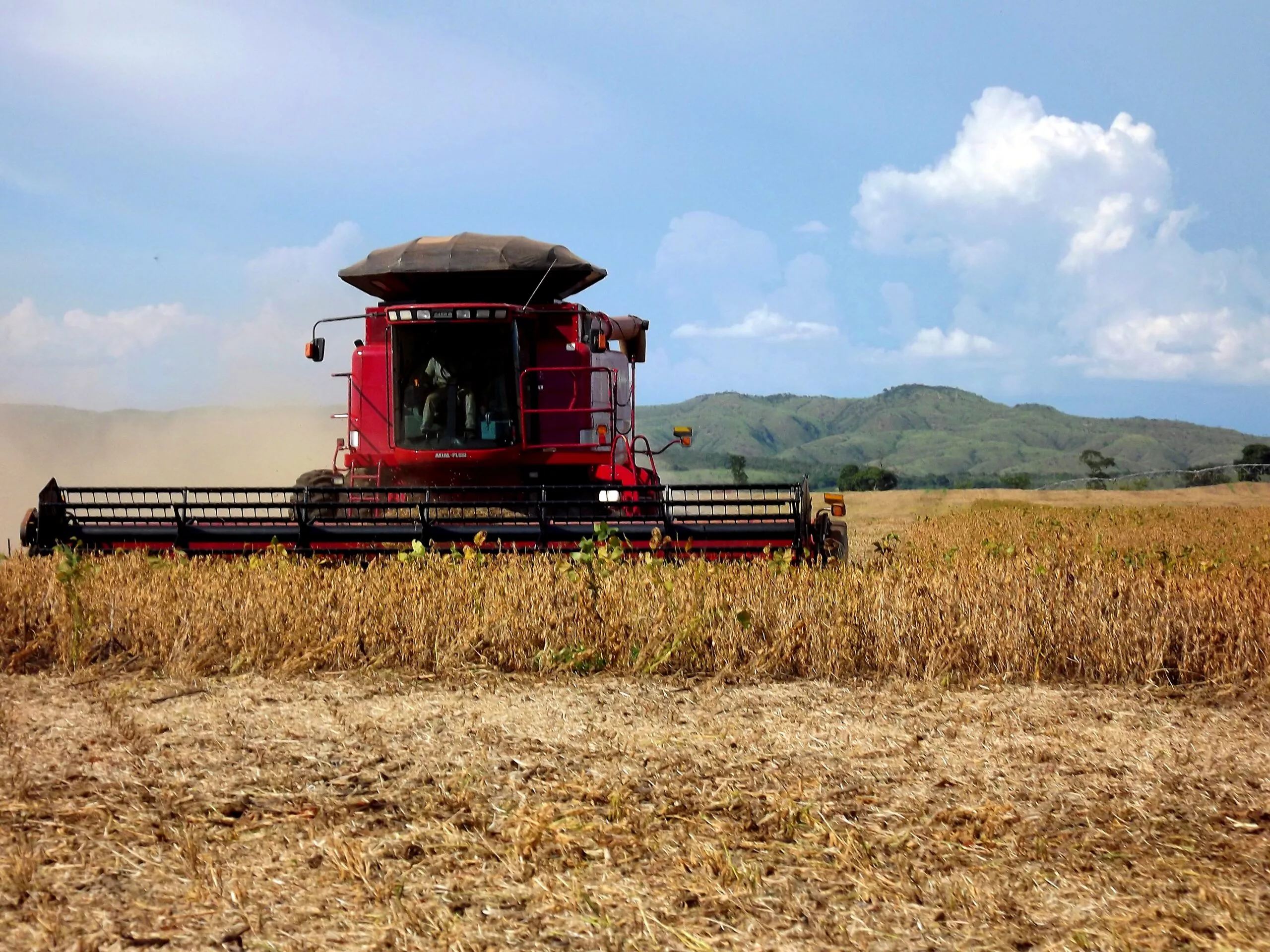
Brazil · AGRIBUSINESS
Key Facts
- —Record The state total reached 213.06 billion reais (US$ 41.29 billion) in 2025.
- —Growth Nominal gain of 13 percent, or 9 percent after inflation, versus 2024.
- —Livestock Animal chains produced 112.1 billion reais (US$ 21.72 billion), some 53 percent of output.
- —Soybeans The crop earned 42.3 billion reais (US$ 8.20 billion) from 21.4 million tonnes.
- —Exchange rate The PTAX selling rate was 5.1604 reais per dollar on 26 August 2026.
State agriculture data show a 9 percent real gain, driven by volume in grains and by prices in meat.
Paraná farm production hit a record 213.06 billion reais (US$ 41.29 billion) in 2025, state data show. The gain of 13 percent in reais rested on bigger grain harvests and firmer meat prices.
A record year on the state’s farms
The Paraná farm production value reached 213.06 billion reais (US$ 41.29 billion) in 2025. That is the largest gross farm income the southern Brazilian state has ever recorded.
The measure is the Valor Bruto da Produção, or gross value of production, known in Brazil as the VBP. It counts farm-gate revenue before processing, freight and taxes.
In 2024 the same measure stood at 188.3 billion reais (US$ 36.49 billion). The 2025 result is therefore 13 percent higher in nominal terms.
Stripping out inflation, the gain was 9 percent in real terms. Prices alone did not create the record, because volumes rose across the main crops.
All conversions here use the PTAX reference rate of the Banco Central do Brasil, the country’s central bank. Its selling rate was 5.1604 reais per dollar on 26 August 2026.
Who counts the money, and how
The figures come from the Departamento de Economia Rural, the rural economics department of the state government, known as Deral. Deral sits inside the Secretaria de Estado da Agricultura e do Abastecimento, the state agriculture and supply secretariat, or Seab.
Deral technicians survey prices and output for Paraná farm production in all 399 municipalities. The 2025 basket covered 347 separate products and farm activities.
A preliminary reading of 212.6 billion reais (US$ 41.20 billion) was published in June 2026. Municipalities then had 30 days to appeal against their own numbers.
The consolidated result was released on 24 August 2026 and lifted the total slightly. Seab and Deral now put the year at 213.06 billion reais (US$ 41.29 billion).
Livestock carries more than half
Livestock generated 112.1 billion reais (US$ 21.72 billion), or 53 percent of the state total. It was the fourth year in a row that animal chains led Paraná farm production.
Broiler chicken was the biggest single livestock line at 35.5 billion reais (US$ 6.88 billion). That is 17 percent of the state total, up from 31.8 billion reais (US$ 6.16 billion) in 2024.
Cattle rearing and fattening injected 19.4 billion reais (US$ 3.76 billion) into the state economy. Dairy added 12.8 billion reais (US$ 2.48 billion), and pork for slaughter 9.6 billion reais (US$ 1.86 billion).
Grains stage a strong comeback
Crop farming produced 91.2 billion reais (US$ 17.67 billion), about 43 percent of the total. Forestry accounted for most of the rest, at 9.7 billion reais (US$ 1.88 billion).
Soybeans stayed the largest single activity, at 42.3 billion reais (US$ 8.20 billion). The harvest rose 14 percent, from 18.8 million to 21.4 million tonnes.
Corn recovered hard after a crop failure in 2024 cut the harvest to 16 million tonnes. Both corn crops together reached 21 million tonnes and 19.1 billion reais (US$ 3.70 billion).
Wheat and other winter crops also gained yield in the 2024/25 season, Deral said. Sugarcane entered the top ten activities with 4.8 billion reais (US$ 930 million) from 36.7 million tonnes.
Volume, not price, did most of the work
The split between volume and price is the most telling part of the Paraná farm production data. Grains grew mainly on bigger harvests, while meat and milk grew mainly on better prices.
Second-crop corn actually sold cheaper in 2025, at 53.89 reais (US$ 10.44) a 60-kilo sack. The 2024 average had been 54.90 reais (US$ 10.64), so the 30 percent real gain came from supply.
Soybeans followed the same pattern, with a 10 percent real rise built on 14 percent more volume. Deral described the advance as productivity in the field rather than a market swing.
Livestock told the opposite story, since chicken slaughter stayed inside its long-run band of 2.35 to 2.4 billion birds. The 14 percent nominal gain there came largely from firmer prices for poultry, beef, pork and fish.
Milk was a milder version of the same effect, with output up 3 percent past 4.7 billion litres. The average farm-gate price moved from 2.61 reais (US$ 0.51) to 2.67 reais (US$ 0.52) a litre.
The west of the state takes the lead
Western Paraná produced 48.25 billion reais (US$ 9.35 billion), or 22.64 percent of the state total. The Matelândia district, covering 47 municipalities, was the top farm region for the year.
Toledo was the strongest single municipality, at 5.16 billion reais (US$ 1.00 billion). Cascavel, Castro, Santa Helena and Carambeí completed the top five.
Forty-five municipalities passed 1 billion reais (US$ 194 million) in gross farm revenue. They are about 11 percent of the state’s 399 cities but hold 35.4 percent of its farm income.
Where the state sits nationally
The federal agriculture ministry, Ministério da Agricultura e Pecuária, keeps its own VBP series for every state. On that measure the state ranked fourth in 2025, behind Mato Grosso, Minas Gerais and São Paulo.
The ministry put the state at 157.4 billion reais (US$ 30.50 billion), about 11.2 percent of the national total. Mato Grosso led that ranking with 221.3 billion reais (US$ 42.88 billion).
The two series differ because Deral counts 347 items while the ministry tracks a narrower basket. Readers should not treat the state and federal totals as directly comparable.
In animal protein, Paraná farm production is the clear national leader and has been for 19 straight years. The state accounts for about 34.4 percent of Brazil’s chicken slaughter.
National VBP was reported near 1.4 trillion reais (US$ 271 billion) for 2025, up 11.3 percent. The state’s primary sector grew 13.1 percent, says Ipardes, the Paraná economic and social development institute.
The 2026 picture so far
Companhia Nacional de Abastecimento, Brazil’s national food supply agency known as Conab, sees another national record ahead. Its eleventh survey of the 2025/26 season, published on 13 August 2026, projects 360.8 million tonnes of grain.
For this state, a Deral forecast in May 2026 placed soybeans near 21.7 million tonnes on 5.75 million hectares. First-crop corn set a yield record above 11,000 kilos per hectare.
Whether Paraná farm production sets another record depends on prices as much as weather. Deral will not publish the 2026 value until well into 2027.
More: Brazil news in English, every day from The Rio Times.
Frequently Asked Questions
What exactly does the 213.06 billion reais figure measure?
It is the gross value of production, or VBP, calculated by Deral for 347 farm items. The figure is farm-gate revenue for calendar 2025, before processing, freight or taxes.
Did higher prices or bigger harvests cause the record?
Both, but they worked in different places, and the real gain of 9 percent shows volume mattered. Grain volumes rose sharply while meat and milk gained mostly on price.
Where does the state rank among Brazilian farm states?
On the federal ministry’s own VBP series, Paraná farm production ranked fourth in 2025, near 11.2 percent of the national total. It leads the country in chicken output.
Connected Coverage
Sources
- www.agricultura.pr.gov.br
- dcmais.com.br
- diariodosudoeste.com.br
- www.bemparana.com.br
- www.agrolink.com.br
- curitibainforma.com.br
- www.brasilagro.com.br
- agenciabrasil.ebc.com.br
- www.portaldoagronegocio.com.br
- gazetadoparana.com.br
- olinda.bcb.gov.br
This article was produced by The Rio Times’ automated newsroom system. How we use AI · Report an error · Editorial responsibility: Matthias Camenzind, Editor-in-Chief