Nigeria Claims US$200 Billion in Free Zone Investment as It Tightens Rules
Nigeria · INVESTMENT
Key Facts
- —The country Nigeria is Africa’s most populous nation, with about 230 million people. Its economy is less than a tenth the size of Britain’s in dollar terms, and crude oil still earns most export revenue.
- —Why it matters Free zones are fenced or licensed areas where companies pay little or no tax and duty if they export. Nigeria uses them to court factories, logistics firms and oil-service companies.
- —Why now Trade minister Jumoke Oduwole announced the rewrite on 17 September. A drafting retreat on the new rules opened in Abuja, the capital, on 26 September.
- —What happened Oduwole said the authorities record over US$200 billion of foreign investment and more than 100,000 direct jobs across the zone scheme.
- —The numbers She also cited over ₦900 billion (about US$678 million) of domestic investment and more than 500,000 jobs once supply chains and host communities are counted.
- —What it means for you Foreign firms in Nigerian zones face a 75% export, 25% domestic-sales split, with home-market sales taxed under normal Nigerian law.
- —Still open The US$200 billion is a cumulative official tally. No breakdown between pledged and invested money has been published, and the new regulations are not final.
Nigeria free zones have drawn more than US$200 billion of foreign investment, according to the federal government. The claim comes as Abuja tightens the rules that let zone companies sell into the home market.
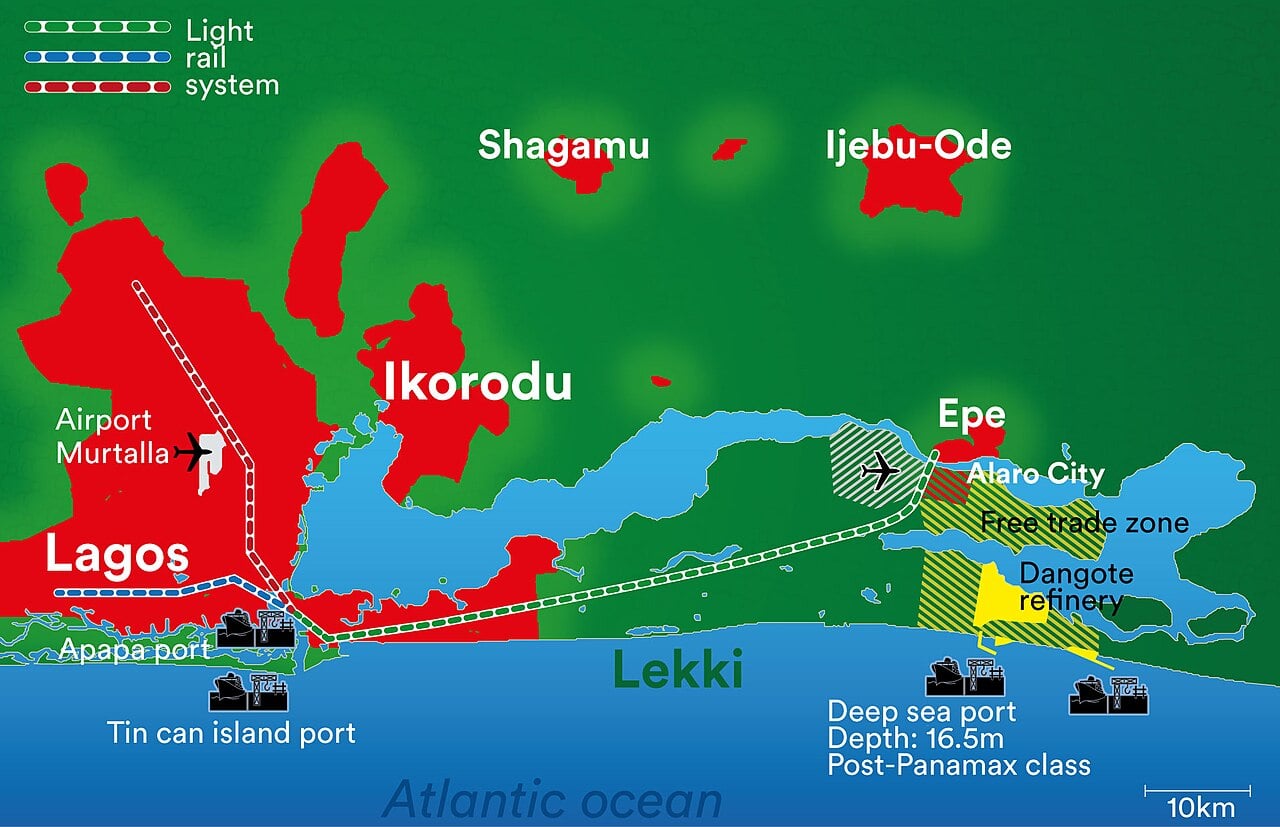
Nigeria, Africa’s most populous country, has spent three decades building special zones where exporters pay little tax or duty. Nigeria free zones now host refineries, factories, logistics hubs and oil-service bases, mostly around Lagos and the oil-producing south.
Jumoke Oduwole, the minister of industry, trade and investment, put a large number on that effort. She told a stakeholder meeting of zone operators on 17 September that the scheme had drawn over US$200 billion of foreign capital.
What the minister said
“Across the scheme, the authorities record over $200bn of foreign investment,” Oduwole said, according to Punch. She cited over ₦900 billion (about US$678 million) of domestic investment as well.
She added that the zones had created more than 100,000 direct jobs.
Counting supply chains, logistics networks and host communities, she said, the total rises to over 500,000 jobs.
The naira figures here are converted at ₦1,328 per US dollar, the rate published by open.er-api.com on 2 October 2026. The Sun and BusinessDay first reported the remarks on 20 September.
What the US$200 billion measures
The number is a cumulative tally recorded by the two agencies that license the zones. They are the Nigeria Export Processing Zones Authority (NEPZA) and the Oil and Gas Free Zones Authority (OGFZA).
It covers the whole history of the scheme, not one year. No public breakdown separates money pledged by investors from capital actually spent inside the zones.
Neither the ministry nor the two agencies has published how the total was calculated, or over which years.
Readers should treat it as an official claim rather than an audited count.
The new rules
The real news is the rewrite of the NEPZA regulations. Oduwole said the government had identified a major problem: goods made in zones were leaking into the home market while keeping export tax breaks.
The revised framework clarifies a 75% export and 25% domestic-sales structure. Sales into Nigeria will be aligned with normal Nigerian tax law.
The reforms also split duties more clearly. NEPZA and OGFZA keep licensing and oversight, the Nigeria Revenue Service handles tax, and the Nigeria Customs Service handles customs control and enforcement.
Digital free zones
The draft rules create what the minister called Digital Free Zones and Digital Special Economic Zones. These would operate “on a platform rather than a perimeter,” with no requirement for a physical site.
A new Innovator Licence would cover firms in fields where regulation is still developing. Reporting and fee structures would reflect how digital businesses earn money.
How operators reacted
Representatives of zone operators welcomed a stronger, more transparent regime, according to Punch. They asked the government to protect companies that invested under the existing rules.
Their main worry is uncertainty during the transition. Investors priced projects on the old incentives, and a sudden change could hit returns on plants already built.
The wider strategy
Abuja wants the zones to drive non-oil exports and support President Bola Tinubu’s goal of a US$1 trillion economy by 2030. The model borrows from Asia and the Gulf.
World Bank research has estimated that China’s special economic zones produce about 22% of its output, 45% of its foreign investment and 60% of its exports. Dubai’s Jebel Ali Free Zone made the United Arab Emirates a major re-export hub.
This fits the pattern covered in Africa: The New Scramble, where ports, trade routes and export platforms have become tools of great-power rivalry.
What it means for foreign investors
For a company already inside a Nigerian zone, the key change is the domestic-sales cap and the tax on those sales. Exporters keep their incentives; firms built to serve the Nigerian market from inside a zone lose ground.
Digital businesses may gain a new route into the scheme without building a physical plant. The details depend on regulations that are not yet final.
What to watch next
A drafting committee began turning the consultations into final regulations on 26 September. It is examining transition arrangements for existing licences and a possible phased 75% rule.
The other test is enforcement. Customs and tax officials must police the 75% rule without choking legitimate exporters.
Frequently Asked Questions
How much foreign investment have Nigeria’s free zones attracted?
Trade minister Jumoke Oduwole said the authorities record over US$200 billion of foreign investment across Nigeria free zones. It is a cumulative official tally, with no published split between pledged and invested capital.
How many jobs have Nigeria’s free zones created?
The government says more than 100,000 direct jobs. It puts the total above 500,000 when supply chains, logistics networks and host communities are included.
What is the new export rule for Nigeria’s free zones?
The revised regulations clarify a 75% export and 25% domestic-sales structure. Sales into Nigeria are to be taxed under normal Nigerian law.
What are digital free zones?
They are a new licence category in the draft rules for firms that operate online rather than on a physical site. The regulations are not yet final.
Connected Coverage
Sources
This article was produced by The Rio Times’ automated newsroom system. How we use AI · Report an error
LatAm Markets: Live Signals → — real-time movers, turnover leaders and FX across Latin America.
Read More from The Rio Times