Narcocorrido: how Mexican culture expresses the importance of drug trafficking in the country
El Chapo had contacts
With Colombian narcos
And dealt drugs
From South America
To the North of the continent
Where there was a market
Huge imports
Detected the heroin
That came from Thailand
Ready to be distributed
In the countries in Europe
and Latin America
(Free translation of the composition by Mario Quintero Lara)
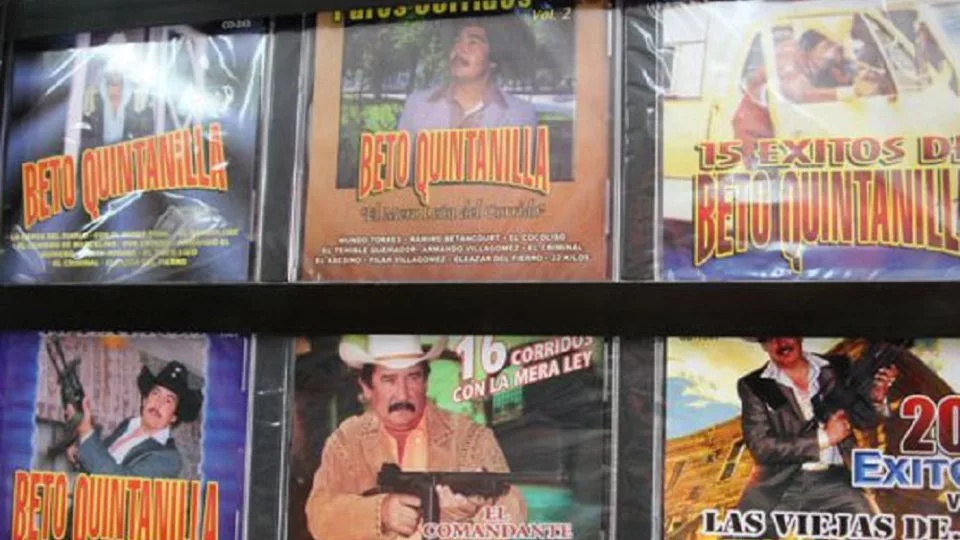
This excerpt is part of a “narcocorrido”, a style that works as a musical tribute to drug barons.
It is a mixture of the Mexican musical genre “corrido”, created in the 18th century, with lyrics that tell stories of drug dealers, sometimes with details that even the police reports do not know.
The narcocorrido cited above, by Mario Quintero Lara, deals with the story of former drug trafficker Joaquín “El Chapo” Guzmán, who, this week, asked the president of Mexico, Andrés Manuel López Obrador, for help in the face of the “psychological torment” he claims to be experiencing in prison in the United States, where he is serving a life sentence.
“El Chapo”, once one of the richest people in the world, ran the cartel in northern Mexico and became one of the main suppliers of drugs to the United States.
In 2009, he entered the Forbes list of the richest people in the world at position 701, with an estimated fortune of US$1 billion.
The former drug lord is accused of helping to transport tons of cocaine into the US, conspiring to produce and distribute heroin, methamphetamine and marijuana, and killing and ordering the killing of people.
Guzmán famously escaped prison twice in Mexico and managed to avoid arrest repeatedly, until he was apprehended in 2016 and sentenced to life in prison in 2019.
The war on drugs in Mexico, which pits authorities against traffickers, has killed more than 100,000 people in a decade and is the theme of this musical subgenre of the Mexican corrido, increasingly popular in the country, also called “northern ballad”.
Songs with lyrics that describe the universe of Mexican drug trafficking gained prominence in the world with the television series Breaking Bad, Narcos, La Reina del Sur and El Chapo.
The trio Los Cuates de Sinaloa, for example, gained notoriety with the theme Negro y Azul, a narcocorrido in homage to the character Walter White (Heisenberg), protagonist of the series Breaking Bad.
The music baptizes a chapter and appears right at the opening. Singer Gabriel Berrelleza tells the story of how “WW” conquered his reign in the world of drug trafficking.
“The cartel is in an uproar, because of the lack of respect / They talk about a certain Heisenberg, who now controls the market / Nothing is known about him, because he was never seen / From the cartel’s fury, no one has ever escaped / This guy is already dead, but they still haven’t warned him”, says the free translation of one of the song’s excerpts.
CULTURE OF DRUG TRAFFICKING
Drug trafficking is so rooted in Mexico’s history and in its geopolitical relationships that it spills over into cultural productions.
In addition to narcocorridos, there are other demonstrations on the subject.
Last November, the mayor of Mexican drug lord Joaquín “El Chapo” Guzmán’s hometown revealed that he was considering opening a narcotics museum, hoping to attract tourists to the area.
The museum, in the city of Badiraguato, in the state of Sinaloa, in northwest Mexico, could tell the stories of several drug trafficking leaders who were born in the region, which is the heart of the powerful Sinaloa Cartel, according to the Mexican newspaper Reforma.
Using drug trafficking as a theme for artistic and tourist manifestations divides opinions.
“We need to demystify some prejudices. In fact, we are talking about the production, distribution, sale and consumption of narcotic substances that were considered illegal in a certain historical-geographical context”, points out Mariel Muraro, specialist in the subject and Professor of Criminal Law at UniCuritiba.
She quotes the author Rosa Del Olmo, in the book “The Hidden Face of Drugs”, when arguing that the strong presence of Mexican immigrants in the United States is one of the biggest motivators of drug restrictions in the country, as a pretext to expel them from American lands. originating in Mexico.
This would have contributed to the international image of drug trafficking and its relationship with Latin America.
Mariel believes that it is important for the culture to appropriate the issue, since “drug trafficking is part of Mexican history and must be widely debated by society in general”.
Robervani Pierin do Prado, also a specialist in Criminal Law, professor and coordinator of the Law course at the Integrated University Center of Campo Mourão, in Paraná, Brazil, declares that cultural tributes to drug trafficking are an incentive to crime.
“It conveys the idea that drug trafficking is something positive and that it can add to society,” he observes.
“As much as it is part of history, it continues to be a nefarious crime with deleterious effects”, highlights Prado.
With information from Gazeta do Povo
This article was produced by The Rio Times’ automated newsroom system. How we use AI · Report an error · Editorial responsibility: Matthias Camenzind, Editor-in-Chief
Read More from The Rio Times