Panama · DIPLOMACY
Key Facts
- —Visit President José Raúl Mulino of Panama meets President Daniel Noboa in Guayaquil on Friday 4 September 2026.
- —Agenda Talks cover investment, trade and security, with emphasis on economic matters and security cooperation.
- —Trade balance In 2024 Ecuador exported US$6,286 million to Panama and imported US$118.5 million, on Banco Central del Ecuador data.
- —Main exports Petroleum was US$6,175.7 million of the 2024 total, though Panama is the reported destination rather than the final market.
- —Security focus Coordination against transnational organised crime, which Foreign Minister Roberto Kury called the greatest threat facing the region’s democracies.
Panama’s president heads to Ecuador’s main port city with a lopsided trade balance and shared security worries on the table.
Mulino goes to Guayaquil to talk trade and security with Ecuador’s president, Daniel Noboa, on Friday 4 September 2026. The visit was announced by Ecuadorian Foreign Minister Roberto Kury.
A One-Sided Trade Relationship
The trade numbers are stark. In 2024 Ecuador exported US$6,286 million to Panama and imported US$118.5 million, according to the Banco Central del Ecuador.
In the first ten months of 2025 the figures were US$5,614 million against US$87.9 million. Petroleum made up US$6,175.7 million of the 2024 exports.
The central bank cautions that Panama is the destination exporters report, not the country that burns the oil.
What Each Country Sells
Strip out the oil and the relationship is small. Ecuador’s non-petroleum exports to Panama came to US$110.4 million in 2024.
Panama’s shipments the other way were US$118.5 million in 2024, of which US$63.8 million was non-petroleum.
Ecuador’s ambassador in Panama City has named the products on the table. Ecuador offers organic produce, blueberries above all; Panama offers detergents, cleaning liquids and vehicle parts.
Why Guayaquil Hosts the Meeting
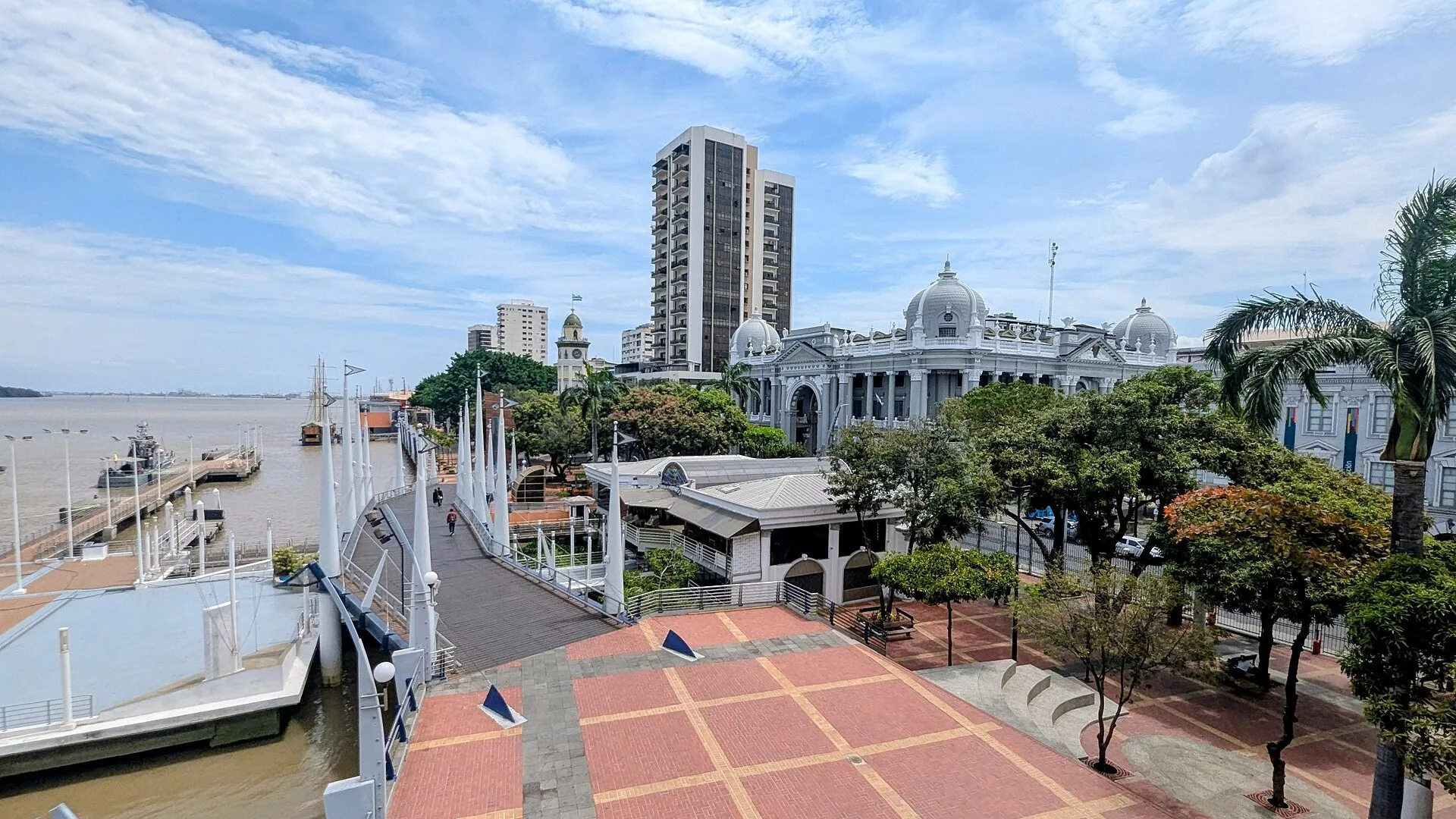
Guayaquil is Ecuador’s largest city and its main port. It handles most of the country’s non-oil trade.
Neither government has explained why Guayaquil rather than the capital, Quito. Noboa does conduct much of his official business from the coast.
Beyond Trade: Security Cooperation
Security is also on the agenda, with discussions on joint action against transnational organised crime. Migration is a separate item on the agenda.
It rests on two accords the foreign ministries signed in October 2025, covering case handling and information exchange.
Moreover, both leaders will talk about stronger regional security integration. However, no specific operational mechanisms have been outlined.
Recent Diplomatic Contacts
The two presidents have met repeatedly. They saw each other in Seville in June 2025, at Davos and at the United Nations.
Noboa also went to Panama City that January for the CAF economic forum.
Their foreign ministries held a second round of political consultations in October 2025.
Two irritants have already been cleared. Ecuador struck Panama from its tax-haven list on 14 August 2025, and Panama’s National Assembly then voted to lift its retaliatory measures.
Cooperation in logistics, clean energy, agro-industry and services is also part of the conversation.
What Is an Economic Complementation Agreement?
An Economic Complementation Agreement is the Latin American form of a partial trade deal. It cuts tariffs on agreed goods rather than opening whole economies.
Such an agreement could help balance the trade relationship over time. What is on the table is a narrower Partial Scope Agreement under ALADI.
The two trade vice-ministers signed its terms of reference to open negotiations.
Ecuador first aimed to sign in the first quarter of 2026. In January its ambassador, Pascual del Cioppo, said April or May instead.
It is still unsigned, and neither government has said it will be signed on Friday.
Mulino’s Priorities
President Mulino has emphasized economic matters and security cooperation in his agenda. He arrives in Guayaquil with a focus on investment opportunities.
For Panama, the visit is a chance to boost its small export footprint in Ecuador. By contrast, Ecuador sees Panama as a gateway to wider markets.
The Broader Regional Context
The meeting comes amid regional efforts to tackle organised crime together. Mulino and Noboa are expected to align their approaches.
Since both countries face similar security challenges, cooperation could strengthen their positions. Overall, this visit is part of a larger push for regional integration.
Looking Ahead After the Talks
After the meeting, both governments may issue statements on progress. However, no specific outcomes have been announced yet.
In short, the visit is a step toward deeper ties between Panama and Ecuador. The focus will remain on trade and security in the months ahead.
More: Latin America news in English, every day from The Rio Times.
Frequently Asked Questions
What is the main purpose of Mulino’s visit to Guayaquil?
The main purpose is to discuss investment, trade and security with President Daniel Noboa. The emphasis is on economic matters and security cooperation.
How lopsided is the trade between Ecuador and Panama?
In 2024 Ecuador exported US$6,286 million to Panama and imported US$118.5 million, according to the Banco Central del Ecuador. The gap is almost entirely crude oil.
The central bank notes Panama is the reported destination for those cargoes, not their final market.
Why is the meeting held in Guayaquil instead of Quito?
Guayaquil is Ecuador’s largest city and its main port. Therefore, it is the natural place for an economic meeting.
What security topics are on the agenda?
The leaders will discuss joint action against transnational organised crime and regional coordination. Migration cooperation is a separate strand, resting on accords signed in October 2025.
Connected Coverage
Sources: EFE, 1 September 2026; Panamá América; Diario Expreso; Banco Central del Ecuador; El Universo; Primicias; La Estrella de Panamá.
This article was produced by The Rio Times’ automated newsroom system. How we use AI · Report an error · Editorial responsibility: Matthias Camenzind, Editor-in-Chief