Mexico · Economy
- MX$2.1 trillion (~US$123 billion): the combined pension bill sitting on the books of Pemex and CFE by mid-2026.
- Pemex: MX$1.506 trillion (~US$88 billion) in pension obligations, up 10.9% from a year earlier.
- CFE: MX$554.2 billion (~US$32.5 billion), up a steep 25.3% year on year.
- Federal budget: pensions swallow about 24% of programmable spending in 2026, with IMSS, ISSSTE, Pemex and CFE alone needing more than MX$1.7 trillion (~US$100 billion).
- Pemex losses: a MX$46 billion (~US$2.7 billion) net loss in the first quarter of 2026, on top of MX$1.43 trillion (~US$84 billion) of financial debt.
- Public finances: total government debt near 51% of GDP, with a 2026 deficit target of about 4.1% of GDP.
México’s two giant state firms owe more than US$120 billion in future pensions — and the bill lands on a government that is already short of cash.
The Pemex and CFE pension costs are climbing fast in 2026, and they are quietly becoming one of the heaviest weights on México’s strained public finances. Together, the country’s state oil company and its state electricity company now carry pension promises worth about MX$2.1 trillion (~US$123 billion) — money owed to current and future retirees that neither firm has fully set aside.
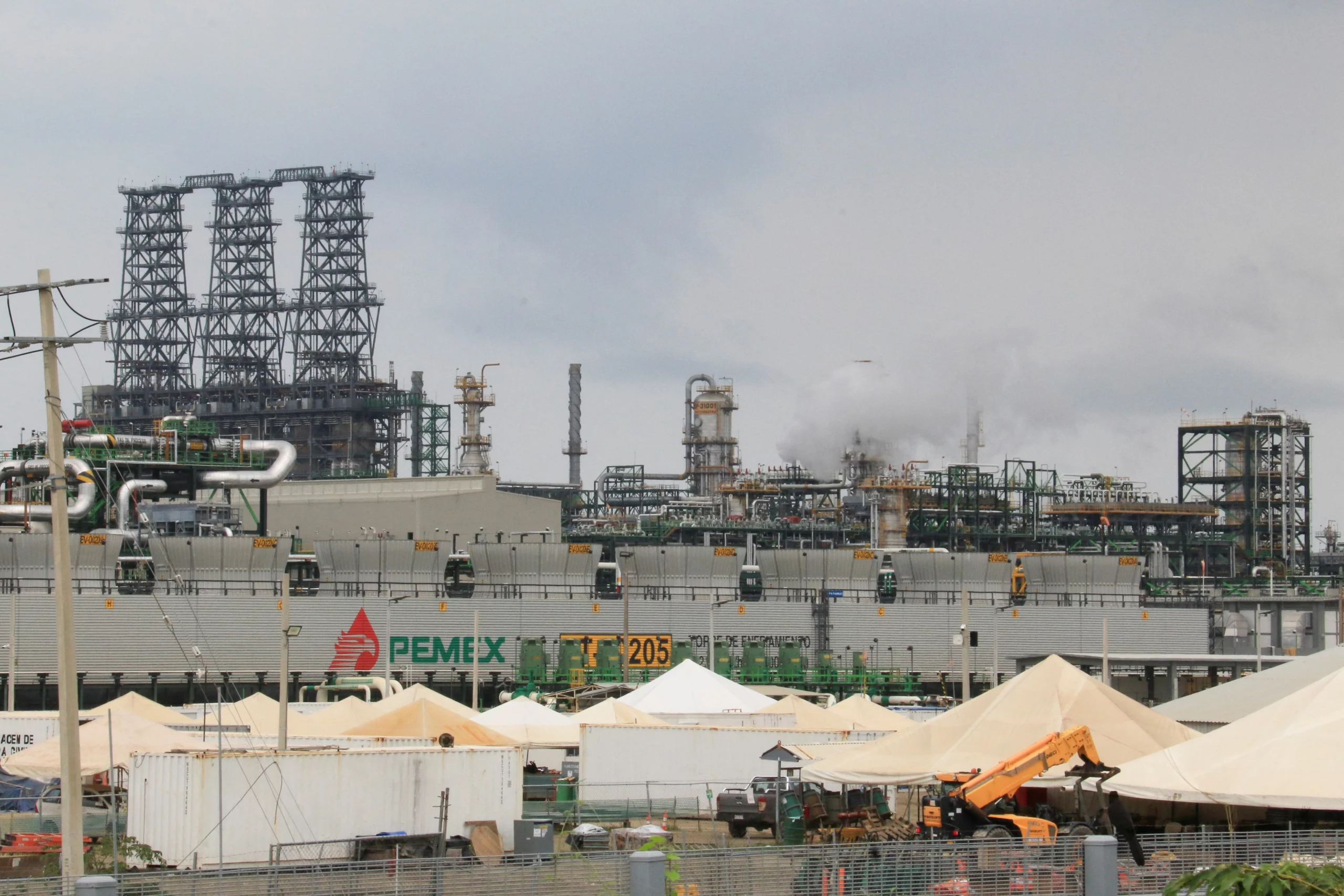
How big are the Pemex and CFE pension costs?
Start with the plain meaning. A “pension liability” is simply the total of all the retirement payments a company has promised its workers, added up in today’s money. If the company has not saved enough to cover that promise, the gap becomes a debt like any other.
Pemex carries the larger share. Its pension obligations reached MX$1.506 trillion (~US$88 billion) by the first half of 2026, according to figures reviewed by the Mexican Institute for Competitiveness (IMCO). That is 10.9% more than a year earlier, and it now equals 37.6% of everything the company owes. CFE, the electricity utility, adds MX$554.2 billion (~US$32.5 billion), a figure that jumped 25.3% in a single year.
Why the pension bill keeps growing
Two forces push these numbers up. Workers at both firms retire on generous terms, sometimes after fewer years than private-sector staff, and many draw large monthly checks — the “pensiones doradas,” or golden pensions, that Méxican newspapers keep writing about. People also live longer, so each promise has to be paid for more years than the plans first assumed.
President Claudia Sheinbaum’s government has tried to slow the bleeding. It capped the highest payouts and reshaped some benefits in early 2026. But the reforms touch new and future retirees more than current ones, so the accumulated bill still rises while the savings arrive slowly.
What it means for the federal budget
Here is where the “fiscal burden” comes in — a fancy phrase that just means how much a cost eats into the government’s wallet. In the 2026 budget, pensions of all kinds absorb roughly 24% of programmable spending, the part of the budget the state can actually choose how to use.
The commitments to IMSS, ISSSTE, Pemex and CFE alone come to more than MX$1.7 trillion (~US$100 billion). Every peso spent topping up a retiree’s check is a peso not spent on hospitals, schools or roads. And because Pemex and CFE cannot cover their own promises, the federal treasury increasingly stands behind them.
Pemex is already losing money
The pension weight lands on companies that are not healthy to begin with. Pemex reported a net loss of MX$46 billion (~US$2.7 billion) in the first quarter of 2026, and it carries about MX$1.43 trillion (~US$84 billion) in financial debt on top of its pension promises. Its net worth is deep in the red.
So the government keeps stepping in. The 2026 package hands Pemex MX$517.4 billion (~US$30.3 billion), including MX$263.5 billion (~US$15.4 billion) just to pay down debt. Rating agency Fitch has said Pemex’s liabilities effectively drag the country’s own credit rating down by a full notch.
Why this matters if you live in or invest in Latin America
If your money or your life is tied to México, this is not an abstract accounting story. The more the treasury spends propping up Pemex and CFE, the less room it has to cut taxes, invest, or cushion a slowdown — and México’s public debt is already near 51% of GDP, with a 2026 deficit target of about 4.1%. That math shapes the peso in your pocket, the interest rate on your mortgage or business loan, and how nervous foreign investors feel about the whole country. When a state firm’s hidden pension bill grows faster than the economy, everyone who holds pesos ends up sharing the cost.
More: Mexico news in English, every day from The Rio Times.
Frequently Asked Questions
What is a pension liability in plain terms?
It is the full amount a company has promised to pay its retirees over time, counted in today’s money. When the firm has not saved enough to cover it, the shortfall works like a debt the company — or the government behind it — must eventually pay.
How much do Pemex and CFE pensions cost together?
By the first half of 2026 the two firms carried combined pension obligations of about MX$2.1 trillion (~US$123 billion). Pemex accounts for MX$1.506 trillion (~US$88 billion) and CFE for MX$554.2 billion (~US$32.5 billion).
Who ultimately pays this bill?
Because both companies are state-owned and cannot fully fund their promises, the federal government stands behind them. That means Méxican taxpayers, through the national budget, increasingly carry the cost.
Why should investors care about state-firm pensions?
These growing obligations widen the government’s deficit and weigh on México’s credit rating. That can raise borrowing costs, pressure the peso and reduce money available for other public spending — all of which affects returns across the Méxican economy.
Sources: AM/El Economista (13 August 2026); Mexican Institute for Competitiveness (IMCO); El Imparcial on the 2026 Federal Expenditure Budget (PEF); Mexico Business News; Bloomberg; Fitch Ratings; The Rio Times.
This article was produced by The Rio Times’ automated newsroom system. How we use AI · Report an error
Read More from The Rio Times