Locals shocked and surprised to see tanks emerging from waters on beach near Rio de Janeiro
RIO DE JANEIRO, BRAZIL – Residents of beachside Maricá close to Rio de Janeiro were shocked to see amphibious tanks emerging from the water last week. As this coincided with the beginning of the “superferiado” lockdown in the state, many assumed that the military presence was to enforce lockdown in the area, with rumors to this effect spreading like wildfire on social media and WhatsApp groups.
https://vimeo.com/531464139
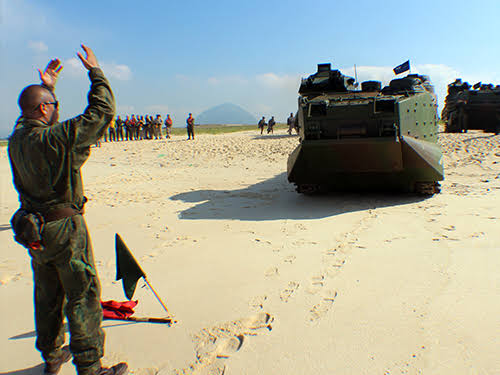
Videos and images show some strange shapes in the water and then the amphibious tanks emerging from the sea and lines of tanks ranged on the beach. Command posts were set up and there was additionally activity in the restinga area behind the beach itself. Large numbers of soldiers were seen elsewhere in the area.
All this, however, was not due to lockdown, but simply for the training of the navy in the use of amphibious vehicles by the specialized Battalion for Amphibious Vehicles (BtlVtrAnf). Students of the Amphibious Assault Vehicles Course (C-Esp-Op-CLAnf) are brought to the Restinga of Maricá to train as the gradient of the beach and characteristics of the seabed here are perfect for introducing students to the more difficult conditions that soldiers will encounter in real operations. The Commandant of the Reinforcement Troop (TrRef) was present and watched the exercise in live transmission from a command center on the beach.

It may seem absurd that the navy would be involved to this degree in implementing restrictions, but the Brazilian navy has in the past been involved in helping Maricá authorities police coastal areas, principally to ensure safety regulations are followed by private boats in the region. They are also involved in the enforcement of fishing regulations as illegal trawling can be a problem in the region.
The Brazilian Armed Forces have a large number of these amphibious assault vehicles, with the unit that they form part of going back to 1960. They are known as Clanfs for short and those who operate them are called “clanfistas”.
https://vimeo.com/531465186
A contingent of 23 was purchased in 2014. These were model AAV-7A1 and are the same that are used by United States Marines. These models, which the Brazilian navy possesses a total of 49 now, can go at up to 13 km/h in water, 32 km/h off-road, and reach a maximum speed of 72 km/h on surfaced roads.
The purpose of these vehicles is to allow ground troops to disembark safely and secure a beachhead in a combat situation. The vehicles protect soldiers and provide support fire as troops are carried onto a beach and can then gain control of land for further actions. (Argentina used similar vehicles to invade the Falklands in 1982.) This, of course, is merely precautionary in present-day Brazil.
However, these have been used on dry land, for example in 2010 the pacification of the favela complexes of Alemão and Maré. As they can transport large numbers of soldiers in security they are useful for urban operations.
The Brazilian military though rarely involved in combat is the second largest in the Americas after the USA and has over 300,000 active troops and officers. The navy operate along the country’s coast as well as, significantly, in the rivers of the Amazon basin.
More: Brazil news in English, every day from The Rio Times.
Editorial responsibility: Matthias Camenzind, Editor-in-Chief · Editorial standards · Report an error
Living in or visiting Rio de Janeiro? See this month's events and our Rio de Janeiro city guide with rents, safety and upcoming concerts.