Latin America Defense Monitor — August 30–September 5, 2026
Weekly Edition · Saturday, September 5, 2026 · Issue #20
Executive Summary
The Big Picture: This week’s Latin America Defense Monitor opens again in Colombia, where the new government’s offensive has gone from opening salvo to full doctrine. Between August 27 and 31, the armed forces struck two different FARC-dissident factions from the air, killing at least 31 fighters. In the same days, Bogotá extradited another group’s leader, ended formal talks with three armed organizations, and labelled every non-state armed group in the country a terrorist organization. The conflict-monitoring group ACLED says August was the deadliest month for clashes between security forces and armed groups since its Colombia records began in 2018 — at least 84 killed since De la Espriella took office on August 7.
At the same time, a Washington Post reconstruction revealed that America’s top commanders — including the four-star general responsible for Latin America — formally warned Defense Secretary Pete Hegseth that the six-month Iran war is draining ships, aircraft and equipment from their regions, registering official “non-concur” objections even as the Caribbean strike campaign passes 227 dead.
On the Pacific side, Peru is hosting UNITAS LXVII, the world’s longest-running multinational naval exercise, out of Callao — with Argentina deploying ships and marines for two months. And Ecuador quietly confirmed that the US soldiers operating on its soil belong to the 7th Special Forces Group, with American military personnel now enjoying 180 days of visa-free entry per year.
Latin America Defense Monitor: Where Things Stand
| Country | Status | What’s Happening |
|---|---|---|
| Colombia | High | Airstrikes on two FARC-dissident factions kill 31+ in five days; talks ended with three armed groups; all armed groups declared terrorists; deadliest month since ACLED records began (84+ dead since Aug 7). |
| US (SOUTHCOM) | High | Latin America commander among four-stars formally objecting (“non-concur”) to asset drain for the Iran war; Caribbean boat-strike toll passes 227 across 68+ strikes. |
| Peru | Active | Hosting UNITAS LXVII out of Callao — maritime, amphibious, Amazon-riverine and cyber phases; Argentina deploying for two months alongside Siforex XIV. |
| Ecuador | Elevated | 7th Special Forces Group confirmed operating inside the country; DoD personnel get 180-day visa-free entry; talk of reopening the Manta base. |
| Venezuela | Elevated | New reconstructions detail the January US operation — a cyber blackout over Caracas, 150 aircraft, six air-defense sites destroyed; joint US–Venezuela operations continue under the post-Maduro government. |
| Mexico | Watch | Foreign Secretary Velasco heads to Beijing on his first China visit; no repeat of last week’s border laser engagements reported. |
| Argentina | Active | Deploys to Peru for UNITAS/Siforex; the Milei–Lula row has not stopped joint drills — Viekaren XXVI with Chile wrapped in the Beagle Channel. |

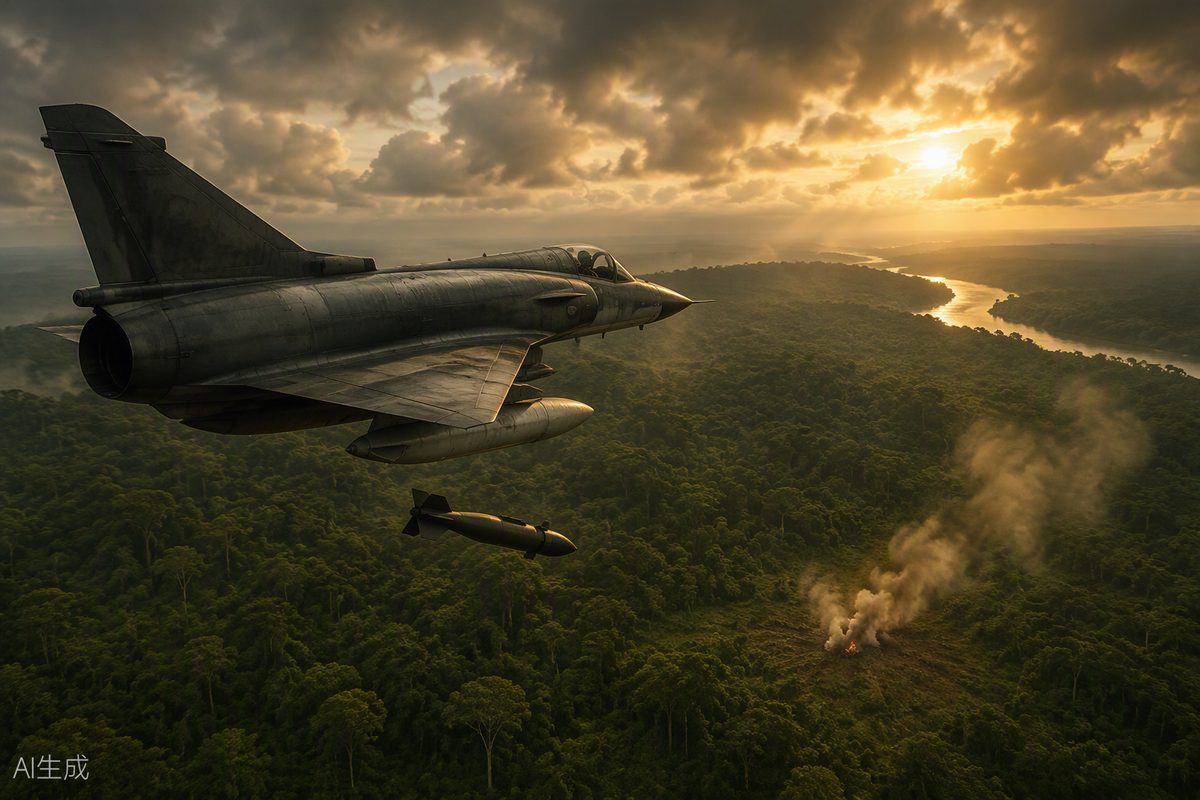
Between August 27 and 31, the Colombian armed forces carried out airstrikes against two different FARC-dissident factions, killing at least 31 fighters — starting with Operation AMÓN in Guaviare and quickly extending beyond it. In the same stretch, the government extradited the leader of another armed group, formally ended peace talks with three organizations, and decreed that every non-state armed group active in Colombia is a terrorist organization.
ACLED, the conflict-data monitor, now counts at least 84 deaths in clashes between security forces and armed groups since De la Espriella took office on August 7 — making August 2026 the deadliest month for such clashes since ACLED began covering Colombia in 2018. Its senior Latin America analyst, Tiziano Breda, put it bluntly: in three weeks the president has “completely buried” Petro’s Total Peace policy, replacing it with an all-out war offering armed-group members two options: prison or death.
The new posture has an architectural dimension too: De la Espriella has offered Medellín as the headquarters of the Shield of the Americas, the US-led security bloc Colombia joined in August. The US delegation to his inauguration was led by the head of the DEA, and Washington has pledged $1 billion in security assistance.
The Washington Post reported Sunday that the heads of the Army, Navy and Air Force — and the four-star commanders overseeing Europe, Asia and Latin America — have formally warned Defense Secretary Pete Hegseth that sustaining the six-month Iran war is unsustainable and erodes their ability to respond to threats in their own regions.
The warnings appear in the classified Secretary of Defense Orders Book dated August 14. The commanders of European, Pacific and Southern Commands registered formal “non-concur” objections — meaning they disagree with keeping forces committed around Iran but will carry out the orders. More than 50,000 troops are committed to the Iran theater, some through September, others into 2027, and equipment has been pulled from every region — including Latin America — to sustain the blockade and strikes in the Strait of Hormuz.
For Latin America, the squeeze is specific: it came in the same week that the boat-strike campaign in the Caribbean and Eastern Pacific passed 227 dead across at least 68 strikes (InSight Crime’s running timeline), and while a US carrier group remains in the Caribbean.
Ecuadorian officials have confirmed that the American soldiers operating inside the country are members of the Army’s 7th Special Forces Group — the Green Beret unit assigned to Latin America — working alongside Ecuadorian forces against cartels (Task & Purpose). President Noboa’s government has granted US military personnel visa-free entry for up to 180 days per year, and two US warships are arriving to support the campaign. Noboa has also advocated reopening the US military base at Manta, closed in 2009.
The Ecuador file also carries a shadow: reporting compiled on Operation Southern Spear notes that the CIA has run a parallel covert strike campaign against suspected trafficking vessels near the Galápagos, both inside Ecuador’s exclusive economic zone and in international waters, and that US and Ecuadorian forces conducted a joint airstrike on a FARC-dissident target in March.
Peru is hosting UNITAS LXVII — the 67th running of the world’s longest annual multinational maritime exercise — out of Callao, with this year’s edition expanding beyond the traditional sea phase to include amphibious, Amazon-riverine, cyber-defense and lake phases. Argentina has deployed ships and personnel to Peru from mid-August through mid-October, doubling up with the Siforex XIV submarine exercise.
The exercise lands amid the deepest US–Peruvian defense ties in years: a $1.5 billion modernization of the Callao naval base is under way, Lockheed’s $1.8 billion industrial package for the F-16 offer is on the table, and record joint coca-eradication figures were posted this year under the CORAH program.
New reconstructions of the January US operation in Venezuela — drawing on Washington Post reporting — detail how it overcame what was considered Latin America’s densest air-defense network: a cyberattack that cut power across much of Caracas, allowing some 150 US aircraft, drones and helicopters to approach undetected, followed by strikes on six air-defense sites covering the capital, the port of La Guaira, La Carlota air base, Fuerte Tiuna, Higuerota airport and the El Volcán communications center.
Venezuela’s Russian-supplied shield — S-300VM, Buk-M2, Pechora and Pantsir systems, backed by Chinese radar — destroyed almost nothing. At least two Buk launchers were confirmed lost. The post-Maduro government that emerged from the operation now cooperates with US forces: in June, a joint operation killed Niño Guerrero, the leader of Tren de Aragua.
China announced that Mexican Foreign Secretary Roberto Velasco Álvarez will make his first visit to Beijing since taking office — a trip framed around deepening the comprehensive strategic partnership. It comes days after the US military’s first operational laser shootdowns of cartel drones on the border, and with US trade pressure on Mexico at a high.
| Country | The Deal | Where It Stands | Why It Matters |
|---|---|---|---|
| Colombia | $1bn US security assistance; Shield of the Americas HQ (Medellín offered) | Pledged; HQ offer on the table | Would anchor the alliance institutionally on Colombian soil |
| Peru | F-16 Block 70 + $1.8bn Lockheed package; $1.5bn Callao base modernization | Package proposed; base work under way | The region’s busiest defense relationship right now |
| Ecuador | US troop presence (7th SFG), 180-day visa-free entry, possible Manta base | Operating; base under discussion | Deepest US footprint in South America in decades |
| Venezuela (legacy) | Russian S-300VM/Buk/Pantsir + Chinese radar | Neutralized in January | A procurement lesson the whole region is studying |
| Argentina | Frigates & submarines (Brazilian and European candidates) | Evaluating; Brazil pitching | Fleet renewal still unfunded but unavoidable |
United States
Brazil
China
Russia
A year ago, the argument in Latin America’s defense ministries was about money: who had it, who didn’t, whose jets were oldest. This week showed the new argument: alignment.
Colombia has aligned completely — airstrikes, extraditions, a billion dollars, and an offer to host the alliance’s headquarters. Ecuador has aligned almost as completely — Green Berets inside, warships coming, a base possibly returning. Peru drills with the US Navy off Callao while weighing American jets. Venezuela’s new government flies joint operations with the country that bombed its capital in January.
Against that: the region’s two largest powers after the US keep their distance. Brazil feuds with Argentina’s president while their navies exercise together, sells warships, and joins nothing. Mexico sends its foreign minister to Beijing in the same week American lasers guard its border.
And the patron itself is stretched. When the general in charge of Latin America has to file a formal objection because his ships are sailing to the Strait of Hormuz, the region’s governments are on notice: the American embrace is real, but it is not unlimited.
Last week the Latin America Defense Monitor asked who gets to lead the fight. This week answered with body counts: 31 in five days of Colombian airstrikes, 227 at sea. The hemisphere has chosen its war. The open question now is whether the patron can fight it everywhere at once.
Background: Colombia’s Guaviare Air Strike Kills 11 in Camp Tied to Calarcá.
Background: US Army Uses a Laser Weapon for the First Time to Down Three Cartel Drones on the Mexico Border.
Previous edition: Latin America Defense Monitor — August 22–29, 2026.
This article was produced by The Rio Times’ automated newsroom system. How we use AI · Report an error · Editorial responsibility: Matthias Camenzind, Editor-in-Chief