LatAm Pre-Open for Friday, September 18, 2026
Key Facts
- The Bank of Japan raised its policy rate to 1.25% overnight, the highest Japanese benchmark in thirty-one years, and the Nikkei still closed 1.38% higher.
- Chile’s exchange is shut today and again on Saturday, for Independencia Nacional and the Día de las Glorias del Ejército, removing one regional market from the day.
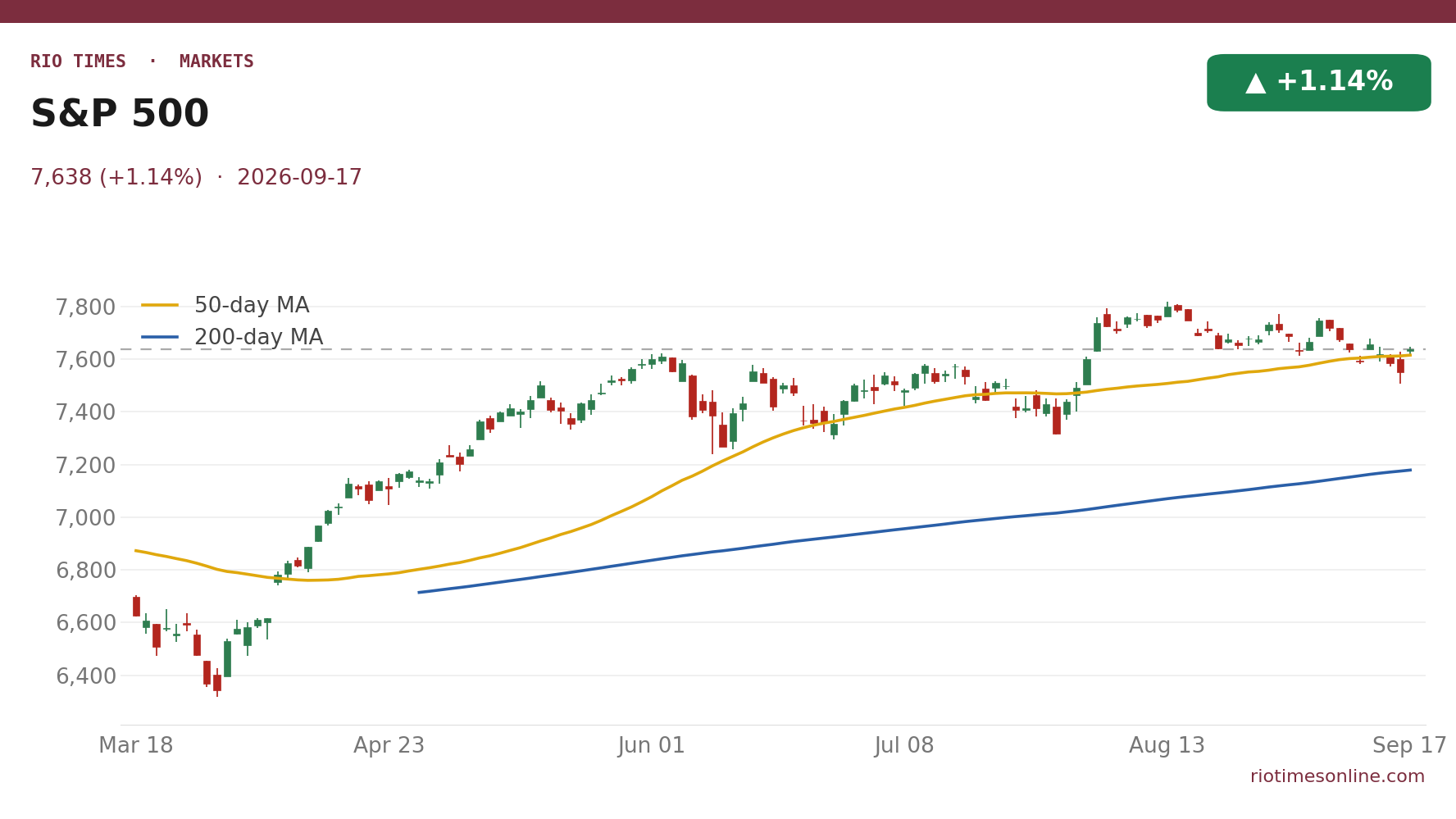
- Wall Street rebounded hard on Thursday, with the S&P 500 up 1.14%, the Nasdaq up 1.69% and the volatility index down 12.8%.
- Argentina publishes August trade figures at four this afternoon, with forecasts near US$2.055 billion against a July surplus of US$2.115 billion.
- Colombia releases its July activity index at noon, with analyst forecasts spread from 0.2% to 2.3% against a June reading of 3.5%.
- The Colombian peso was the region’s weakest currency on Thursday, falling 1.09% to about 3,154 per dollar while every major regional index rose.
Today’s Focus
Three central banks moved this week and only one of them cut. The Federal Reserve raised on Wednesday, Brazil cut the same day, and the Bank of Japan raised overnight.
Tokyo took its benchmark to 1.25% from 1.00%, the highest in thirty-one years. Japanese money has funded carry trades into emerging markets for a generation, and that funding now costs more.
The practical effect across Latin America is a thinner cushion. Investors who borrow cheaply abroad to hold regional paper are being paid less for the same currency risk than a week ago.
Thursday’s session gave the region a friendly handover. The S&P 500 rose 1.14%, the Nasdaq 1.69%, and the volatility index fell 12.8% to 15.44.
One market is missing today. The Bolsa de Santiago is closed for Fiestas Patrias and closed again on Saturday, so Chilean names trade only in New York until Monday.
What matters today. Whether regional currencies can hold their ground now that both Washington and Tokyo are raising. The Colombian peso is the one already showing strain.

| Instrument | Level | Session |
|---|---|---|
| Ibovespa (Brazil) | 185,992.03 | +0.24% |
| S&P 500 (US) | 7,637.76 | +1.14% |
| Nasdaq Composite (US) | 26,418 | +1.69% |
| VIX (US volatility) | 15.44 | -12.82% |
| USD/BRL | 5.1289 | -0.48% |
| Gold (per ounce) | US$4,346.42 | +1.74% |
| Silver (per ounce) | US$65.43 | +3.44% |
| Oil fund (USO) | US$155.31 | -0.55% |
Thursday, 17 September 2026 close. Brent and gold in US dollars.
01 What changed overnight
The Bank of Japan’s increase was the only central bank event since the regional close. It was widely expected, and Japanese equities took it well rather than badly.
American futures carried Thursday’s recovery into Friday without much drama. The ten-year Treasury yield eased to 4.947% from 5.006%, which softens one of the pressures on regional assets.
The two lines show the gap that has opened this month. Wall Street has recovered its September losses while Latin American equities in dollar terms have lagged the move.
That gap is the trade of the quarter for regional desks. It closes either through a weaker dollar or through local earnings, and neither has arrived yet.
02 The board before the open
| Instrument | Last close | Session | Read |
|---|---|---|---|
| S&P 500 | 7,637.76 | +1.14% | A friendly handover into the regional open |
| Nasdaq Composite | 26,418 | +1.69% | Technology led the American rebound |
| VIX | 15.44 | -12.82% | Volatility unwound after the Fed decision |
| US 10-year yield | 4.947% | -1.18% | Eased from 5.006% the day before |
| Brent crude | US$104.82 | -0.95% | Softer on the Saudi pipeline workaround |
| Gold (per ounce) | US$4,346 | +1.74% | Rebound after Wednesday’s rate-driven fall |
Nothing on the board argues for a defensive open. The combination of lower volatility, lower yields and softer oil is the one regional equities usually like.
Oil is the exception worth watching. Brent has fallen for two sessions as Saudi Arabia routes crude around its damaged East-West pipeline through ship-to-ship transfers near Oman.
Live Market IntelligenceLatin America — Cross-Market Board
Rio Times · Live Market Intelligence
Latin America — Cross-Market Board
-0.75%
167,921.80
-0.75%
69,779.20
-0.01%
10,374.91
+1.18%
2,848,945
—
2,490.92
+0.00%
| Instrument | Last | Change | YoY | Prev. | High | Low | Volume |
|---|---|---|---|---|---|---|---|
| IBOV | 167,921.80 | -0.75% | +19.56% | 169,186.42 | 178,526 | 175,157 | — |
| IPSA | 10,374.91 | +1.18% | — | 10,254.15 | 10,722 | 10,633 | — |
| IPC MEX | 69,779.20 | -0.01% | +12.74% | 69,787.41 | 70,008 | 69,383 | 49,372,306 |
| MERVAL | 2,848,945 | — | +12.65% | 2,859,051 | — | — | — |
| COLCAP | 2,490.92 | +0.00% | — | — | — | — | — |
| USD/BRL | 5.34 | -1.32% | -0.84% | 5.42 | 5.42 | 5.30 | — |
| EUR/BRL | 5.95 | +7.53% | -4.87% | 5.54 | 6.04 | 5.92 | — |
| USD/MXN | 18.69 | +0.62% | +1.45% | 18.57 | 18.69 | 18.54 | — |
| USD/CLP | 983.47 | -0.57% | +5.64% | 989.13 | 991.87 | 979.07 | — |
| USD/COP | 3,149 | +3.06% | -18.02% | 3,056 | 3,173 | 3,111 | — |
| USD/PEN | 3.45 | +0.17% | +3.85% | 3.44 | 3.45 | 3.44 | — |
| USD/ARS | 1,537 | -0.28% | +3.77% | 1,541 | 1,541 | 1,537 | — |
| USD/UYU | 40.21 | +3.57% | +2.29% | 38.83 | 40.21 | 40.08 | — |
| USD/PYG | 5,803 | +3.78% | -16.54% | 5,592 | 5,803 | 5,735 | — |
| USD/BOB | 11.97 | +4.93% | +77.92% | 11.41 | 11.97 | 11.82 | — |
| USD/DOP | 60.54 | +1.83% | -4.34% | 59.45 | 61.14 | 59.85 | — |
| USD/CRC | 451.24 | +2.13% | -7.80% | 441.83 | 451.40 | 450.04 | — |
| USD/GTQ | 7.64 | +3.23% | +2.18% | 7.40 | 7.64 | 7.64 | — |
03 What the data shows — two releases that matter
Argentina’s statistics institute publishes August trade figures at four in the afternoon in Buenos Aires. Forecasts point to a surplus near US$2.055 billion against July’s US$2.115 billion.
That number lands in an awkward week for Argentine data. On Thursday the same agency reported second-quarter output down 0.6% and unemployment at 7.9%, the highest since 2021.
Colombia’s statistics agency releases the July economic activity index at noon. June came in at 3.5% year on year, and forecasts for July run from 0.2% to 2.3%.
That spread is itself the story. A range that wide means analysts disagree about whether Colombian growth is slowing gently or sharply.
04 Brazil and the currencies
Brazil cut the Selic to 13.75% on Wednesday, its fifth consecutive quarter-point reduction. The Federal Reserve raised its range to 3.75-4.00% the same afternoon.
The real ignored the arithmetic and strengthened, closing at R$5.1289 per dollar. Equity inflows have so far outweighed the narrowing interest-rate gap.
The Colombian peso did not. It fell 0.31% to about 3,132 per dollar, and the official reference rate rose 28.01 pesos to 3,128.46.
The Chilean peso strengthened, closing at 962.00 to the dollar. It is still up 16.25 pesos on the week, a sixth consecutive weekly rise.
05 The regional setup
| Market | Close | Session | Today |
|---|---|---|---|
| Ibovespa (Brazil) | 185,992.03 | +0.24% | Open; IGP-M preview at eight |
| S&P/BMV IPC (Mexico) | 63,873 | +0.58% | Open; no significant domestic release |
| S&P Merval (Argentina) | 3,061,512 | +1.08% | Open; trade balance at four |
| S&P IPSA (Chile) | 11,381 | +1.30% | Closed for Independencia Nacional |
| MSCI COLCAP (Colombia) | 2,521.85 | +0.40% | Open; activity index at noon |
Four of the five main markets trade today. Chile’s absence matters most for copper-linked flows, which lose one of their usual venues until Monday.
Mexico reopened on Thursday after Independence Day with strong breadth. Four hundred and seventy shares advanced against 268 that fell, on turnover of 18,038 million pesos or about US$1.05 billion.
06 The technical picture
The Ibovespa is roughly 6.4% below its 52-week high of 198,657 points. It has traded in a narrow band all month without testing either edge.
Mexico’s IPC sits about 10.8% below its own peak near 71,601 points. The index has now recovered the ground it lost before the holiday break.
Chile’s IPSA is the regional outlier on momentum, having risen 1.43% over the week. The market is shut for two days, so that reading holds until Monday.
Colombia’s COLCAP rose on Thursday but fell 2.16% the day before. The index and the currency have been pulling in opposite directions all week.
Argentina’s Merval reached 3,061,512 points while country risk climbed to 515 points. That is the highest reading since 26 August, and it sits oddly beside a rising index.
07 What to watch
- Argentina’s trade balance at four: A surplus near US$2.055 billion would keep the external account steady in a week of weak growth data.
- Colombia’s activity index at noon: Forecasts range from 0.2% to 2.3%, so the number itself will move the peso and the COLCAP.
- The Colombian peso: It was the region’s weakest currency on Thursday and the one most exposed to a firmer dollar.
- Thin regional liquidity: With Santiago shut, flows concentrate in São Paulo, Mexico City and Buenos Aires.
- Two Federal Reserve speakers: Michelle Bowman and Jeff Schmid both speak today and either could move the dollar.
More: Latin America news in English, every day from The Rio Times.
Frequently Asked Questions
Is the Chilean stock exchange open today?
No. The Bolsa de Santiago is closed on Friday 18 September for Independencia Nacional and again on Saturday for the Día de las Glorias del Ejército.
What did the Bank of Japan decide?
It raised its policy rate to 1.25% from 1.00% on Friday 18 September. That is the highest Japanese benchmark rate in thirty-one years.
What Latin American data is due today?
Argentina publishes August trade figures at four in the afternoon in Buenos Aires and Colombia releases its July activity index at noon. Brazil gets the second September preview of the IGP-M at eight.
How did regional markets close on Thursday?
The Ibovespa rose 0.24%, Mexico’s IPC 0.58%, the Merval 1.08%, the IPSA 1.30% and the COLCAP 0.40%. Chile’s session was shortened for the holiday.
Which currency moved most on Thursday?
The Colombian peso, which weakened 0.31% to about 3,132 per dollar. The Brazilian and Chilean pesos both strengthened on the day.
Why does a Japanese rate rise matter in Latin America?
Cheap yen borrowing has funded investment in higher-yielding emerging markets for decades. A higher Japanese rate raises the cost of that funding.
Sources: Bank of Japan monetary policy statement of 18 September 2026; exchange data from B3, BMV, BYMA, the Bolsa de Santiago and the Bolsa de Valores de Colombia; INDEC and DANE publication calendars; Portafolio for Colombian forecasts and the official reference rate; La Tercera and Diario Estrategia for the Chilean close; Infobae for Mexican and Argentine session detail.
This article was produced by The Rio Times’ automated newsroom system. How we use AI · Report an error · Editorial responsibility: Matthias Camenzind, Editor-in-Chief
LatAm Markets: Live Signals → — real-time movers, turnover leaders and FX across Latin America.