LATAM Airlines SES Wi-Fi Coming to 60+ Jets by 2026
Connected Skies
Key Facts
—The Deal. LATAM Airlines signed a multi-year agreement with SES to fit more than 60 new aircraft with satellite Wi-Fi.
—The Jets. The incoming fleet includes Airbus A320neo, A321XLR, and Embraer E195-E2 single-aisle aircraft.
—The Technology. The new jets will use electronically steered array antennas that switch between satellites in different orbits.
—The Timeline. Embraer E195-E2 installations begin in the fourth quarter of 2026, with A321XLRs arriving from 2027.
—The Scale. LATAM is the largest airline in the region to deploy this specific ESA antenna, expanding an existing partnership covering over 250 aircraft.
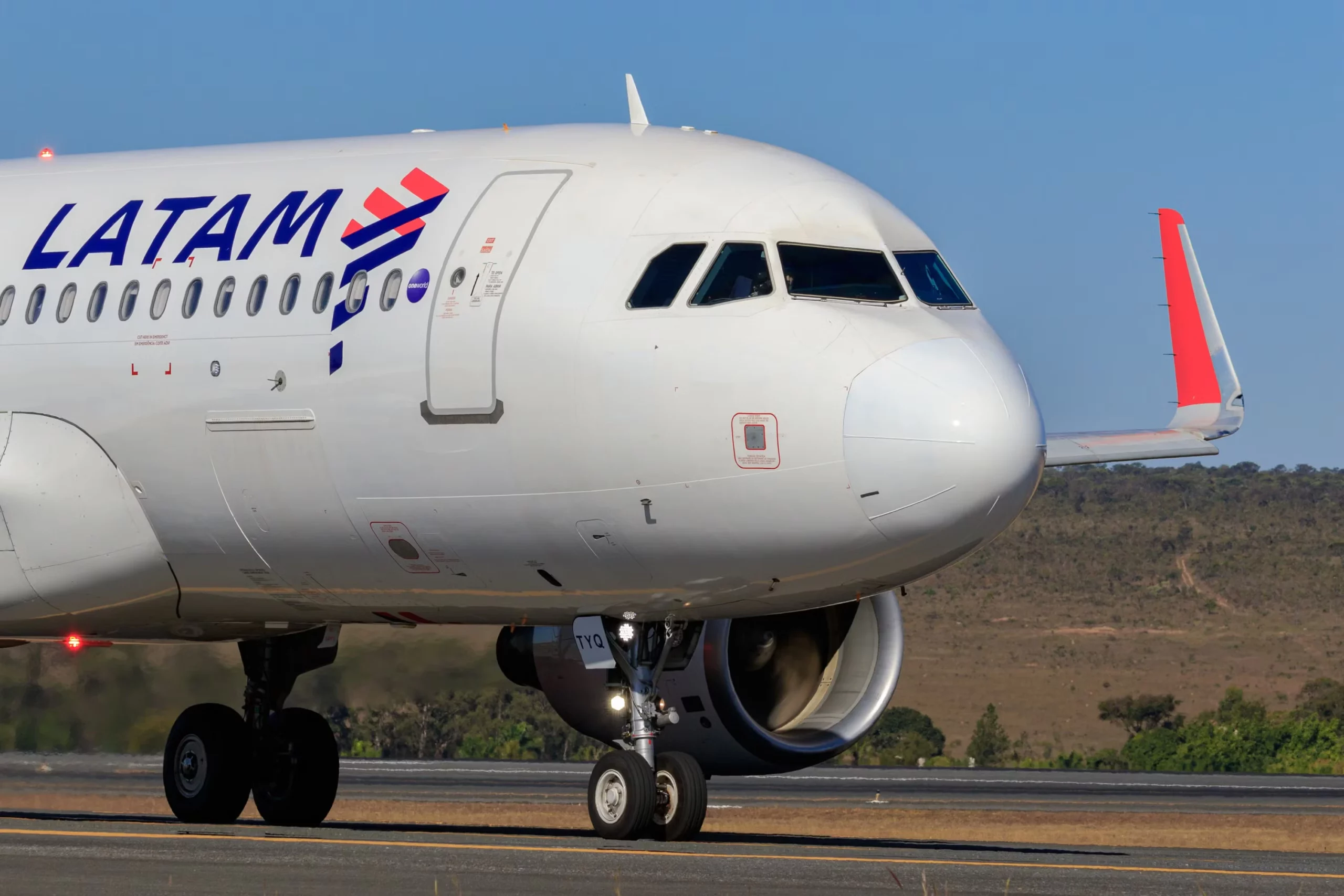
LATAM Airlines SES Wi-Fi is set for a major expansion after the carrier announced a deal on 29 July 2026 to fit more than 60 incoming jets with a new generation of satellite internet, promising steadier connections on everything from short domestic hops to long, thin international routes.
A Bigger, Smarter Pipe to the Plane
The agreement with Luxembourg-based satellite operator SES is not a start from scratch. It builds on a relationship that already keeps more than 250 LATAM aircraft connected, mostly from the Airbus A320 family, using SES’s proven 2Ku technology.
What changes with the new jets is the antenna and the network behind it. The incoming Airbus A320neos, longer-range A321XLRs, and Embraer E195-E2s will carry electronically steered array, or ESA, antennas that talk to satellites in multiple orbits at once.
Multi-Orbit Means Fewer Dead Zones
The term “multi-orbit” is the key to understanding why this matters for anyone who has watched a loading wheel spin at 35,000 feet. The system can switch between satellites in traditional geostationary orbit, which sit far away and cover large areas, and a constellation in low-Earth orbit, which sits much closer and reduces lag.
The low-Earth-orbit layer comes from Eutelsat OneWeb, SES’s partner for this part of the network. It is a middle-ground approach that sits between conventional geostationary systems and the ultra-fast, low-latency networks such as Starlink, though LATAM does not use Starlink for this rollout.
Live Company IntelligenceLATAM Airlines SES Wi-Fi Coming to 60+ Jets by 2026 — the full investor dossier
LATAM Airlines Group S.A., together with its subsidiaries, provides passenger and cargo air transportation services in Chile, Argentina, Peru, Colombia, Ecuador, Brazil, the United States, other Latin American countries, the Caribbean, Europe, and Oceania. As of December 31, 2024, the company provides passenger transport services to…
Net income rose to $1.5 bn in 2025, from $581.8 mn in 2023.
The Jets That Will Carry the New LATAM Airlines SES Wi-Fi
The aircraft list tells a story about where LATAM wants to fly and who it wants to carry. The Embraer E195-E2, with installations starting in the fourth quarter of 2026 through LATAM Brazil, is a workhorse for domestic and regional routes where quick, reliable connectivity is a competitive advantage.
The Airbus A321XLR, arriving from 2027, is a different animal entirely. Its extra-long range lets airlines open thinner routes that were previously uneconomical for a single-aisle jet, connecting cities that never had a direct link before, and passengers on those longer flights will expect to work and stream without interruption.
What It Means for Passengers and the Bottom Line
LATAM did not publish specific speeds for the new system, and the financial terms of the deal remain private. But the business logic is clear: connectivity sells tickets and builds loyalty, especially among the corporate travellers and premium leisure flyers who fill the front of the cabin.
The airline’s existing pricing model offers a useful guide. LATAM Pass members get free messaging, while elite tiers including Gold, Gold Plus, Platinum, Black, and Black Signature receive full internet access at no charge, and other passengers pay modest fees, with short-haul packages currently ranging from about US$5 for an hour to roughly US$12 for full-flight browsing.
A Regional Signal, Not a One-Off
SES calls LATAM the largest airline in the region to deploy this specific ESA antenna, a careful distinction that matters. The Luxembourg firm has also signed Mexico’s Viva for 100 A320s and the Abra Group for more than 100 aircraft, so LATAM is leading in scale but not alone in the move toward multi-orbit connectivity.
For investors and industry watchers, the deal confirms that Latin American carriers are leapfrogging older technology rather than waiting for a single perfect solution. The bet is that passengers will reward airlines that offer a steady connection on every route, not just the flagship ones.
The Read-Through for Expats and Business Travellers
For the internationally-minded professionals and expats who crisscross the region, the upgrade is a quiet but meaningful shift. A reliable internet connection on a three-hour flight from São Paulo to Santiago, or a new direct A321XLR route from a secondary Brazilian city to Miami, turns dead time into productive time.
It also narrows the gap between Latin American carriers and their global rivals, where fast, stable Wi-Fi has become a basic expectation rather than a pleasant surprise. LATAM’s move puts pressure on competitors to match the offer or risk losing the loyalty of the region’s most valuable flyers.
What to Watch Next
The first real test comes quickly, with the Embraer E195-E2 installations beginning before the end of 2026. Passenger feedback on those domestic and regional routes will signal whether the multi-orbit promise holds up in daily operation.
The longer arc to watch is the A321XLR rollout from 2027, which will pair the new connectivity with routes that did not exist before. Together, the new jets and the new network represent a bet that Latin American aviation’s next chapter will be written by airlines that connect their passengers to the ground as reliably as they connect cities to each other.
More: Chile news in English, every day from The Rio Times.
Frequently Asked Questions
Which aircraft will get the new LATAM Airlines SES Wi-Fi?
The new system will be installed on more than 60 incoming Airbus A320neo, A321XLR, and Embraer E195-E2 jets. The E195-E2 installations begin in Q4 2026, while the A321XLRs arrive from 2027.
Does LATAM use Starlink for its in-flight Wi-Fi?
No, LATAM does not use Starlink. The low-Earth-orbit component of its new multi-orbit system comes from Eutelsat OneWeb, SES’s partner for this network, which sits between traditional geostationary systems and ultra-fast LEO networks like Starlink.
How much does LATAM charge for in-flight internet?
LATAM Pass members receive free messaging, and elite-tier members get full internet at no charge. Other passengers pay modest fees, with existing short-haul packages running from about US$5 for an hour to roughly US$12 for full-flight browsing.
This article was produced by The Rio Times’ automated newsroom system. How we use AI · Report an error
In depth
Read More from The Rio Times