Operation Jackal IV: 58 Arrests, and an Argentine Supply Line
WEST AFRICA · FINANCIAL CRIME
Key Facts
—The operation: Operation Jackal IV ran from November 2025 to June 2026, coordinated by INTERPOL. It involved 22 countries across six continents.
—The result: Police made 58 arrests and identified 263 suspects. The stated aim was to follow the money rather than only the fraudsters.
—Johannesburg: South African officers searched seven locations and arrested 39 people, more than two thirds of the total. They seized US$2.67 million and blocked 257 bank accounts.
—The victims: The Johannesburg syndicate targeted retirees in English-speaking countries with romance and investment scams. Members were split into roles that INTERPOL described as conversion and retention.
—Argentina: Investigators identified 196 people linked to a network selling website domains and laundering services to West African groups. Seventeen were arrested.
—Italy: One account in a laundering network moved €845,000 (US$736,000) across 560 transactions and 20 different financial instruments. Shell companies and remittance services hid the origin of the funds.
—The new pattern: INTERPOL says the same groups are increasingly turning to sextortion, with victims as young as 14. The agency issued the warning alongside the arrest figures.
Operation Jackal IV closed with 58 arrests across 22 countries and 263 suspects identified, and the most striking finding was not in West Africa at all: a network in Argentina was selling domains and laundering services to the groups running the scams.
What Operation Jackal IV set out to do
INTERPOL ran the operation for eight months, from November 2025 to June 2026. The stated target was the financial infrastructure behind West African organised crime groups, among them Black Axe.
The agency links these networks to a substantial share of the world’s cyber-enabled fraud. The catalogue is familiar: romance scams, cryptocurrency and investment schemes, and business email compromise.
Tomonobu Kaya, who directs INTERPOL’s Financial Crime and Anti-Corruption Centre, described the approach as “attacking the very lifeblood of organized crime”. The method was to trace illicit flows across borders rather than to chase individual scams.
Johannesburg did most of the arresting
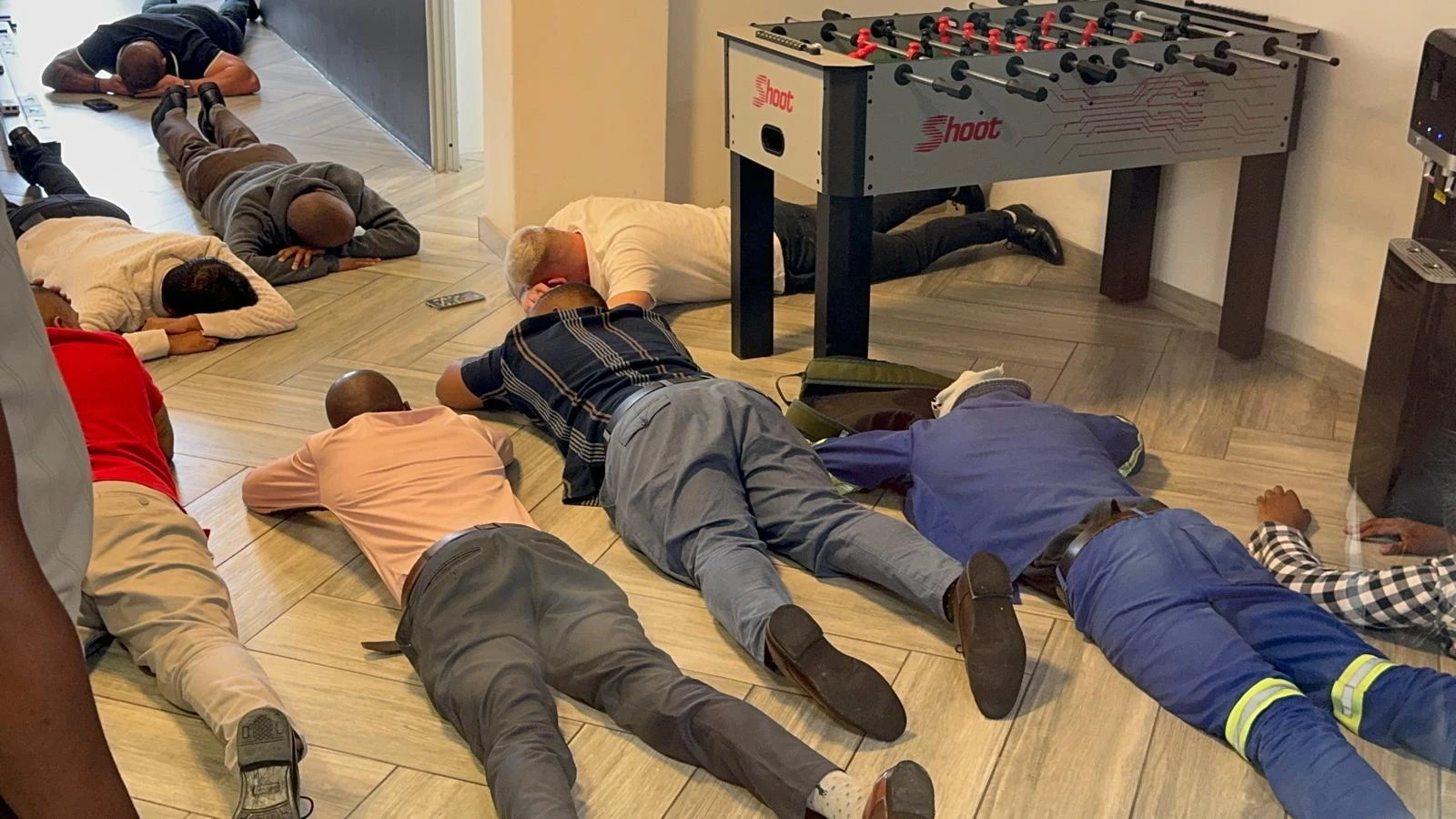
South Africa accounted for 39 of the 58 arrests, after officers searched seven locations in Johannesburg. They seized US$2.67 million and blocked 257 bank accounts.
The syndicate under investigation ran romance and investment scams aimed at retirees in English-speaking countries. INTERPOL said its members were assigned to distinct roles, some converting victims and others retaining them once money had been paid.
That division of labour is the detail worth dwelling on. It describes something closer to a sales organisation than a gang.
The Argentine connection
The finding that should interest readers on this side of the Atlantic came from Buenos Aires. Argentine investigators identified 196 individuals tied to a network suspected of selling website domains and money-laundering services to West African crime groups.
Seventeen of them were arrested. INTERPOL described the arrangement as crime-as-a-service, in which the specialist work is outsourced to external providers, often through the dark web.
It is a reminder that these networks are not regional in any meaningful sense. The fraud may be run from Johannesburg and the victims may sit in Britain or Australia, but the plumbing can be bought in Argentina.
Latin America has usually appeared in these investigations as a laundering destination. Appearing instead as a supplier of infrastructure is a different and more uncomfortable role.
Europe supplied the laundering detail
Italian authorities identified one person involved in a laundering network built on shell companies and remittance services. A single account moved €845,000 (US$736,000) through 560 transactions across 20 different financial instruments.
That is the texture of modern laundering: not one large transfer but hundreds of small ones, spread thin enough to look like commerce. Romanian police separately shut down a call centre selling an investment scam promising returns on stocks and cryptocurrency.
Victims of that scheme sent money to electronic wallets the group controlled. The wallet, not the bank account, is now the first stop for stolen funds.
Business email compromise sits alongside the romance schemes in INTERPOL’s description of what these groups do. It is the least emotive of the categories and often the most expensive.
The warning INTERPOL attached
Alongside the arrest figures, the agency flagged a shift in tactics. West African groups are increasingly using sextortion, and some of the targets are minors as young as 14.
Offenders make contact through social media, build trust, and then demand payment under threat of exposure, INTERPOL said. The agency is treating it as an emerging pattern rather than an isolated set of cases.
What this means for the region’s reputation
For African financial centres the operation cuts both ways. It confirms the scale of the problem, and it also shows that South African and regional police can run large, coordinated financial investigations.
The reputational cost is real for legitimate business, particularly in cross-border payments and remittances. Compliance departments abroad tend to read headlines faster than they read arrest statistics.
The more useful measure will be prosecutions rather than arrests. Asset seizures and frozen accounts are the part that actually changes the economics.
The 257 blocked accounts in South Africa may matter more than the 39 arrests. Individuals are replaceable in these structures, and banking access is not.
INTERPOL framed the whole operation around following illicit financial flows rather than chasing individual scams. On that measure the results are best read as a map of the plumbing, drawn across four continents.
More: South Africa news in English, every day from The Rio Times.
Frequently Asked Questions
What was Operation Jackal IV?
It was an eight-month INTERPOL operation running from November 2025 to June 2026 against West African organised crime groups and their financial networks. Twenty-two countries across six continents took part.
How many people were arrested?
Police made 58 arrests and identified 263 suspects. South Africa accounted for 39 of the arrests.
What happened in Johannesburg?
Officers searched seven locations linked to a syndicate running romance and investment scams aimed at retirees in English-speaking countries. They arrested 39 people, seized US$2.67 million and blocked 257 bank accounts.
What was the Argentine role?
Investigators in Argentina identified 196 people linked to a network suspected of selling website domains and money-laundering services to West African crime groups. Seventeen were arrested.
What new trend did INTERPOL report?
The agency said West African crime groups are increasingly using sextortion, with some victims as young as 14. Offenders make contact through social media before demanding payment.
Connected Coverage
INTERPOL’s own assessment of how automation is changing African fraud appears in AI now drives 55 percent of cybercrime in Africa, and the agency’s Latin American operations have run on similar lines in its arms-trafficking sweep across the region. More from the region sits on our Western Africa hub.
This article was produced by The Rio Times’ automated newsroom system. How we use AI · Report an error · Editorial responsibility: Matthias Camenzind, Editor-in-Chief
In depth
LatAm Markets: Live Signals → — real-time movers, turnover leaders and FX across Latin America.