Guyana Police Chase Down a Vessel Carrying Opposition Leader Azruddin Mohamed
GUYANA · POLITICS
Key Facts
What happened: Guyana police intercepted a speeding boat carrying Opposition Leader Azruddin Mohamed on the Demerara River on 25 August.
The pursuit: Police say the vessel ignored a siren order to stop, and a bag was thrown overboard during the chase.
The other side: Mohamed’s party says police searched the boat for drugs and found nothing illegal aboard.
The catch: The bag thrown into the river was never recovered, and nobody knows what it contained.
The backdrop: Mohamed is fighting extradition to the United States on fraud and money-laundering charges.
Guyana’s police and coast guard chased down a go-fast boat carrying opposition leader Azruddin Mohamed on the Demerara River on Tuesday night. The two sides now tell sharply different stories about what the interception was really about.
What police say happened on the Demerara
The Guyana Police Force gave its account on Wednesday 26 August. It said a joint patrol of police and the Guyana Defence Force Coast Guard spotted the vessel at 9:40 the previous evening.
Go-fast boats are open speedboats used widely on Guyana’s rivers. The patrol that night was described as routine maritime work.
The boat was entering the mouth of the Demerara River at high speed, police said. Officers signalled it to stop by siren, and they say it failed to comply.
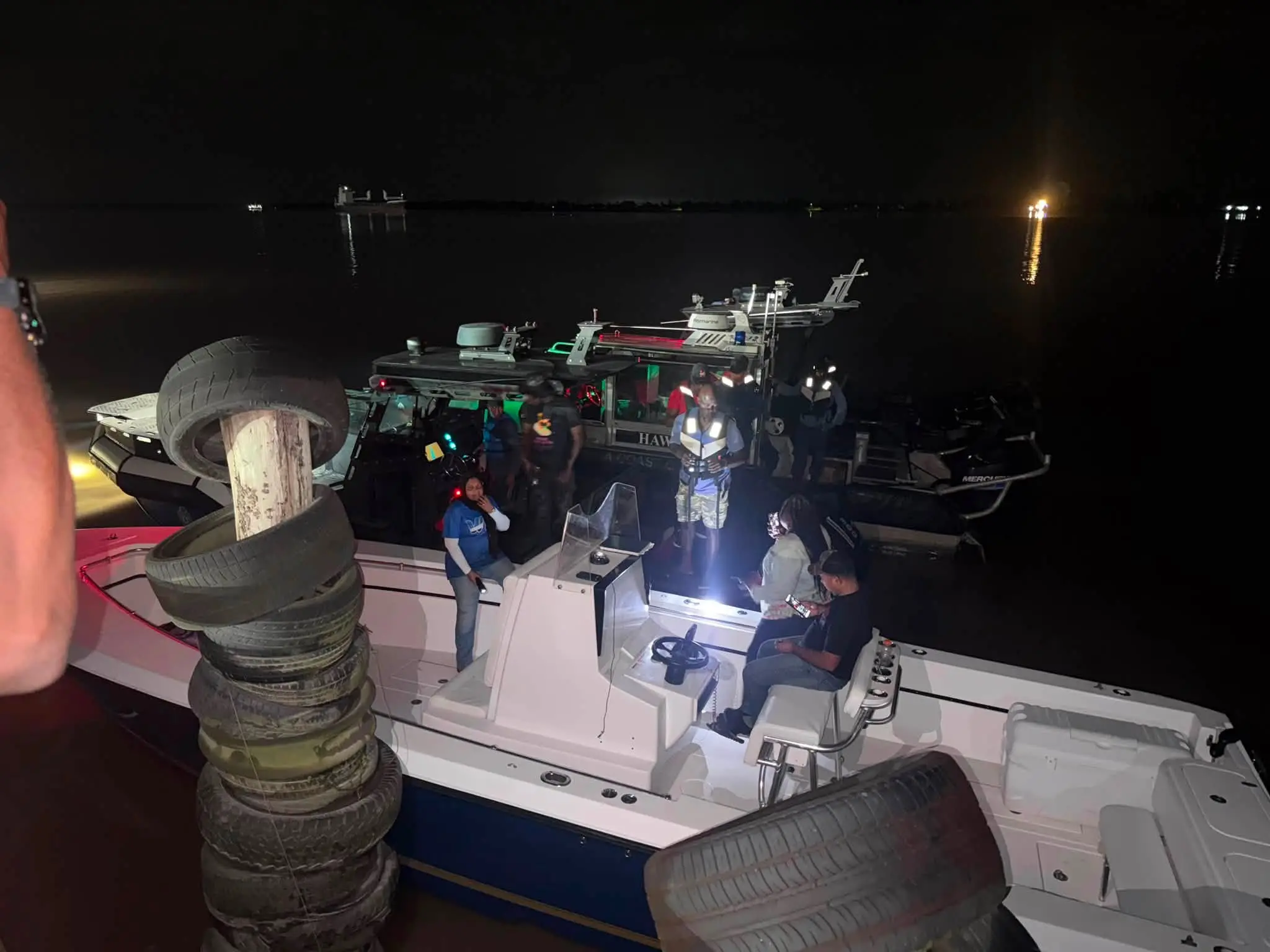
A pursuit followed, ending at a wharf at Friendship on the East Bank Demerara. Three people, including Opposition Leader Azruddin Mohamed, were found aboard.
Five other people suspected of travelling on the boat were seen at the wharf. Police also reported seeing a bag thrown into the river during the chase.
Officers could not say what the bag held or who threw it. The police force and the coast guard are jointly investigating, and recovery efforts continue.
The opposition’s version of the stop
Odessa Primus, general secretary of Mohamed’s We Invest in Nationhood party, was on the vessel. She disputes the police framing of the whole episode.
Officers first said Mohamed needed to produce documents for the boat, she said. He told them the boat was docked and the papers were not with him.
Police then searched the vessel and its occupants on suspicion of illegal substances, Primus said. Nothing illegal was found, according to her account.
A separate incident added to the tension at the wharf. Legislator Natasha Singh was taken into custody after a bag containing a licensed firearm was found.
The weapon belongs to another legislator, Dawn Hastings, the opposition said. Hastings had reportedly stepped off the boat and left her bag behind.
Where the delegation was coming from
Mohamed and his colleagues were returning to Georgetown from Region One, the Barima-Waini district. They had travelled there on a condolence mission.
Region One is Guyana’s far north-west, reached from the capital mainly by boat or small plane. The opposition delegation had spent the day there before heading home.
The group met survivors and relatives of victims of the MV Barima ferry tragedy of 18 July. Caribbean Media Corporation reports put the death toll from that sinking above 100 people.
The ferry disaster remains an open wound in the region, and river safety is a raw subject. Go-fast boats are the standard transport on Guyana’s great rivers, where roads are few.
Routine policing or a pattern of pressure
River checkpoints are part of daily life in Guyana’s interior. This one happened to net the country’s most controversial politician.
Government figures have long accused Azruddin Mohamed of entering politics to dodge extradition. Aubrey Norton, leader of the People’s National Congress Reform, said exactly that in June.
Mohamed’s camp reads every police action through the same lens in reverse. His party says the state is harassing a man the voters made opposition leader.
Both readings are now part of Guyana’s political weather. Tuesday’s interception will be argued over in parliament and on the campaign trail alike.
Who Azruddin Mohamed is
Mohamed is a 39-year-old businessman from a gold-trading family. He founded We Invest in Nationhood, known as WIN, to contest the September 2025 general election.
The upstart party took 16 of the 65 seats in the National Assembly. That made WIN the main opposition, ahead of the long-established coalition A Partnership for National Unity.
On 26 January 2026, Mohamed was elected Leader of the Opposition by opposition lawmakers. Guyana’s constitution sets no character qualification for the post.
WIN’s rise broke a decades-old two-party pattern in Georgetown. Azruddin Mohamed built the movement in months, campaigning on pay rises and against corruption.
President Irfaan Ali’s People’s Progressive Party Civic holds the government. Relations between the ruling party and the Mohamed family have collapsed into open hostility.
The US case behind the politics
The United States sanctioned Mohamed and his father, Nazar Mohamed, in June 2024. Washington alleged they avoided more than US$50 million in duties on over 10,000 kilogrammes of gold exports.
A federal grand jury in Florida indicted both men in October 2025. The charges include wire fraud, mail fraud and conspiracy to commit money laundering.
Guyanese police arrested Mohamed on 31 October 2025 after a US extradition request. He was released on bail reported at 150,000 Guyana dollars (US$720) and surrendered his passport.
Mohamed denies every charge and calls the case political. His extradition fight is still working through Guyana’s courts.
The sanctions had practical consequences inside Guyana as well. The Bank of Guyana revoked the family’s gold-trading and currency-exchange licences within months.
What foreigners and investors should watch
For expatriates in Guyana, the direct impact of the river incident is small. The larger story is the friction between a sanctioned opposition leader and the state.
The banks have already picked a side in this fight. Several Guyanese banks closed accounts linked to the Mohamed family after the 2024 sanctions.
Washington has warned that a US-sanctioned official complicates investment ties. Every confrontation between Mohamed and law enforcement now carries that weight.
The immediate question is the missing bag. If police recover it, its contents will decide whether Tuesday night was routine maritime work or something else.
The second question is the extradition calendar. A ruling either way would reshape Guyana’s opposition politics before the year ends.
A third question is whether any charge follows from Tuesday night. Police have announced an investigation, and no accusation against Mohamed himself.
More: Latin America news in English, every day from The Rio Times.
Frequently Asked Questions
Why did Guyana police intercept the opposition leader’s vessel?
Police say the go-fast boat entered the Demerara River mouth at high speed on 25 August 2026 and failed to stop when signalled by siren. The opposition says officers asked for boat documents and then searched for drugs.
Was anything illegal found on Azruddin Mohamed’s boat?
Nothing illegal was found aboard, according to WIN general secretary Odessa Primus. Police say a bag was thrown into the Demerara River during the pursuit, and it has not been recovered.
Why is Azruddin Mohamed fighting extradition to the United States?
A Florida grand jury indicted Mohamed and his father in October 2025 for wire fraud, mail fraud and money-laundering conspiracy tied to gold exports. Both deny the charges, and the case is before Guyana’s courts.
Sources
Barbados Today (Caribbean Media Corporation), 27 August 2026 · Demerara Waves, 26 August 2026 · Ignite News, 26 August 2026 · Caribbean Broadcasting Corporation · US Department of State · Guyana Police Force. Conversions at 209 Guyana dollars per US dollar, 28 August 2026.
Connected Coverage
More on Guyana’s politics and economy: Guyana puts a refinery at the heart of its national oil company plans, IDB calls the Guyana outlook highly uncertain on oil risk and King Charles to make a state visit to Guyana in October.
This article was produced by The Rio Times’ automated newsroom system. How we use AI · Report an error · Editorial responsibility: Matthias Camenzind, Editor-in-Chief