Guyana Barima Ferry Inquiry Makes First Site Visit, Critics Seek Answers
GUYANA · INVESTIGATION
Key Facts
- —What happened Guyana’s Commission of Inquiry made its first site visit to the MV Barima accident area on September 2.
- —The scale The July 18 ferry sinking killed at least 72 people, with about 31 still unaccounted for.
- —What it means The inquiry is gathering documents and witnesses, but no public hearing date has been set.
- —The catch Opposition leader Amanza Walton-Desir says key questions remain about the site survey and vessel recovery.
- —Who it affects Families of the dead and missing, plus all Guyanese who depend on coastal ferry travel.
- —What comes next Hearings will be held at the Arthur Chung Conference Centre once the schedule is announced.
Six and a half weeks after Guyana’s deadliest maritime disaster, investigators made their first site visit — but questions remain.
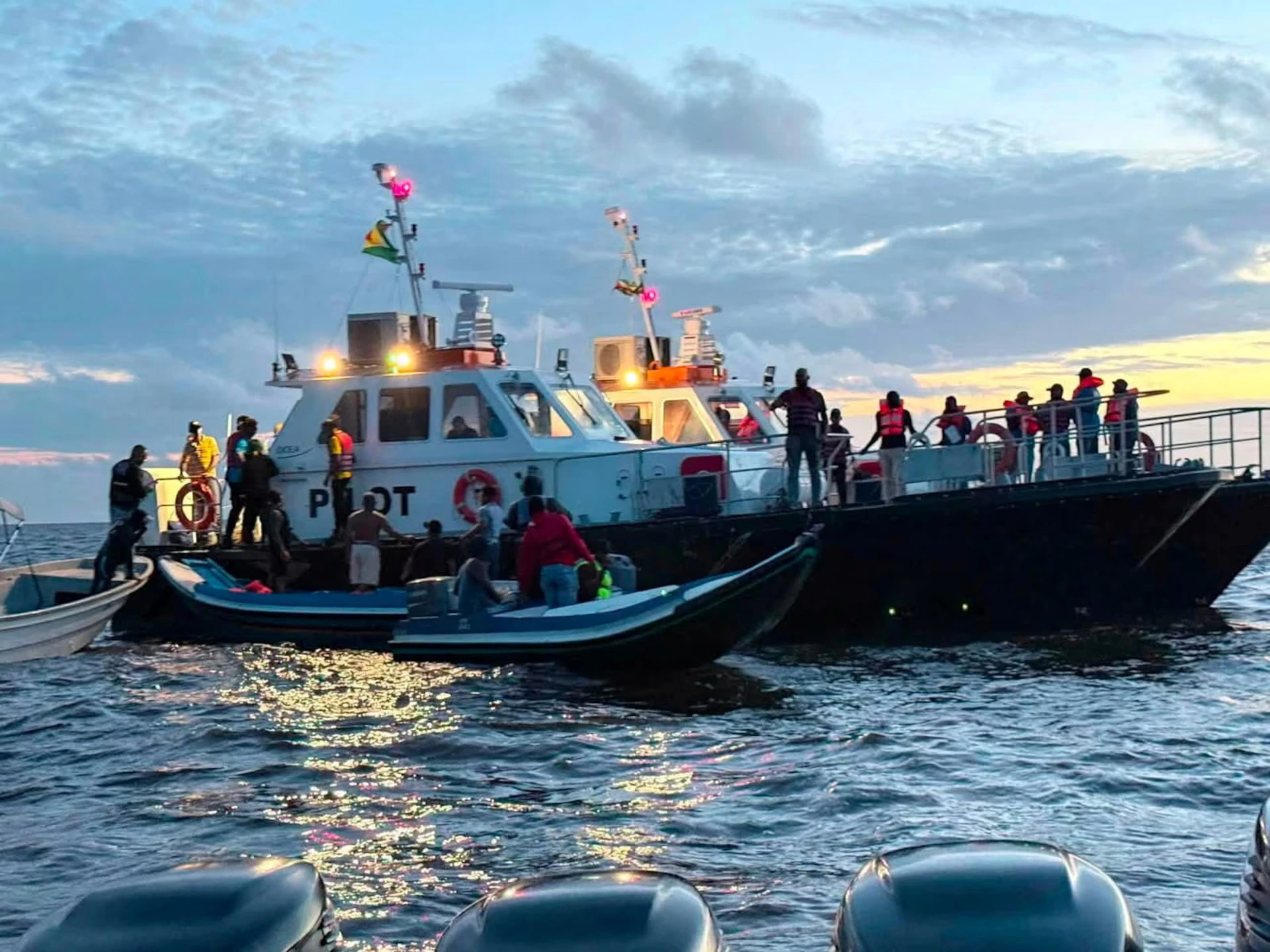
Guyana’s Commission of Inquiry (CoI) made its first preliminary visit to the MV Barima accident site on Wednesday, September 2. The visit came about six and a half weeks after the ferry capsized, killing at least 72 people.
The five-member panel is chaired by Belizean Justice Godfrey Philip Smith. It surveyed the wreck site off the Essequibo Coast, where the 87-year-old ferry sank on the night of July 18.
The Commission is gathering documents on the ferry’s seaworthiness and how the crew operated it, according to a report from Demerara Waves.
It is also collecting records from Guyana’s Maritime Administration Department, known as MARAD. Other sources include the Transport and Harbours Department and the Guyana Defence Force’s Coast Guard and Air Corps.
A Slow-Moving Investigation
The Commission is compiling a list of potential witnesses and preparing a hearing schedule. No public start date has been announced yet.
Hearings will eventually be held at the Arthur Chung Conference Centre in Greater Georgetown.
The disaster remains Guyana’s worst maritime tragedy. The official manifest listed 133 people, but authorities believe roughly 179 were actually aboard.
That gap points to possible overloading of the vessel. Seventy-six people were rescued, and 72 bodies have been recovered so far.
That leaves about 31 people still unaccounted for.
Opposition Demands Answers
On Thursday, September 3, Amanza Walton-Desir, leader of the Forward Guyana Movement, issued a public statement. She was responding to the Commission’s first substantial public update.
Walton-Desir welcomed the update, which included a notice inviting public submissions. But she said it left major questions unanswered.
She asked who conducted the preliminary site survey and which commissioners took part. She also asked what technical experts and methods were used.
Walton-Desir questioned whether investigators actually examined the sunken ferry, or only visited the general area where it went down.
She pressed for details on any written records or photographs from the visit. She also asked how any evidence was secured.
Walton-Desir asked what role MARAD played in the investigation. She also asked what has been done to recover the vessel or find remaining victims.
Concerns Over Accountability
Walton-Desir’s most pointed remark targeted the government’s handling of the process. “The President cannot use that process as a constitutional waiting room in which ministerial responsibility is suspended until the Commission reports,” she said, according to the Guyana Standard.
President Irfaan Ali announced the independent Commission of Inquiry in late July. It will examine pre-departure procedures, cargo handling, emergency response, and possible regulatory violations.
The panel was sworn in on July 30. Justice Smith chairs it, and Javed Shadick serves as Secretary.
The inquiry must also recommend maritime safety reforms for Guyana. Coastal communities across the country depend heavily on ferry connections.
The ferry’s captain and first engineer tested positive for marijuana after the accident. Three men, including the captain, have already been charged with murder in the case.
What Happens Next
The Commission has not yet announced when public hearings will begin. Its witness list also remains under preparation.
The panel is expected to release more details on its schedule soon. It will also explain how the public can make submissions to the inquiry.
For the families of the dead and missing, the wait continues. The gap between the manifest and the estimated number aboard has fueled public anger.
Many suspect the ferry was overloaded on its regular Georgetown-to-Port Kaituma route.
More: Guyana news in English, every day from The Rio Times.
Frequently Asked Questions
What caused the MV Barima ferry to sink?
The exact cause is still under investigation, but authorities believe the ferry may have been overloaded. The official manifest listed 133 people, while authorities now estimate about 179 were actually aboard.
How many people died in the MV Barima disaster?
At least 72 bodies have been recovered, with about 31 people still unaccounted for. Seventy-six people were rescued from the water.
Who is leading the Commission of Inquiry?
The five-member Commission is chaired by Justice Godfrey Philip Smith of Belize, with Javed Shadick serving as Secretary. The panel was sworn in on July 30, 2026.
When will public hearings begin?
No public hearing start date has been announced yet. Hearings will be held at the Arthur Chung Conference Centre in Greater Georgetown once the schedule is set.
What concerns has the opposition raised about the inquiry?
Amanza Walton-Desir of the Forward Guyana Movement has asked who conducted the site survey and whether the sunken vessel was actually examined. She also questioned how evidence was secured and what role MARAD played in the investigation.
Sources: Demerara Waves, Guyana Standard, UPI, Jamaica Observer, The St Kitts Nevis Observer.
This article was produced by The Rio Times’ automated newsroom system. How we use AI · Report an error · Editorial responsibility: Matthias Camenzind, Editor-in-Chief