
GHANA · CRITICAL MINERALS
Key Facts
- —The country Ghana is one of Africa’s top gold producers and now wants lithium, the electric-car battery metal, among its mineral exports.
- —What happened On Monday 19 October, London-listed Kodal Minerals signed a binding deal to earn up to 80% of a Ghana lithium project.
- —The price Kodal paid US$300,000 for an initial 10%, then earns 30%, 60% and 80% through stages of US$1.25 million, US$4 million and US$7.5 million.
- —The rock Rock samples from the 156 square kilometre site returned up to 2.49% lithium oxide, and drilling is planned before the end of 2026.
- —Ghana’s rules Ghana charges lithium miners a sliding royalty of 5% to 12%, rising with the price of spodumene, the main lithium ore.
- —Kodal’s other mine Kodal’s Bougouni mine in Mali produced 27,234 tonnes of lithium concentrate in the three months to 30 September.
- —Still open No resource estimate exists yet for the Ghana lithium project, and the Minerals Commission has yet to approve the licence transfer.
A new Ghana lithium project has an outside backer, London-listed Kodal Minerals, which agreed on Monday 19 October to earn up to 80%. The Asamankese site lies about 75 km by road from Accra, Ghana’s capital.
Lithium is the metal inside electric-car batteries, and Ghana says it wants to turn such ore into battery parts at home. Kodal’s deal is early-stage exploration with no resource estimate yet, so it rests on drilling still to come.
What Kodal Agreed in Ghana
Kodal Minerals, a mining company quoted on London’s AIM market and led by chief executive Bernard Aylward, signed a binding agreement with GH Geo-Consult Limited. GH Geo-Consult holds the Asamankese prospecting licence in Ghana’s Eastern Region.
Kodal paid US$300,000 for an initial 10%, which includes US$50,000 for six months of exclusive rights, Ghana’s Graphic Online reported. Aylward called Asamankese “a strategic expansion of Kodal’s lithium footprint in West Africa” in the company’s stock exchange statement.
How the Staged Payments Work
Kodal earns its stake in three steps, each tied to spending on the ground. Stage one requires at least US$1.25 million within six months and lifts Kodal to 30%.
Stage two requires US$4 million and a first resource estimate within 24 months, for 60%. Stage three requires US$7.5 million and a definitive feasibility study, which is a full mine-planning report, for 80%, with GH Geo-Consult keeping 20%.
What the Rock Samples Show
Earlier explorers mapped 42 major and 27 minor pegmatite bodies, the coarse rock that carries lithium, across the 156 square kilometres. Their samples returned up to 3.02% lithium oxide.
Kodal took 164 rock samples, tested at the Intertek laboratory in Tarkwa, and the best reached 2.49%. In 95 of the 164 samples the reading was above 1%.
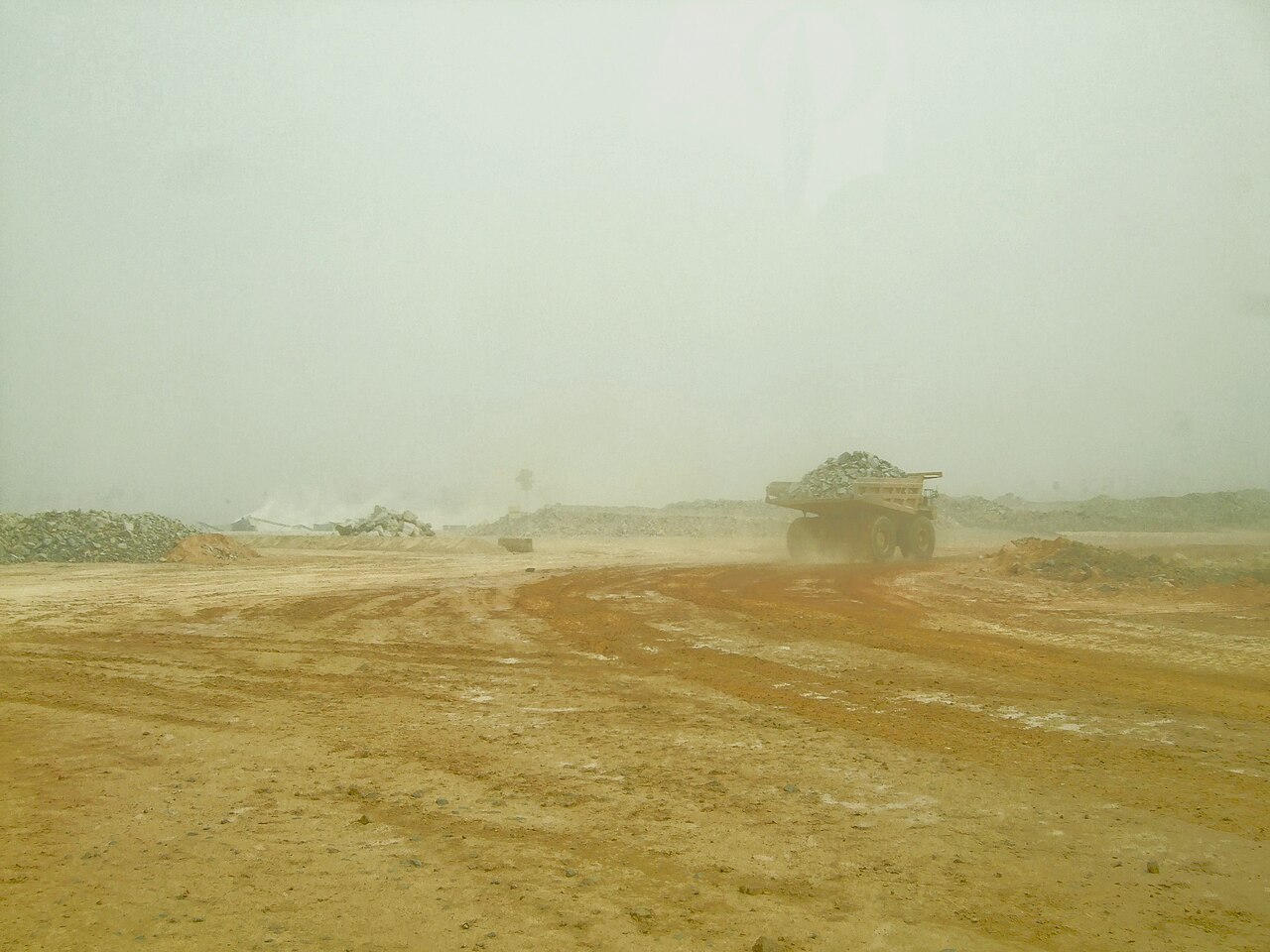
Where Drilling Starts
The first drill targets are Amantra, where a lithium-bearing rock system runs for more than 3 km, and Nfranta, over 4 km. Kodal expects diamond drilling at the Ghana lithium project to start before the end of 2026.
It plans to use a local contractor with small rigs and is appointing a Ghana-based geology team under country manager Abdul-Razak Shaih Ballah. Kodal can stop spending at any point and keep the stake it has earned so far.
Ghana’s Lithium Rules and Royalties
Ghana’s parliament ratified the Ewoyaa lithium mining lease of Atlantic Lithium, another listed company, in March 2026. Under the 2025 royalty rules, the state takes 5% of spodumene sales up to US$1,500 a tonne and 12% above US$3,200 a tonne.
President John Dramani Mahama said in June 2025 that Ghana must “move beyond extraction to transformation”, including “converting lithium into battery components”. At a minerals forum in Accra on Monday 19 October, he and Liberia’s Vice President Jeremiah Koung urged joint bargaining, The High Street Journal reported.
Kodal’s Mali Mine as the Template
Kodal’s Bougouni mine in southern Mali produced 27,234 tonnes of lithium concentrate in the quarter to 30 September, and 80,429 tonnes this year. Four shipments have earned about US$142.8 million, and a new export permit covers a further 125,000 tonnes.
Kodal holds an economic interest of about 32% in Bougouni, while its partner Hainan Mining, a Chinese company, controls the venture. The Ghana lithium project gives Kodal a second West African option, though it is far behind Bougouni.
What It Means for US Readers
Lithium is a core input for US electric-car and battery makers, so any new source of ore is worth watching. Kodal’s shares trade on London’s AIM market, so US investors usually need a broker with London market access.
Ghana is also a test of whether African states can keep more of the value from battery metals, as Mahama’s government says it intends. Our explainer on Ghana’s natural resources sets out the gold, manganese and cocoa that still dominate its exports.
What Is Not Known
No one has published a resource estimate for Asamankese, so the size of the lithium deposit is unknown. It is also unclear whether any ore would be exported as concentrate, as in Mali, or processed in Ghana.
The licence still has to be moved into the new joint venture, which GH Geo-Consult will ask the Minerals Commission, Ghana’s mining regulator, to approve. Drilling results due after the first holes will decide whether Kodal pays for the later stages.
More: Ghana news in English, every day from The Rio Times.
Frequently Asked Questions
Who is buying into the Ghana lithium project?
Kodal Minerals, a company quoted on London’s AIM market, signed the deal on Monday 19 October. It paid US$300,000 for 10% and can reach 80%.
Where is the Asamankese lithium site?
The Ghana lithium project lies in the Eastern Region, about 75 km by road from Accra. The licence area covers 156 square kilometres.
How much must Kodal spend to reach 80%?
Kodal paid US$300,000 at the start, then faces stages of US$1.25 million, US$4 million and US$7.5 million. Each stage lifts its stake, to 30%, 60% and finally 80%.
Is there a lithium mine in Ghana yet?
Not in production yet. Parliament ratified the Ewoyaa lease of Atlantic Lithium in March 2026, but the Ghana lithium project at Asamankese is still at the exploration stage.
Can Kodal walk away from the deal?
Yes, it can stop spending at any time. It keeps the stake it has earned up to that point.
Sources: Kodal Minerals, stock exchange announcement, 19 October 2026; Graphic Online, 19 October 2026; Kodal Minerals, Asamankese project page, 15 October 2026; Kodal Minerals, Bougouni quarterly update, 13 October 2026; Atlantic Lithium, Ewoyaa lease ratification, 20 March 2026; The High Street Journal, 19 October 2026; Graphic Online, Mahama at Mining in Motion, 2 June 2025.
This article was produced by The Rio Times’ automated newsroom system. How we use AI · Report an error · Editorial responsibility: Matthias Camenzind, Editor-in-Chief
Critical Minerals in Africa
- Africa’s Critical Minerals 2026: Who Holds What and Why
- DR Congo Explained 2026: The M23 War, the Cobalt Economy, the Politics and What to Watch
- Zambia Explained: The Country, Its Copper Economy, Its Politics and What to Watch
- The Lobito Corridor: A New Railway for African Copper