
Environment: French Guiana
Key Facts
—Who. About 200 pupils at the high school in Maripasoula, and the firefighters of the SDIS 973 fire service.
—What. A savanna fire reached the school fence on Tuesday 6 October. Classes were cancelled and no injuries were reported.
—Where. Maripasoula, a river town on the Lawa, on the border with Suriname, reachable mainly by air or boat.
—Why. Météo-France says rain from 1 July to 20 September was 57% below normal, tied to an exceptional El Niño.
—Status. The cause is unknown. A second fire burned at least 6 hectares (about 15 acres) in Montsinéry the same day.
—US link. French Guiana is an overseas region of France and part of the European Union, and a tropical coast and river region in northern South America.
—As of. 7 October 2026, 22:42 GMT
A savanna fire reached the fence of the high school in Maripasoula, French Guiana, on Tuesday 6 October. Smoke entered the buildings and about 200 pupils waited outside, while another blaze burned near the capital, Cayenne.
What We Know
The fire started at about 3:15 pm local time in savanna beside the main road, roughly 150 metres from the school, according to two witnesses quoted by Guyane la 1ère, the public broadcaster. Driven by wind, it spread fast, and a teacher said the flames licked the school fence.
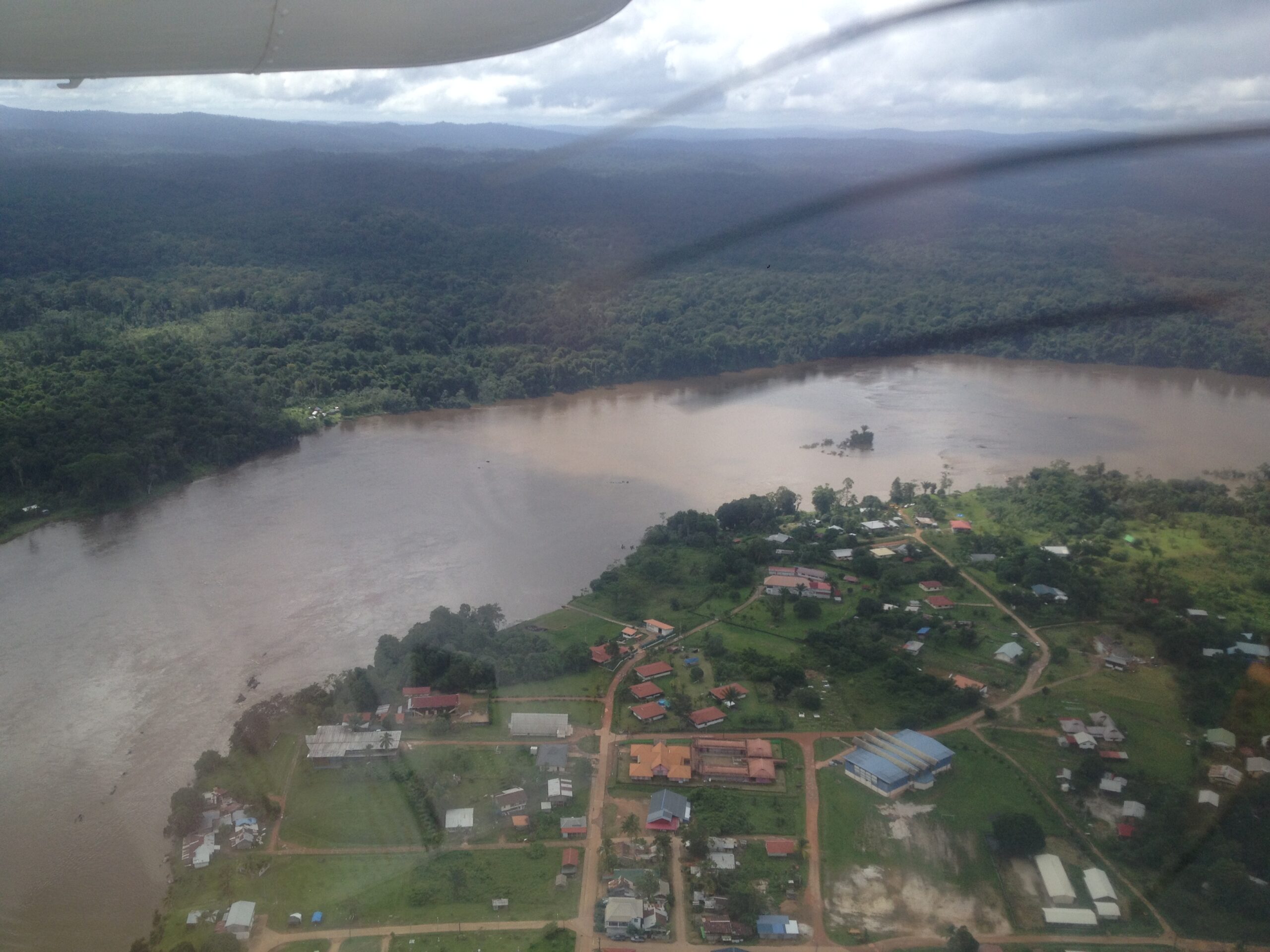
Smoke set off the alarms and also reached the boarding house, so boarders could not return to their rooms at once. Classes due to run until 5:30 pm were cancelled, and no panic was reported.
Firefighters first guarded the school grounds, then moved towards the abattis, small farm plots cleared from the forest. The teacher said he saw only one fire engine at work.
The flames moved towards a ditch near the gymnasium before they were contained. The cause was not known on Tuesday evening, and the teacher said another fire had broken out on the other side of the school the week before.
A Remote Town Already Under Strain
Maripasoula sits on the Lawa river, which marks the border with Suriname, and is listed as France’s largest municipality by area. With no road to the coast, people and goods arrive by plane or by boat.
On 8 September the mayor, Jonathan Abienso, told France-Guyane that freight from Cayenne could take up to three weeks to arrive. He asked the territorial authorities, the shipping companies and the interior towns to find lasting solutions.
The fire struck a school whose staff were already protesting. On Monday 5 October they stopped work for an hour, in an action led by the SNES-FSU and UNSA unions, to demand more staff, a nurse and a safer boarding house.
Staff said two supervisors were responsible for 58 boarders at night, according to Guyane la 1ère. The unions warned that without concrete answers the protest could become a strike.
Fires Spread Along the Coast
In Montsinéry-Tonnegrande, south-west of Cayenne, at least 6 hectares had burned in the Quesnel-Ouest area by Tuesday evening. Guyane la 1ère said about 40 more hectares were under threat, with 13 firefighters and three vehicles at work.
Lieutenant Garry Jean-Zephirin said crews were attacking the fire from three sides. He said the priority was to stop it and that homes were not threatened, according to the broadcaster.
Four days earlier, on Friday 2 October, about 100 hectares burned between La Carapa and Montsinéry. On Saturday 19 September, France-Guyane counted about 20 fire outbreaks in a single day, most under one hectare.
On 20 September, SDIS 973 said a forest fire near Stoupan had burned 5 hectares of trees. On Tuesday 29 September, the Bricocéram hardware store was evacuated when smoke from a savanna fire seeped inside.
Why the Dry Season Is So Severe
Météo-France, the national weather service, says French Guiana’s dry season runs from 1 July to 30 November. The second, usually hotter half began on 15 September.
From 1 July to 20 September, average rainfall across 25 stations was 157.6 millimetres, against a normal 363.7. That is a shortfall of 206 millimetres, or 57%, according to the service.
August was the driest August since 1967. September had a 25-day dry spell, and temperatures passed 38°C (100°F) in inland towns including Maripasoula, Camopi and Apatou.
Météo-France links the drought to an exceptional El Niño, a Pacific warming that tends to make this part of South America hotter and drier. Its Niño 3.4 index, which tracks Pacific temperatures, was close to the peak of the 2015 episode in late September.
The service expects October rainfall below normal across the territory. For November, its models still show a persistent deficit, despite the usual seasonal rise in rain.
What the Authorities Have Done
On 23 September the prefecture, which represents the French state, listed five areas at risk of vegetation fires, France-Guyane reported. They were Saint-Georges, Sinnamary, Mana, Saint-Laurent-du-Maroni and Maripasoula.
On 4 September the prefect, Antoine Poussier, said that triggering the Orsec emergency plan for the drought in 2026 was unavoidable. Forecasts then suggested it could start in early October, a month earlier than in 2024.
What Is Not Known
The cause of the school fire is not known, and no official firefighters’ report on it had been published by Tuesday evening. It is also not known how many fires have broken out this season, or how much land has burned in total.
Whether the Orsec plan has been triggered was not confirmed in the sources we checked. Nor is it clear whether the prefecture will tighten rules on open burning.
What It Means for Travelers and US Readers
French Guiana is an overseas region of France and part of the European Union, and its interior towns depend on planes and river boats. Travellers to the Maroni and Lawa area should expect smoke, heat and delayed freight, and should confirm flights and boat transport before leaving.
The territory’s dry season usually runs to the end of November, and forecasts point to little relief before then. Readers following the El Niño story will find that the damage here is local and practical: fires near schools, slower deliveries and stretched fire crews.
More: French Guiana news in English, every day from The Rio Times.
Frequently Asked Questions
Where is Maripasoula?
Maripasoula is a town in western French Guiana on the Lawa river, which marks the border with Suriname. It has no road link to the coast and is reached by air or by river boat.
Was anyone hurt in the school fire?
No injuries were mentioned in Guyane la 1ère’s account, which said there was no panic. Classes were cancelled and about 200 pupils were kept outside while smoke entered the buildings.
When is the dry season in French Guiana?
Météo-France says it runs from 1 July to 30 November. The second half, from 15 September, is usually the hottest and driest.
Why is this year’s drought so severe?
Météo-France links it to an exceptional El Niño in the Pacific. Rainfall from 1 July to 20 September was 57% below normal.
What have the authorities done about the fires?
The prefecture listed Maripasoula and four other areas as at risk of vegetation fires on 23 September. The prefect also said in early September that the Orsec emergency plan was unavoidable this year.
Sources
Météo-France Guyane, start of the dry season’s core (25 September 2026) · Météo-France Guyane, September 2026 monthly summary · Guyane la 1ère, school fire at Maripasoula (6 October 2026) · Guyane la 1ère, fire in Montsinéry (6 October 2026) · Guyane la 1ère, Maripasoula school staff walkout · France-Guyane, areas at risk of vegetation fires · France-Guyane, forest fire near Stoupan · France-Guyane, Bricocéram store evacuated · France-Guyane, mayor of Maripasoula on freight · France-Guyane, Orsec plan preparation
Connected Coverage
This article was produced by The Rio Times’ automated newsroom system. How we use AI · Report an error · Editorial responsibility: Matthias Camenzind, Editor-in-Chief