Costa Rican President Leads Mass Protest Demanding Attorney General’s Resignation
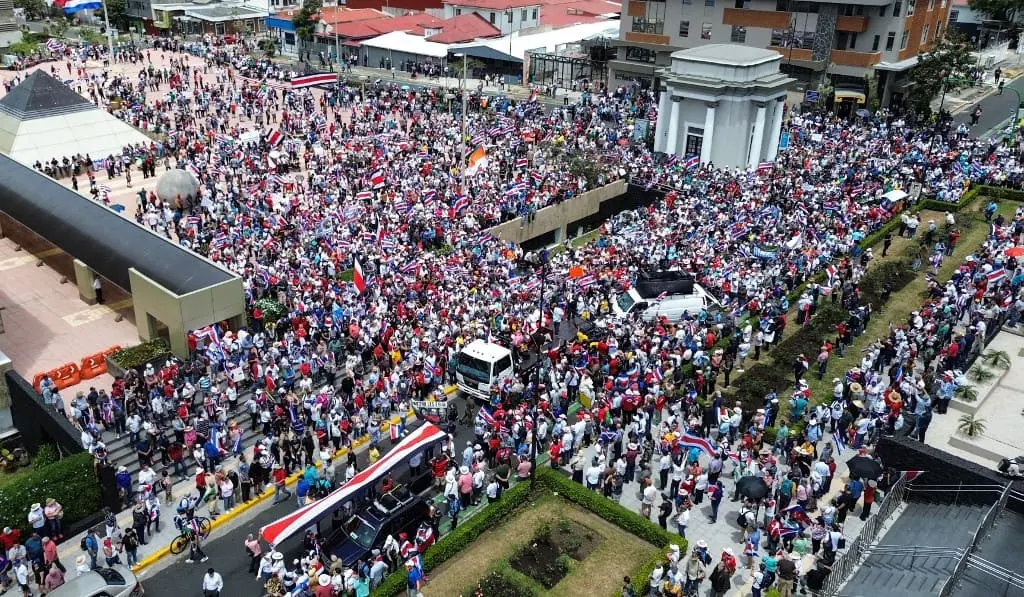
Thousands of protesters joined President Rodrigo Chaves yesterday in San José demanding the resignation of Attorney General Carlo Díaz. The president himself organized and led the demonstration to the Prosecutor’s Office headquarters amid escalating tensions between government branches.
“Now the people have awakened, today is a historic day in our homeland,” Chaves told the crowd of supporters who arrived in dozens of private buses. The 63-year-old conservative economist and former World Bank official maintains popularity ratings above 60% despite ongoing controversies.
Díaz currently leads multiple investigations against Chaves, including probes into alleged illegal campaign financing and abuse of power. The president dismisses these cases as politically motivated attempts to obstruct his agenda of transforming Costa Rican institutions.
“We have fought against insecurity and corruption,” Díaz responded through an official statement. “This demonstration represents an attack on the separation of powers, and we will not yield to pressure.”
The standoff marks a significant escalation in Chaves’ confrontational approach toward other branches of government. Since taking office in May 2022, he has targeted various institutions including the judiciary, legislature, and comptroller’s office.
Supreme Court President Orlando Aguirre called for respecting institutional boundaries. “We urge respect for the separation of powers and healthy democratic coexistence that has always characterized our country,” Aguirre stated.
Costa Rica Faces Political Crisis Amid Rising Tensions
Costa Rica, historically Central America‘s most stable democracy, now faces unprecedented political tensions. Protesters wore shirts depicting Díaz, Aguirre, Congress President Rodrigo Arias, and Comptroller General Marta Acosta with the word “Resign.”
The crisis unfolds against a backdrop of rising criminal violence linked to drug trafficking organizations. Chaves accuses judicial authorities of inaction against crime while they point to his undermining of democratic institutions.
Death threats against lawmakers have increased in recent months as political discourse becomes increasingly hostile. Twenty legislators recently filed complaints against Chaves for alleged incitement against constitutional order.
With presidential elections scheduled for February 2026, Chaves supporters hope to gain a legislative majority that would allow constitutional reforms. The president, barred from immediate reelection, continues positioning himself as fighting against what he calls a corrupt establishment.
More: Latin America news in English, every day from The Rio Times.
This article was produced by The Rio Times’ automated newsroom system. How we use AI · Report an error · Editorial responsibility: Matthias Camenzind, Editor-in-Chief