In a historic moment, President Gustavo Petro and Defense Minister Iván Velásquez offered their apologies.
They spoke to families of 6,402 victims wrongfully killed by the military. These individuals were falsely portrayed as rebels during Colombia’s internal strife.
Jacqueline Castillo, a spokesperson for Mafapo, felt some relief. She said the years-long fight for acknowledgment had finally borne fruit.
People responsible for unlawful killings between 2004 and 2010 are now being held accountable.
This misconduct, known as “false positives,” occurred mainly under former President Álvaro Uribe.
The Special Jurisdiction for Peace (JEP), created after a 2016 peace accord, has started hearings. In these sessions, military members confessed to their crimes.
Castillo’s brother Jaime disappeared on August 10, 2008. He was reported dead two days later, falsely branded as a rebel.
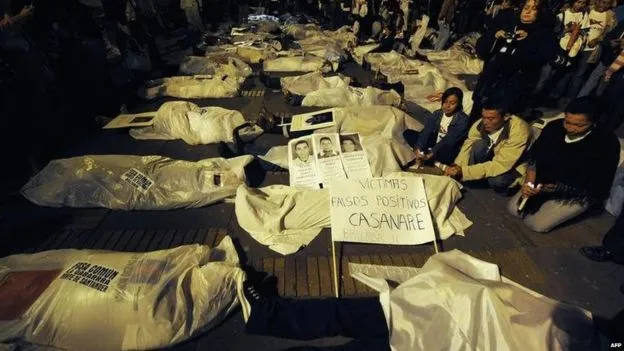
“This event is vital for the families,” Castillo emphasized. She criticized previous governments for ignoring the issue and protecting wrongdoers.
Now, plans are underway for a memorial in Soacha, a hotspot for many victims.
A public gathering unfolded at Bogotá’s Plaza de Bolívar. Families displayed photos and shared brief accounts of their loved ones.
Velásquez took the stage, asking for forgiveness. He vowed to commit to truth and justice.
President Petro also appeared at the event. He thanked the JEP and urged for more transparency. Citing Germany and Spain, he called for collective healing and progress.
This landmark event calls for truth and justice, urging that such tragedies should never occur again.
Background
On a local scale, this apology marks a turning point in Colombia. It helps victims’ families move toward closure.
Moreover, it sets a precedent for accountability within the government and military. Yet, risks persist.
Such admissions can strain Colombia’s relations with allies who may question its human rights record.
Internationally, the act sends ripples through global politics. Like Colombia, other nations have also grappled with internal conflicts and military misconduct.
In Germany, the government has acknowledged and apologized for its past actions.
Spain has taken steps to reconcile its history of internal conflict. Similar initiatives can be seen in South Africa and Rwanda.
The move challenges the old ways of brushing injustices under the rug. It urges governments to come clean, encouraging a more open society.
In sum, Colombia’s recent admission serves as both a lesson and a call to action for countries worldwide, urging them to uphold truth and justice.
More: Colombia news in English, every day from The Rio Times.
This article was produced by The Rio Times’ automated newsroom system. How we use AI · Report an error · Editorial responsibility: Matthias Camenzind, Editor-in-Chief