Brazil’s Factories Grew Less Than Half of What Was Expected
Brazil · ECONOMY
Key Facts
- —Industrial output Rose 0.2% in July 2026, against a 0.5% forecast in the Broadcast survey.
- —Year on year Output was 0.5% lower than in July 2025.
- —The year so far Production is up 1.1% in 2026 and 0.6% over twelve months.
- —Foreign selling A net 18.1 billion reais (US$3.5 billion) left B3 shares in August.
- —Still positive Foreign investors remain net buyers of 18.3 billion reais for the year.
- —Interest rates The Selic rate is 14% a year after four consecutive cuts since March.
Runoff · Sunday, 25 October
Brazil Runoff 2026: Lula vs Flávio
Date, polls, debates, odds and how the runoff works, updated every day.
Brazil runoff polls · Polymarket and Kalshi odds · When results come
Prediction markets · who wins the runoff
Implied chance of winning Brazil’s presidency on 25 October, from traders’ prices.
Polymarket
Flávio Bolsonaro 79.8% · Lula 19.5% (US$186 million traded)
Kalshi (regulated in the US by the CFTC)
Flávio Bolsonaro 80% · Lula 21%
As of 17 October, 8:40 pm ET (01:40 Lisbon), updated every 20 minutes. Prices are bets, not polls, and can move fast.
Why we show this: prediction markets turn real-money bets into a live probability that moves within minutes of the news, which is why investors, campaigns and newsrooms in the United States now follow them closely. We show them next to polls and official results, never instead of them.
Factories grew in July, but by less than half what economists expected. And foreigners spent August taking money off the table.
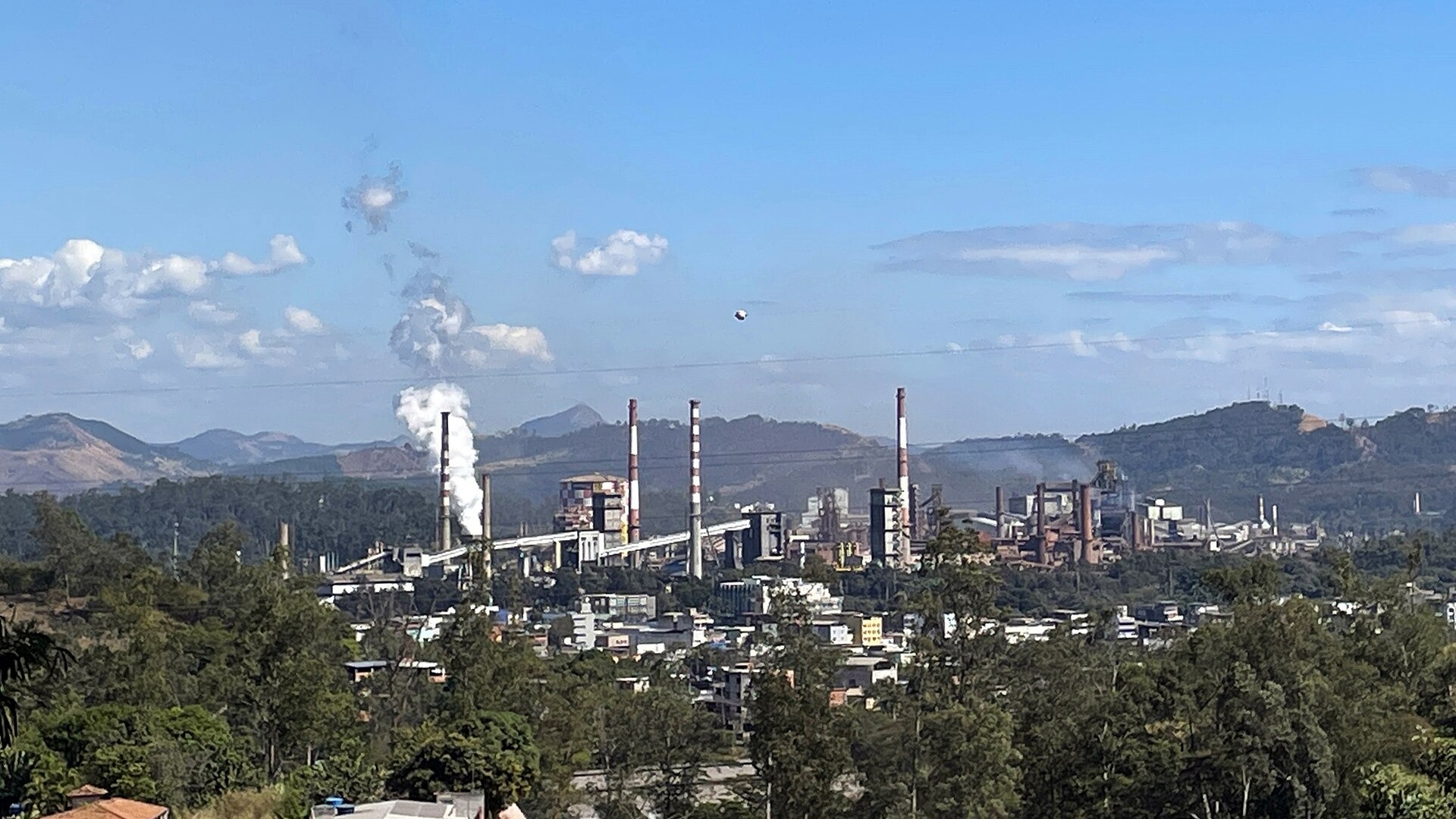
Brazilian industrial production rose 0.2% in July, less than half what economists had expected. It was still enough to break two months of falls.
Separately, foreign investors pulled a net 18.1 billion reais (US$3.5 billion) out of B3 shares in August. That is the heaviest month since the start of the pandemic.
What the July Figure Shows
IBGE, the national statistics institute, published the number on 2 September 2026. Output rose 0.2% against June, after a 1.8% fall the month before.
The Broadcast survey of economists had a median forecast of 0.5%. A Reuters poll expected 0.6%, so the result missed on both counts.
Against July 2025 output was 0.5% lower. Economists had expected roughly flat, so the annual miss was the larger of the two.
Thirteen of the 25 industrial activities grew. Computing and electronics rose 12.2%, other transport equipment 11.2% and tobacco 11.1%.
How to Read the Level
Brazilian industry sits 2.1% above where it was in February 2020, just before the pandemic. It is still 15% below its record, set in May 2011.
For the year to date production is up 1.1%, and over twelve months 0.6%. So the trend is flat rather than falling.
IBGE’s André Macedo was careful about the reading. It is not a change of direction, he said, but it has stopped falling.
The moving quarter is still negative. July did not recover what June and May had lost.
Why Households Are Not Helping
The day before, official figures showed the economy grew 0.5% in the second quarter. Household consumption fell 0.4%, which was the surprise in the release.
Juliana Trece, who coordinates the national accounts unit at FGV Ibre, put it bluntly. There is, she said, an exhaustion of purchasing power.
She pointed to a long stretch of high interest rates and tight credit. Families are heavily indebted, she said, and conditions remain restrictive.
Weak household demand feeds straight back into factories. Consumer goods are what much of Brazilian industry makes.
Rates Are High, But They Are Coming Down
The Selic policy rate is 14% a year. That is high by any standard and it makes borrowing expensive.
But the direction matters. The central bank cut a quarter point on 5 August, unanimously.
It was the fourth consecutive cut of a cycle that began in March at 15%.
The next decision is due in mid-September, and the market expects another cut. Policy is still restrictive in level while easing in direction.
What Companies Plan to Spend
Renato Donatti, a senior director at Fitch Ratings, spoke at a seminar in São Paulo on 1 September 2026. He expects next year to be worse than this one for investment.
He said he would risk predicting that 2027 marks the lowest level of investment by Brazilian companies. The magic number, he said, may be the minimum, depreciation alone.
Spending only what assets lose to wear means replacing and adding nothing. That is a defensive posture, not a growth one.
Trece expects fiscal tightening whatever happens at the ballot box. There will be some fiscal adjustment, she said, regardless of who becomes president next year.
The Money That Left the Stock Market
Foreign investors sold a net 18.1 billion reais (US$3.5 billion) of Brazilian shares over August. That is the final figure for the month, published by B3.
The path through the month matters more than the total. The running outflow reached about 23 billion reais by 20 August, then roughly 5 billion came back in the last ten days.
Partial figures quoted during August were readings of that running total, not competing estimates. On 11 August it stood at 11.9 billion, on 19 August at 20.4 billion.
For the year foreigners are still net buyers of 18.3 billion reais. August erased most of what they had put in, but not all of it.
Why They Were Selling
JP Morgan ranked August the third heaviest monthly outflow since 2008. Only February and March 2020 were larger, at 21 billion and 24.2 billion reais.
That ranking was made on 21 August against a running figure of 20.5 billion reais. The month finished lower, so treat the ranking as the bank’s call at the time.
The bank blames external forces rather than Brazilian politics. Rising United States bond yields and a stronger dollar drew money home.
It cut Brazil to neutral from buy on 11 August, citing worsening credit, the approaching election and rates staying high. Citi also reduced its exposure.
A Detail That Cuts Against the Panic
The real actually strengthened while foreigners were selling. The dollar fell 5.6% over August, closing at 5.1814 reais on 31 August.
The Ibovespa ended the month at 177,418.78, down just 0.32%. This was a rotation out of equities, not a run on the country.
Brazil votes in the first round on 4 October 2026, with a runoff on 25 October. That is the event most investors are now positioning around.
Frequently Asked Questions
How much did Brazilian industry grow in July?
Output rose 0.2% against June, ending two months of decline. The Broadcast survey of economists had expected 0.5%.
Is industry growing or shrinking?
Both, depending on the measure. Production is up 1.1% so far in 2026, but July was 0.5% below July 2025.
The level is still 15% below the record set in May 2011.
How much did foreign investors pull out of B3?
A net 18.1 billion reais (US$3.5 billion) over August. The running total peaked near 23 billion reais on 20 August before about 5 billion came back in the final days.
Was that the biggest outflow since the pandemic?
JP Morgan called it the third largest monthly outflow since 2008, behind February and March 2020. It made that ranking against a mid-month figure of 20.5 billion reais, before money returned.
Is Brazil raising or cutting interest rates?
Cutting. The Selic has come down from 15% to 14% in four consecutive moves since March 2026.
The last was a quarter point on 5 August.
The rate is still high enough to hold back borrowing.
Connected Coverage
Sources: IBGE, Pesquisa Industrial Mensal, released 2 September 2026; IBGE second-quarter GDP of 1 September 2026; B3 foreign flow data; JP Morgan; Projeções Broadcast; Poder360; InfoMoney; Money Times; CNN Brasil. Converted at 5.1814 reais to the dollar, the Banco Central PTAX rate for 31 August 2026.
This article was produced by The Rio Times’ automated newsroom system. How we use AI · Report an error · Editorial responsibility: Matthias Camenzind, Editor-in-Chief