Brazil · Markets
Key Facts
—The move. Azul, Brazil’s largest airline by cities served, upgraded its US listing to the main New York Stock Exchange.
—The ticker. Its American Depositary Shares began trading under the symbol AZUL on 9 July 2026.
—The step up. It moved from NYSE American, the exchange’s smaller-company venue, where those shares had only started trading on 1 June.
—The backstory. Azul spent late 2025 and early 2026 inside a US bankruptcy process; the listing marks its exit.
—Two markets. Its home-market shares stay on Brazil’s B3 in São Paulo, giving the airline a Wall Street–São Paulo footprint.
Brazil’s Azul has planted a flag on its recovery. The airline’s Azul NYSE listing upgrade moves its shares to the main New York Stock Exchange, a symbolic step out of the bankruptcy process it entered less than a year ago.
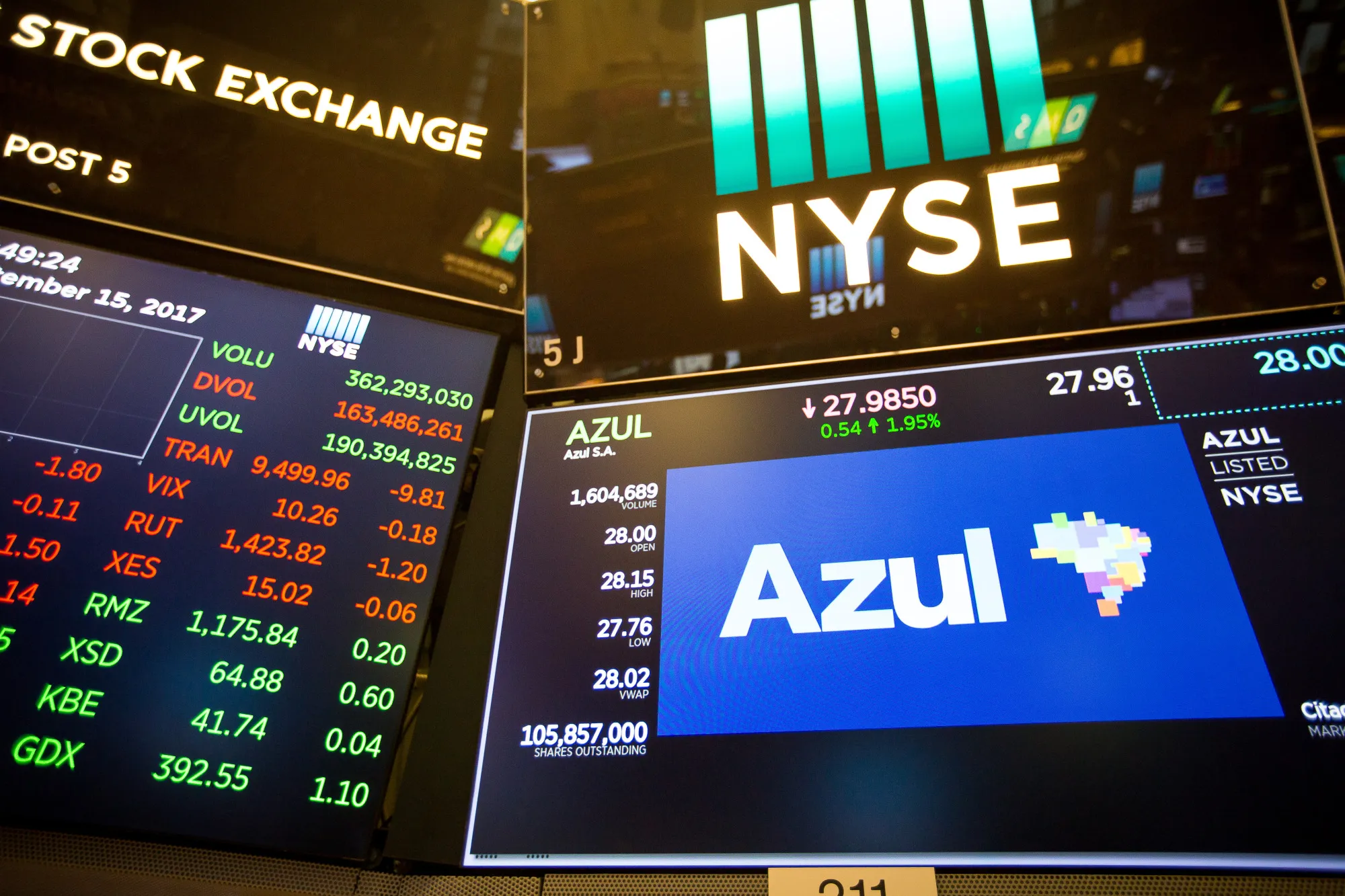
Azul told investors its American Depositary Shares, each representing two common shares, had been cleared to trade on the NYSE, with dealing under the ticker AZUL beginning on 9 July 2026, per company filings.
A step up the exchange ladder
The carrier stepped up from NYSE American, the exchange’s venue for smaller companies, where the same shares had only begun trading on 1 June. Moving to the main board typically brings more analyst coverage and easier access for large institutional funds, so the practical gain is visibility.
Existing holders of common shares and ADSs did not need to take any action in connection with the transfer, a routine feature of an uplisting rather than a new share sale.
For a foreign reader, an American Depositary Share is simply a certificate issued by a US bank that represents a set number of shares in a non-US company. It lets investors buy and sell the stock in dollars on an American exchange, without having to navigate a foreign market directly.
The two-tier structure of the NYSE itself is worth understanding. The main board, where Azul now sits, is home to the world’s largest and most closely watched companies.
NYSE American, its former home, has lighter listing rules and is designed for younger or smaller firms that may not yet meet the main board’s stricter governance and financial thresholds.
Out of bankruptcy, onto Wall Street
The listing is above all a signal. Azul spent late 2025 and early 2026 restructuring inside a US bankruptcy process, and a main-board NYSE listing is the flag it has planted to say that chapter is over.
Its home-market shares remain on Brazil’s B3 exchange in São Paulo, so the airline now runs a two-market structure spanning Wall Street and its own capital, exposing it to both US institutional investors and Brazilian retail traders.
A US bankruptcy process for a Brazilian company can sound confusing. In practice, many international firms use Chapter 15 of the US bankruptcy code, which is designed to give a foreign restructuring legal force in the United States.
It protects a company’s American assets while it reorganises its debts back home, and it often signals deep financial strain that requires a court-supervised fix.
Emerging from that process and immediately stepping onto the NYSE’s main stage is an unusually swift turnaround. It suggests the airline believes it has done enough repair work to meet the exchange’s tougher listing standards and to face the scrutiny that comes with a higher-profile investor base.
Why it matters
For a Brazilian company fresh out of restructuring, a main-board US listing is a bid for credibility with global investors as much as a technical change of venue. Whether it translates into a stronger share price will depend on the airline’s results, not the ticker’s address, but the move resets the story.
Brazil’s airline sector has been shaped by years of high operating costs, a volatile currency and fierce competition. In that context, a dual listing on B3 and the NYSE gives Azul a broader pool of potential shareholders and a way to benchmark itself against global peers rather than only against local rivals.
What to watch next is whether the uplisting attracts the kind of long-term institutional money that tends to stabilise a stock. Another open question is how Azul’s post-bankruptcy balance sheet holds up against Brazil’s stubbornly high interest rates and any shift in domestic travel demand.
The ticker has changed, but the operating environment has not.
Live Company IntelligenceAzul S.A. — the full investor dossier
Valuation & profitability
Price & risk
$0.7452-wk high
$3,400.00
Revenue trend · 6y
Ownership
Dividend
Frequently Asked Questions
What changed for Azul on the NYSE?
Azul upgraded its US listing from NYSE American to the main New York Stock Exchange, with its ADSs trading under the ticker AZUL from 9 July 2026. It is a change of venue, not a new share sale.
Is Azul still listed in Brazil?
Yes. Its common shares remain on Brazil’s B3 exchange in São Paulo, so the airline now trades in both New York and São Paulo.
Why does the uplisting matter?
It follows Azul’s exit from a US bankruptcy process and brings greater visibility, more analyst coverage and easier access for large institutional investors, a bid for credibility after restructuring.
Connected Coverage
Brazil’s Gol Launches Its First Long-Haul Rio–New York Route
This article was produced by The Rio Times’ automated newsroom system. How we use AI · Report an error · Editorial responsibility: Matthias Camenzind, Editor-in-Chief