Argentina: wages lost to inflation in 2022, and the informal sector accumulated a violent 19% drop since December 2019
Nominal remunerations increased by 90.4% in 2022 while prices rose by 94.8%, marking a strong retraction of purchasing power.
Projections for the first quarter of 2023 suggest that the fall in real wages will deepen even more.
INDEC announced that the General Wage Index rose by 5.3% in December 2022, gaining ground by a slight differential concerning the 5.1% increase in retail prices.
However, throughout the year, there was a sharp drop in the purchasing power of wages: they rose by 90.4% against cumulative inflation of 94.8%.
The general wage level (considering the country’s formal and informal sectors) fell by 2.13% between December 2021 and December 2022.
Of the first three years of Alberto Fernández’s administration, two registered real wage drops and a total retraction of 2.81% were accumulated since December 2019.
The inflationary decontrol surpassed all wage adjustment mechanisms.
Disaggregating the wage variation by sector, the situation becomes dramatic.
The real salary of the formal private sector (which has not created jobs since 2011) grew by 4.5% in December and lost against inflation.
This market segment accumulated an increase of 93.8% in 2022 and, again, lost against price increases.
The real private registered salary accumulated a drop of 1.2% at the end of 2022, marking a profound failure of the “income policy” carried out by President Alberto Fernandez.
The negotiation of bargaining agreements once again lagged behind inflation.
The public sector allowed itself a salary increase of 9.2% in the last month of last year, exceeding inflation for the same period.
Likewise, the State generated a salary increase of 3.34% in the public administration, while the private sector had to bear the bulk of the implicit adjustment generated by inflation.
The informal economy was by far the hardest hit by Kirchnerism’s economic policy.
Informal salaries grew by a meager 0.5% in December 2022 and increased 65.4%, 29 points below the year-on-year inflation level.
At the end of 2022, informal private sector salaries plummeted 14% compared to December 2021.
President Fernandez proudly affirmed his frontal refusal to produce any labor reform, while the informal wage has fallen by 19% since December 2019.
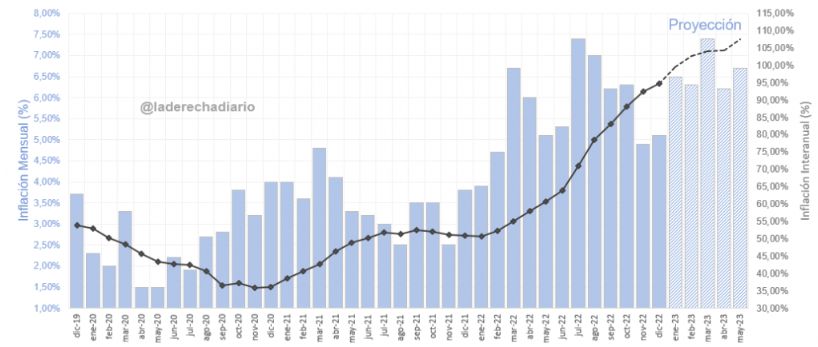
Projections for monthly inflation in the first quarter of 2023 only anticipate that the wage deterioration will deepen further. Implied inflation discounted in peso securities and bonds warns for a 6.5% increase for January, 6.3% in February, and 7.4% in March.
If these estimates are effectively fulfilled, then year-on-year inflation would climb above 104% by the end of the year’s first quarter, threatening the minimal credibility that Sergio Massa’s battered program still retains.
With information from Derecha Diario
More: Argentina news in English, every day from The Rio Times.
Read More from The Rio Times