Brazil Election Risk: Stocks and the Real Recover Five Days Before the Vote
Markets · Brazil
Key Facts
- —What happened Brazilian stocks rose 0.46% and the real edged up on Tuesday 29 September 2026, after a weak morning.
- —What traders price Rate futures fell as oil eased and investors added risk, which Valor tied to a possible Flávio Bolsonaro win.
- —How nervous Brazil’s stock fear gauge, the S&P/B3 Ibovespa VIX, hit a record 31.84 on Monday 28 September.
- —The catch Atlas/Bloomberg and Quaest polls show Lula and Flávio Bolsonaro statistically tied in a runoff, so the result is open.
- —The pressure from abroad The 10-year US Treasury yield stood at 5.24% on Monday 28 September, its highest since June 2007.
Brazilian stocks and the real ended Tuesday higher after a nervous morning. Behind the swings sit two questions: who wins the presidency, and what the winner then does with the budget.
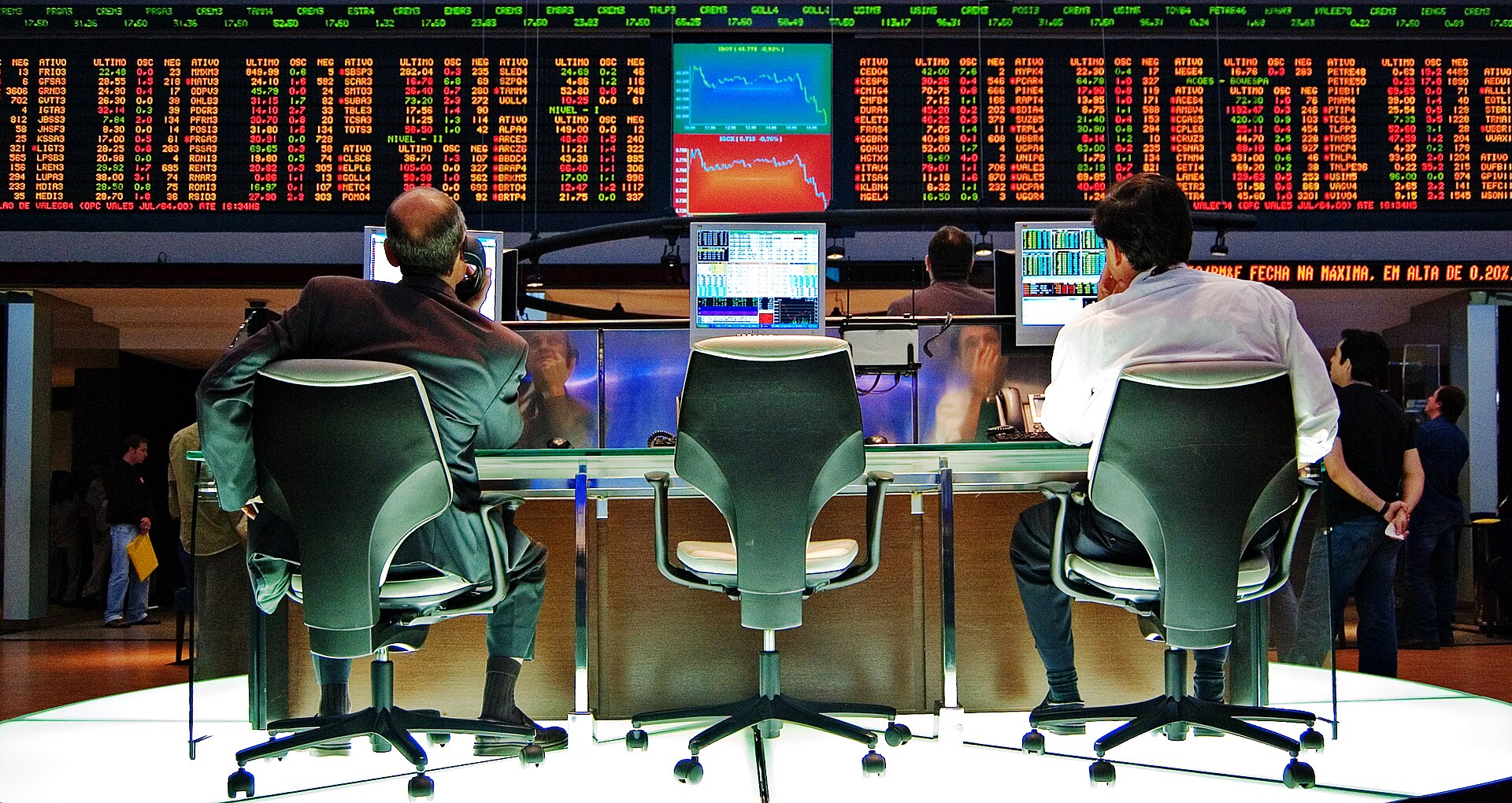
Brazil election risk set the tone on Tuesday 29 September 2026, five days before Brazilians choose a president. Stocks and the real, Brazil’s currency, lost ground in the morning and recovered by the close.
President Luiz Inácio Lula da Silva of the Workers’ Party (PT) is seeking a fourth term. His main rival is Senator Flávio Bolsonaro of the Liberal Party (PL), son of former president Jair Bolsonaro.
The first round is on Sunday 4 October. If no candidate wins more than half of the valid votes, the top two meet in a runoff on 25 October.
Where Tuesday ended
The Ibovespa, the main index of the São Paulo exchange B3, closed up 0.46% at 183,828 points on Tuesday. Valor and G1 both reported that closing level.
The rise ended four days of losses, Reuters reported. At about 1 p.m. Brasília time (16:00 UTC) the index was down 0.32%, near its low of 181,562 points, Valor reported.
At the close, the dollar was down 0.16% at a rate of 5.2166 against the real, Valor reported.
How the vote is priced in interest rates
The clearest election signal came from DI futures. These contracts, traded on B3, track Brazil’s interbank lending rate and show where traders expect borrowing costs to go.
At Tuesday’s settlement, reported by Valor at 5:34 p.m. Brasília time, the January 2029 contract fell to 13.79% from 13.90%. The January 2028 rate eased to 13.575% from 13.665%.
Valor linked the fall to cheaper oil, softer words from a US Federal Reserve official and investors adding risk. Earlier, it tied that appetite to the prospect of a possible Flávio Bolsonaro victory.
A government bond sale pointed the same way. The National Treasury sold all 900,000 inflation-linked NTN-B bonds on offer, at lower rates than traders had expected.
Investors took only 23.1% of the 500,000 LFT bonds, which pay the floating Selic policy rate. Market participants read that mix as appetite for risk, Valor reported.
Reuters, in a story carried by InfoMoney, said many traders see a Lula re-election as an obstacle to controlling public finances. Poll news that favours Flávio Bolsonaro therefore tends to push the dollar and local rates down, it said.
The government argues the opposite. Finance Minister Dário Durigan defended its record in an article for The Economist, InfoMoney reported.
He wrote that the primary deficit, before interest, fell from just over 2% of GDP in 2023. He projected 0.6% for 2026.
Goldman Sachs holds a more guarded view, Valor reported. It likes options that pay if the dollar falls below 5 against the real within three months.
Even with a Flávio Bolsonaro win, Goldman believes, difficulty implementing a fiscal agenda could slow the real’s gains.
Live Market IntelligenceBrazil — Live Market Board
Rio Times · Live Market Intelligence
Brazil — Live Market Board
+0.46%
183,827.59
+0.46%
64,944.41
-0.07%
11,055.91
-0.73%
2,782,561
-0.59%
2,558.92
-0.79%
60,220.45
+0.32%
| Instrument | Last | Change | YoY | Prev. | High | Low | Volume |
|---|---|---|---|---|---|---|---|
| IBOV | 183,827.59 | +0.46% | +21.85% | 182,991.13 | 168,310 | 167,142 | — |
| USD/BRL | 5.16 | +0.01% | -5.13% | 5.16 | 5.18 | 5.14 | — |
| SELIC | 14.00% | — | — | — | — | — | |
| PETR4 | 41.64 | -0.05% | +35.19% | 41.66 | 41.97 | 41.15 | 41,499,400 |
| VALE3 | 72.97 | +0.83% | +30.75% | 72.37 | 73.54 | 72.66 | 17,658,000 |
| ITUB4 | 38.60 | -1.03% | +4.57% | 39.00 | 39.34 | 38.39 | 29,487,800 |
| BBDC4 | 16.85 | +0.36% | +3.50% | 16.79 | 16.90 | 16.67 | 19,416,900 |
| BBAS3 | 19.37 | +0.47% | +0.73% | 19.28 | 19.44 | 19.16 | 11,069,200 |
| B3SA3 | 14.26 | -0.21% | +12.73% | 14.29 | 14.47 | 14.11 | 33,037,800 |
| ABEV3 | 14.89 | -0.80% | +21.91% | 15.01 | 15.07 | 14.81 | 16,453,100 |
| WEGE3 | 47.59 | +0.49% | +29.99% | 47.36 | 48.08 | 47.36 | 3,364,600 |
| PRIO3 | 59.14 | -0.19% | +50.67% | 59.25 | 59.81 | 58.74 | 3,325,600 |
| SUZB3 | 41.33 | +2.35% | -23.55% | 40.38 | 41.48 | 40.35 | 3,914,900 |
| RENT3 | 34.68 | -0.09% | +0.84% | 34.71 | 34.96 | 34.35 | 7,979,100 |
| AZZA3 | 15.89 | -2.63% | -53.76% | 16.32 | 16.42 | 15.82 | 1,330,300 |
| CSNA3 | 4.30 | +0.47% | -42.65% | 4.28 | 4.41 | 4.26 | 10,076,100 |
| GGBR4 | 24.69 | +2.19% | +51.38% | 24.16 | 24.85 | 24.18 | 7,047,600 |
| ENEV3 | 24.21 | -1.38% | +70.49% | 24.55 | 24.64 | 23.99 | 9,297,000 |
What each outcome could mean for the real
JPMorgan said the real carried no significant election premium, InfoMoney reported on 28 September.
A result seen as bad for the public finances could send the dollar toward 5.50 against the real, the bank said. A result read as favourable could lift the real about 6%, taking the dollar near 4.90.
For a lasting shift, JPMorgan said, the winner needs clear budget commitments and a credible plan to deliver them. In its own model portfolio, the bank keeps a neutral weight on the real and options that gain if it weakens.
Citi is more hopeful, Valor reported. Its strategists, led by Dirk Willer, see a slight edge for Flávio Bolsonaro and opened an options position betting on the real.
Jonathan Joo Young Lee, head of the international desk at the broker Mirae Asset, said caution dominates among foreign investors. He told Valor that Lula’s larger Bolsa Família family payments and a ban on betting sites had raised their budget worries.
JPMorgan’s own investor survey leans one way, InfoMoney reported. Weighted by money managed, 59.7% of respondents expected Flávio Bolsonaro to win and 40.3% Lula.
Polls are tighter: an Atlas/Bloomberg survey released on Tuesday had Lula ahead in the first round, 45.3% to 42.2%, Reuters reported. Atlas interviewed 5,005 people online from 23 to 28 September.
In a runoff it showed Flávio Bolsonaro on 47.7% and Lula on 47.6%, a statistical tie within its one-point margin. A Quaest poll released on Monday tied them at 42% each, G1 reported.
Quaest interviewed 2,004 people from 24 to 27 September, with a two-point margin. Both firms called the runoff a technical tie.
State results can differ from the national picture, as the latest Rio Grande do Sul poll shows. Neither national survey gives either man a clear runoff lead.
The pressure from Washington
The 10-year US Treasury yield stood at 5.24% on Monday, the highest since June 2007, the US Treasury’s daily table shows.
On Tuesday the same table read 5.26%, level with 12 June 2007. The Federal Reserve, the US central bank, raised its key rate by a quarter point to 3.75%–4% on 16 September.
Relief came in the afternoon from John Williams, president of the Federal Reserve Bank of New York. After the September increase, “there is no need for urgency,” he said in prepared remarks in Buffalo, New York.
Brazilian rates then hit their lows of the day and the dollar extended its fall, Valor reported. Brent crude, the global benchmark for oil, closed 2.6% lower at US$102.59 a barrel, Reuters reported.
Borrowing is already costly inside Brazil, where the central bank’s Selic rate stands at 13.75%. The strain on companies is the subject of our report on Moody’s 2027 warning for Brazilian corporate debt.
A record fear gauge, in context
The S&P/B3 Ibovespa VIX, a gauge of expected swings built from option prices, hit 31.84 on Monday 28 September. That was its highest since its launch in March 2024, InfoMoney reported.
The longer view is calmer. A Quantum Finance study found the Ibovespa’s daily swings this year far smaller than in the three previous election cycles, Valor reported.
For anyone who earns in dollars and spends in reais, the vote brings exchange-rate risk in both directions. Option prices imply a move of about 6.5% across the two voting days combined, JPMorgan estimated.
What nobody yet knows is how the winner will handle the budget, the core of Brazil election risk. JPMorgan said that clarity had not yet appeared when its report was published.
The bank argues the harder test comes after the count. The winner would need to name an economic team and win support in Congress, especially the Senate, it said.
More: Brazil coverage, every day from The Rio Times.
Background: Brazil Election Results 2026: Live Updates, Vote Count and Runoff Scenarios.
Background: Brazil: Split Payment, the World’s Broadest Instant Tax Collection, Will Only Be Mandatory in 2028.
Background: Fintechs and Digital Banks in Brazil 2026: Market Guide.
Background: Brazil Inflation Rate 2026: IPCA, Selic and What’s Next.
Frequently Asked Questions
When is Brazil’s 2026 presidential election?
The first round is on Sunday 4 October 2026. If no candidate wins more than half of the valid votes, the top two meet in a runoff on the last Sunday of October, which is 25 October 2026.
What is the Brazil election risk that investors talk about?
It is the chance that the result moves prices sharply, mainly through what the next government does with spending and debt. JPMorgan, in a report covered by InfoMoney on 28 September, said a result seen as bad for the public finances could push the dollar toward 5.50 against the real.
What are DI futures?
DI futures are contracts traded on B3, the São Paulo exchange, that track the average interbank lending rate in Brazil. Traders use them to bet on or protect against changes in interest rates. When their rates fall, traders expect cheaper borrowing ahead.
What is Brazil’s stock fear gauge?
The S&P/B3 Ibovespa VIX was launched by S&P Dow Jones Indices and B3 on 19 March 2024. It measures the swings that options on the Ibovespa index expect over the next 30 days. It reached a record 31.84 on Monday 28 September 2026, InfoMoney reported.
Sources: Valor on Tuesday’s stock close, Valor on the real, Citi, Goldman Sachs and BBVA, Valor on DI futures at settlement, Valor on the Treasury auction, Valor on Mirae Asset, Quantum Finance and XP, Valor on John Williams and local assets, G1 on the close and the Quaest poll, InfoMoney/Reuters on the close and the Atlas/Bloomberg poll, Jovem Pan on the Atlas/Bloomberg runoff and fieldwork, Imirante on the Quaest fieldwork, InfoMoney/Reuters on DI rates and the election, InfoMoney on the S&P/B3 Ibovespa VIX, InfoMoney on JPMorgan’s scenarios for the real, InfoMoney on JPMorgan’s view of Brazilian shares, InfoMoney on Dário Durigan’s article, US Treasury daily par yield curve rates, Federal Reserve statement, 16 September 2026, John C. Williams, remarks at the University at Buffalo
This article was produced by The Rio Times’ automated newsroom system. How we use AI · Report an error
Read More from The Rio Times