ExxonMobil Eyes Ninth Guyana FPSO Using Longtail Design
Energy: Guyana
Key Facts
—New phase. On its 31 July 2026 earnings call, ExxonMobil chief Darren Woods said the company is evaluating a ninth Guyana FPSO that could copy the design being advanced for its Longtail project.
—The anchor. That ninth project would center on the Haimara gas discovery, reusing Longtail’s engineering to capture what Woods called “significant capital advantages.”
—Longtail. The eighth Stabroek development targets up to 1.2 billion cubic feet of gas and about 250,000 barrels of condensate per day, with a final investment decision due later in 2026 and first output in 2030.
—Ramp. Gross Stabroek output reached about 900,000 barrels per day in the second quarter, pumped by four producing FPSOs.
—Fifth vessel. A fifth FPSO, the Errea Wittu, has set sail for the Uaru project and is due to start up in the fourth quarter, lifting capacity toward 1.2 million barrels per day.
ExxonMobil is already pumping close to a million barrels a day off Guyana, and it is not slowing down: the supermajor is now weighing a ninth production vessel for the prolific Stabroek Block.
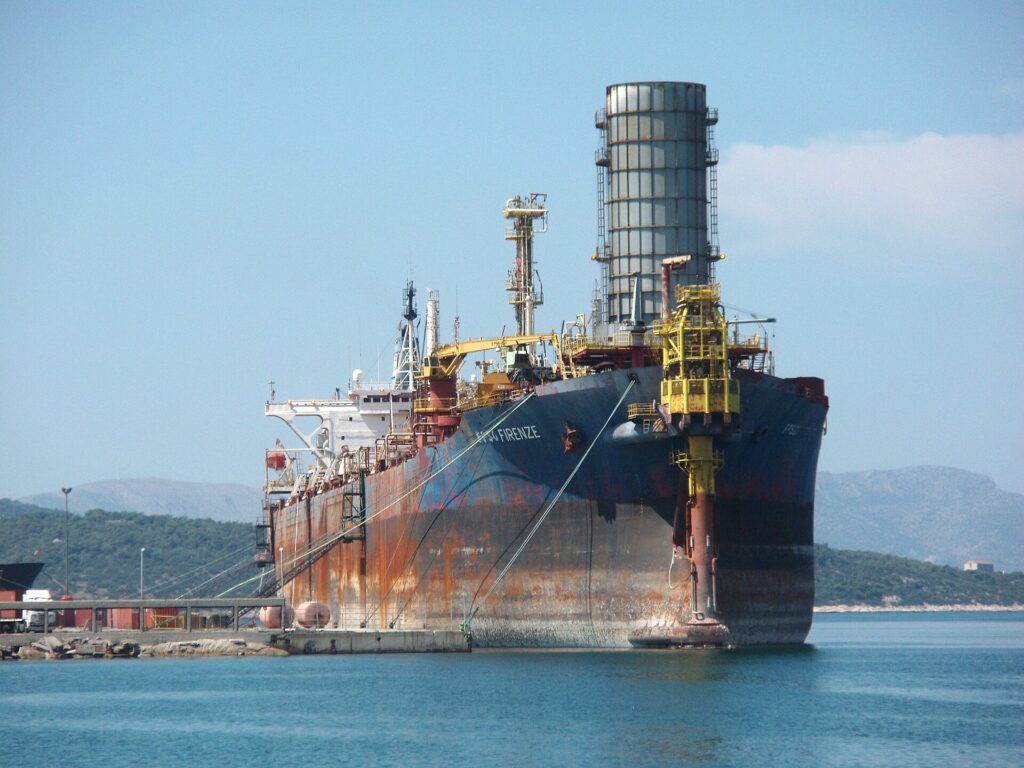
A Ninth FPSO Built on Longtail’s Blueprint
Speaking on ExxonMobil’s second-quarter earnings call on 31 July 2026, Chairman and Chief Executive Darren Woods said the company is evaluating a ninth floating production, storage and offloading vessel, or FPSO, for the Stabroek Block offshore Guyana. The plan would reuse the development concept it is finalising for its Longtail project.
“We now see an opportunity for this ninth FPSO, and really take advantage of what we’ve done with Longtail to replicate that and get some significant capital advantages,” Woods said. The ninth project would be anchored on the Haimara discovery in the south-east of the block.
Woods stressed the decision is not final. “We haven’t finalized that, obviously, but we’re progressing it, and it looks pretty attractive at this stage,” he said, adding that “the tape hasn’t run out on this play yet.” Copying a proven design is meant to cut cost and time.
Inside the Longtail Gas-and-Condensate Project
Longtail is set to be ExxonMobil’s eighth development in Stabroek and its first focused on gas and condensate rather than crude. It targets up to 1.2 billion cubic feet of gas per day and about 250,000 barrels of condensate, drawing on the Longtail, Tripletail and Turbot discoveries made between 2017 and 2019.
The project is designed around gas recycling: rather than injecting water to maintain pressure, it would reinject most of the gas it produces to maximise liquids recovery, using far more gas-compression capacity than earlier vessels. ExxonMobil expects government approval and a final investment decision later in 2026, with first production in 2030.
Because the ninth FPSO would mirror Longtail, the two projects together point to a new, gas-oriented chapter for a block that has so far been defined by oil. That fits Guyana’s own push to turn associated gas into power and industry onshore.
Guyana’s Relentless Production Ramp
The Stabroek Block has become one of the fastest-growing oil provinces in the world. Gross production reached about 900,000 barrels per day in the second quarter of 2026, drawn from four FPSOs: Liza Destiny, Liza Unity, Prosperity and One Guyana.
ExxonMobil has repeatedly cited Guyana as its clearest example of what it calls “advantage growth,” pointing to faster project delivery, lower costs and strong reliability. Each new FPSO adds roughly a quarter-million barrels a day, compounding output at a pace few basins can match.
To date the company has secured government approval for seven projects. Whiptail, the sixth, was sanctioned in April 2024, and Hammerhead, the seventh, was approved in September 2025, each carrying a multibillion-dollar price tag.
The Fifth FPSO Is Already at Sea
The near-term jump in output will come from the Errea Wittu, the fifth FPSO destined for Guyana, which set sail as ExxonMobil presented its second-quarter results. The vessel will serve the Uaru project, the block’s fifth development, and is scheduled to start production in the fourth quarter of 2026.
Built by Japan’s MODEC and approved as a US$12.7 billion project in April 2023, the Errea Wittu is designed to process about 250,000 barrels of oil per day and store some two million barrels. Its name means “abundance” in the Warrau language.
Once it starts up, Guyana’s daily production capacity is set to approach 1.2 million barrels before the end of 2026. Whiptail is due to follow around 2027 to 2028 and Hammerhead in 2029, keeping the ramp going for years.
Who Owns the Stabroek Block
ExxonMobil operates the Stabroek Block with a 45% interest. Its partners are Hess, now part of Chevron following the US major’s 2025 acquisition, with 30%, and China’s CNOOC with 25%. The trio has committed tens of billions of dollars to develop the acreage.
That ownership structure means the benefits, and the risks, of Guyana’s boom are shared among three of the world’s larger oil companies. For Chevron, the Hess deal was in large part a bet on this very block.
For the government of Guyana, the sheer speed of development brings surging revenue but also hard questions about how fast to spend it, how to manage the environmental footprint and how to save for the future. Exxon executives say maximising the acreage’s value benefits the country as much as the companies.
What the Buildout Means for Guyana and the Region
A ninth FPSO would extend one of the most aggressive offshore build-outs anywhere, cementing Guyana’s transformation from a small economy into a major oil and, increasingly, gas producer in barely a decade.
For the wider region, Guyana’s output is reshaping Latin American energy. Alongside Brazil’s pre-salt fields and Argentina’s shale, it is helping drive a rise in the hemisphere’s oil supply, even as global demand faces an uncertain, lower-carbon future.
For foreign residents and investors watching from Georgetown or abroad, the message from Exxon’s latest earnings call is continuity: more vessels, more barrels and, now, more gas, with the company signalling it sees years of growth still ahead in the block.
Frequently Asked Questions
What did ExxonMobil say about a ninth Guyana FPSO?
On its 31 July 2026 second-quarter earnings call, CEO Darren Woods said Exxon is evaluating a ninth floating production vessel for the Stabroek Block that could mirror the Longtail development concept, anchored on the Haimara gas discovery. The plan is not yet finalized.
What is the Longtail project?
Longtail is ExxonMobil’s eighth Stabroek development, a gas-and-condensate project targeting up to 1.2 billion cubic feet of gas and about 250,000 barrels of condensate per day, with a final investment decision expected later in 2026 and first production in 2030.
How much oil is Guyana producing now?
Gross output from the Stabroek Block reached about 900,000 barrels per day in the second quarter of 2026 from four FPSOs. A fifth vessel, the Errea Wittu, is due online in the fourth quarter and would push capacity toward 1.2 million barrels per day.
Sources
OilNOW · Kaieteur News · OilNOW (project overview) · ExxonMobil
Connected Coverage
Guyana Energy & Markets — Monday, August 3, 2026
Sources: OilNOW; Kaieteur News; ExxonMobil.
This article was produced by The Rio Times’ automated newsroom system. How we use AI · Report an error
Read More from The Rio Times